
Last updated September 22, 2026
Free visual inspection and a written scope of work before any mitigation begins - photos, moisture readings, and drying logs go in your claim file
The scope we write is the scope we bill. Anything new gets shown to you, in writing, before we touch it.
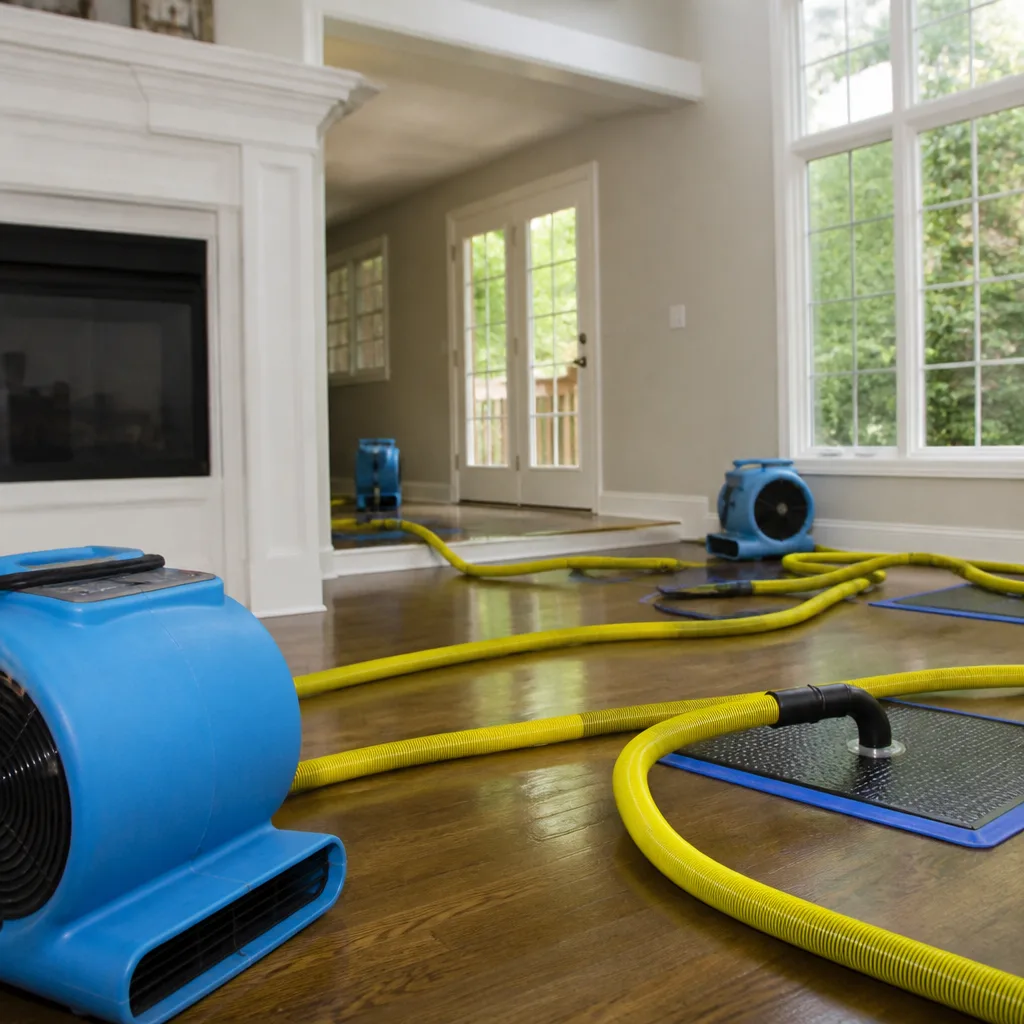

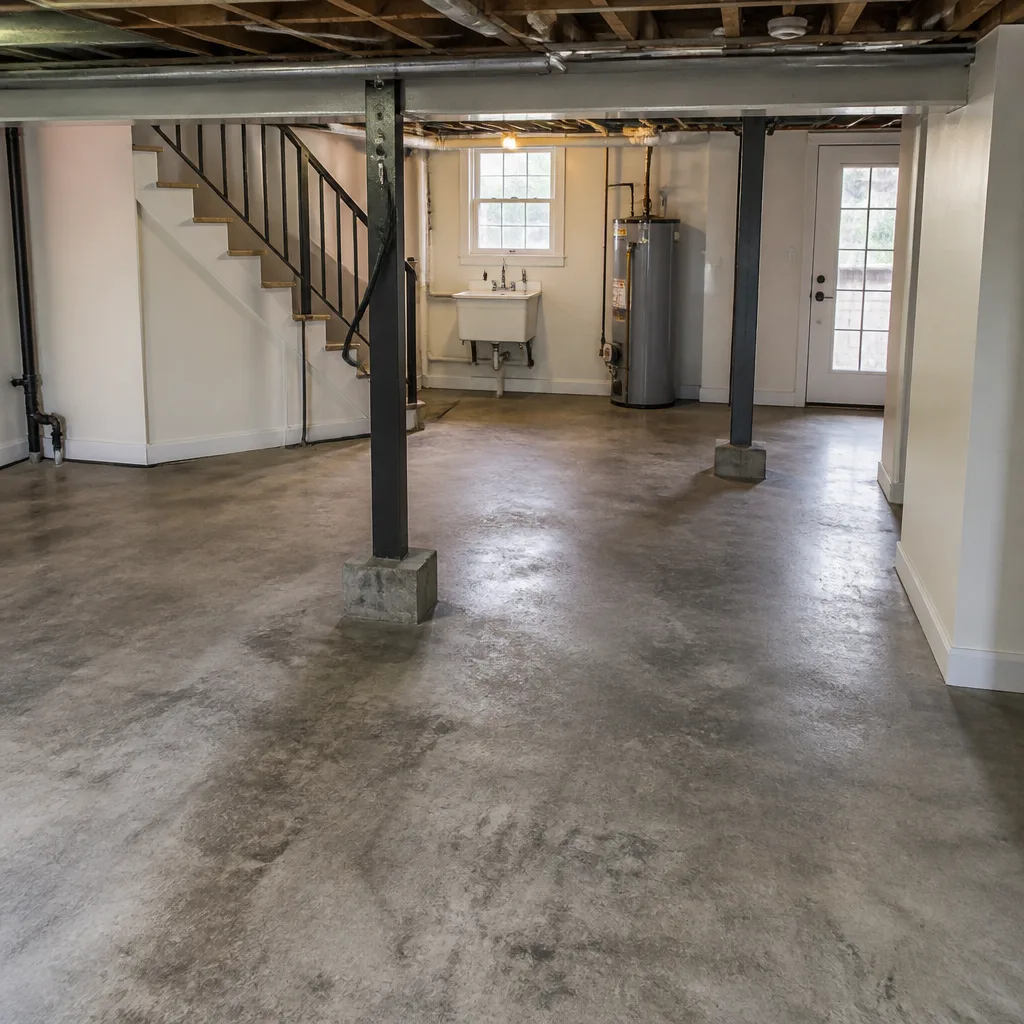

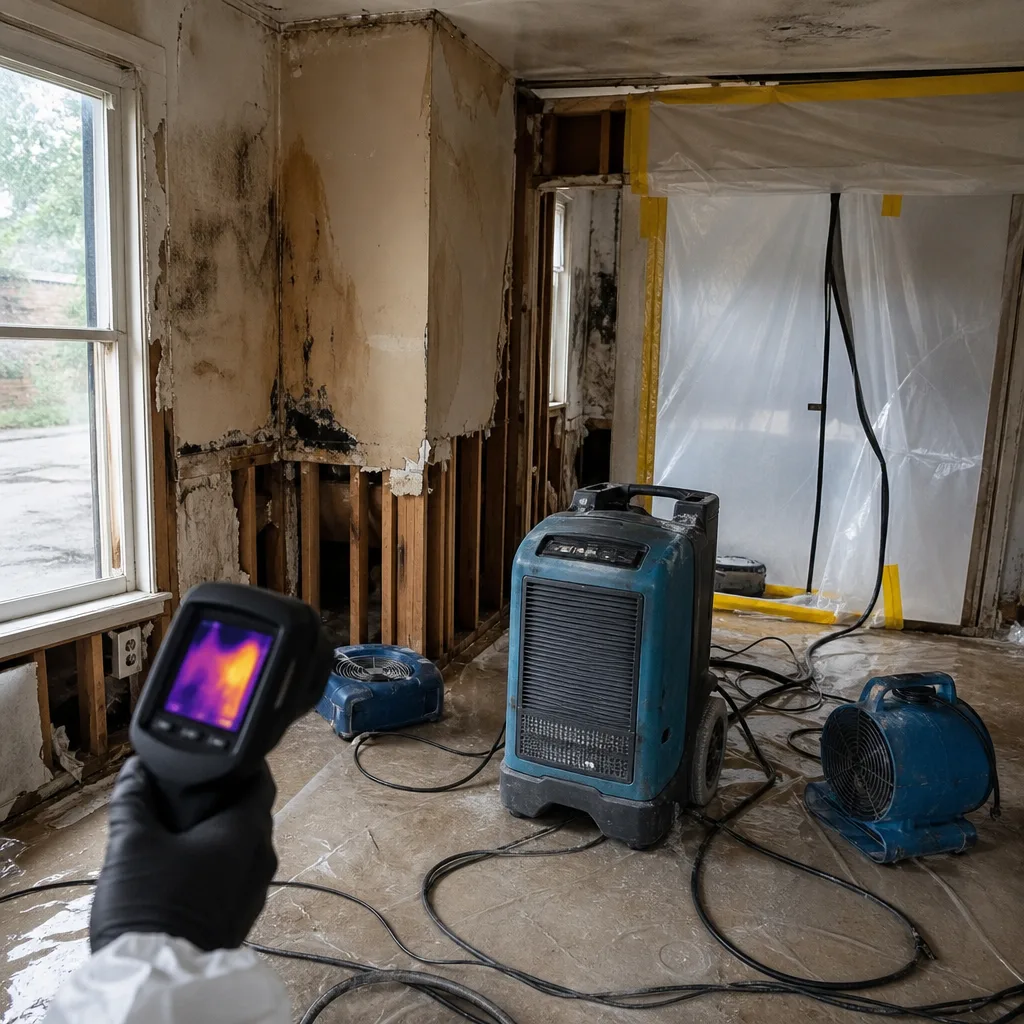 Before
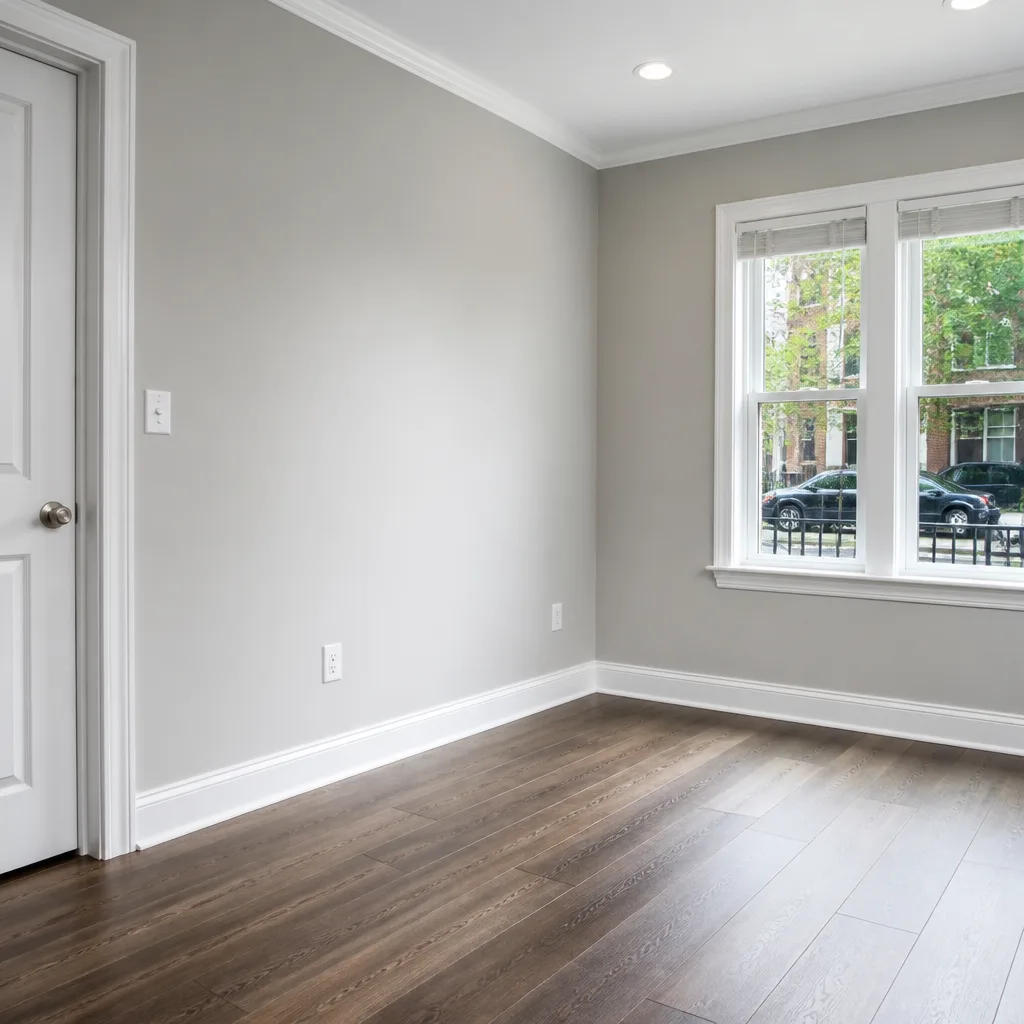 After
After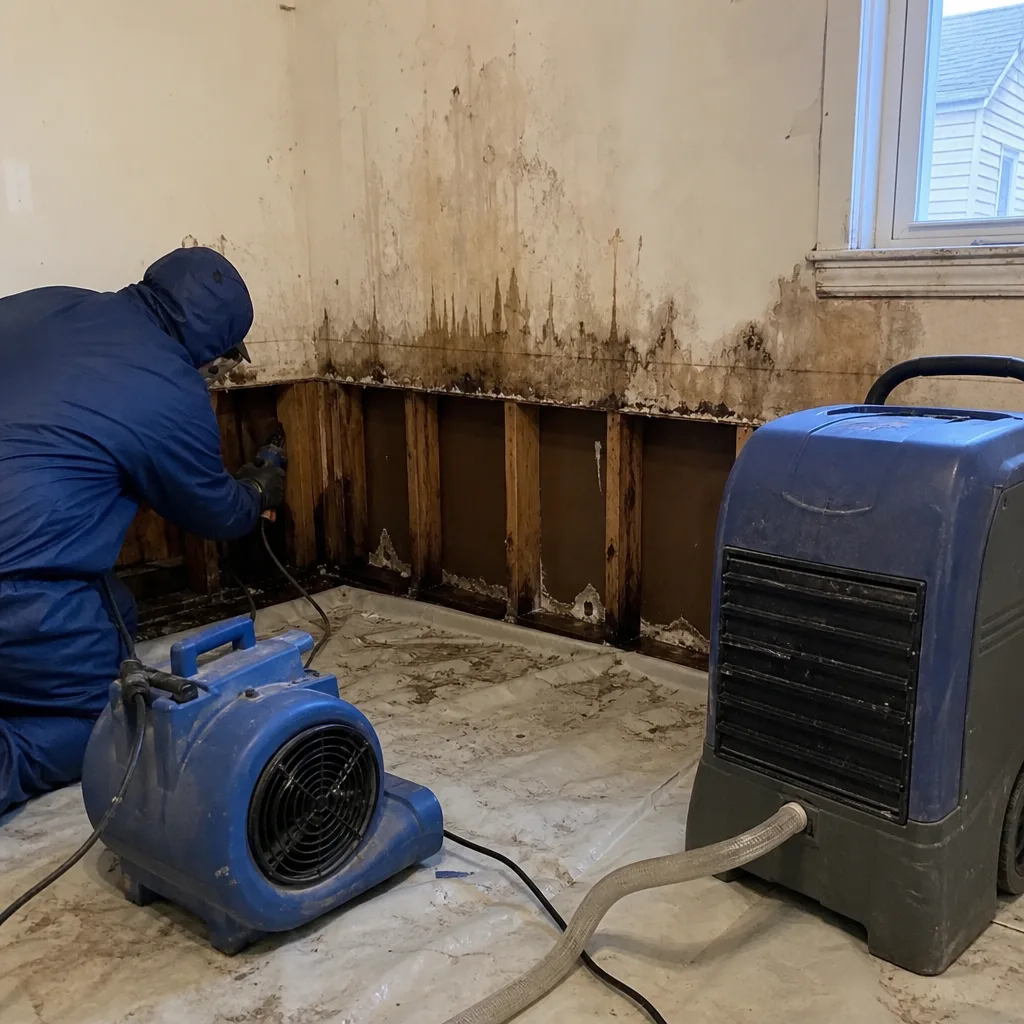 Before
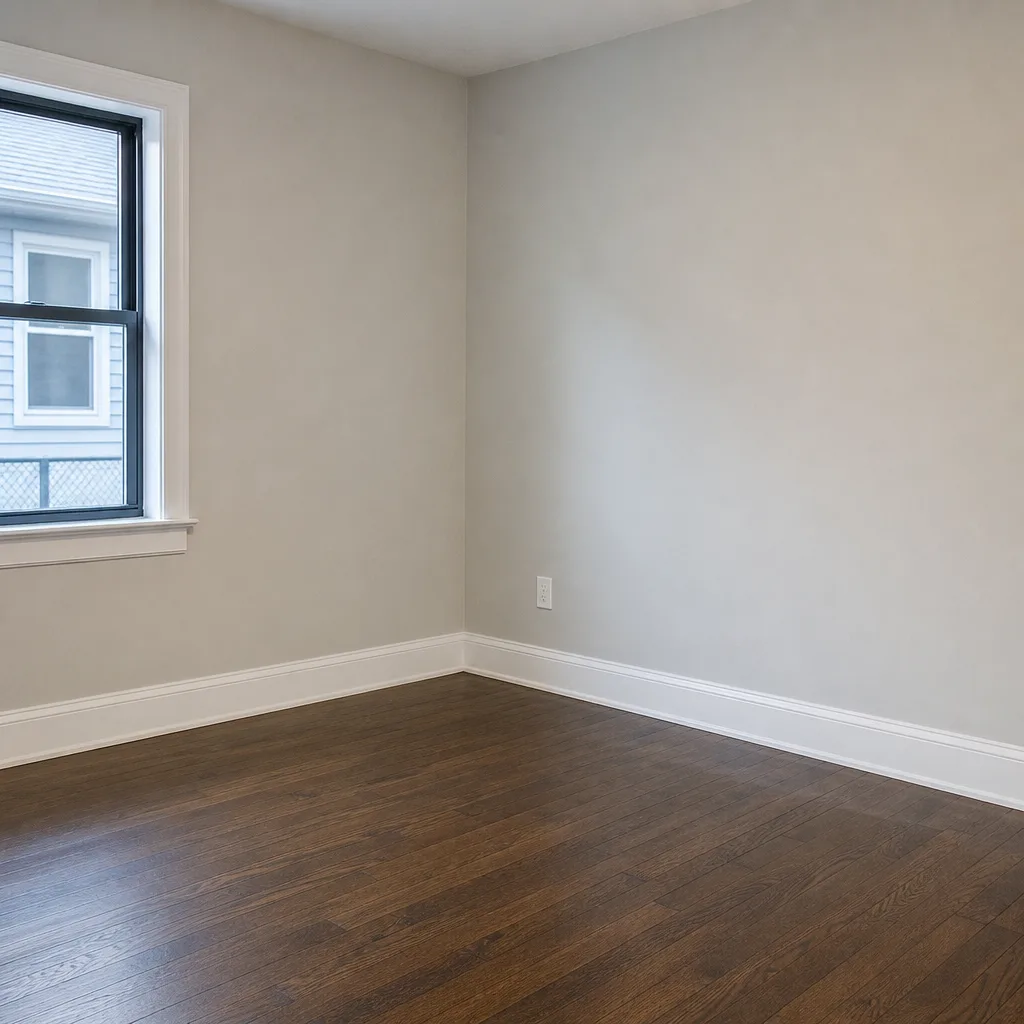 After
After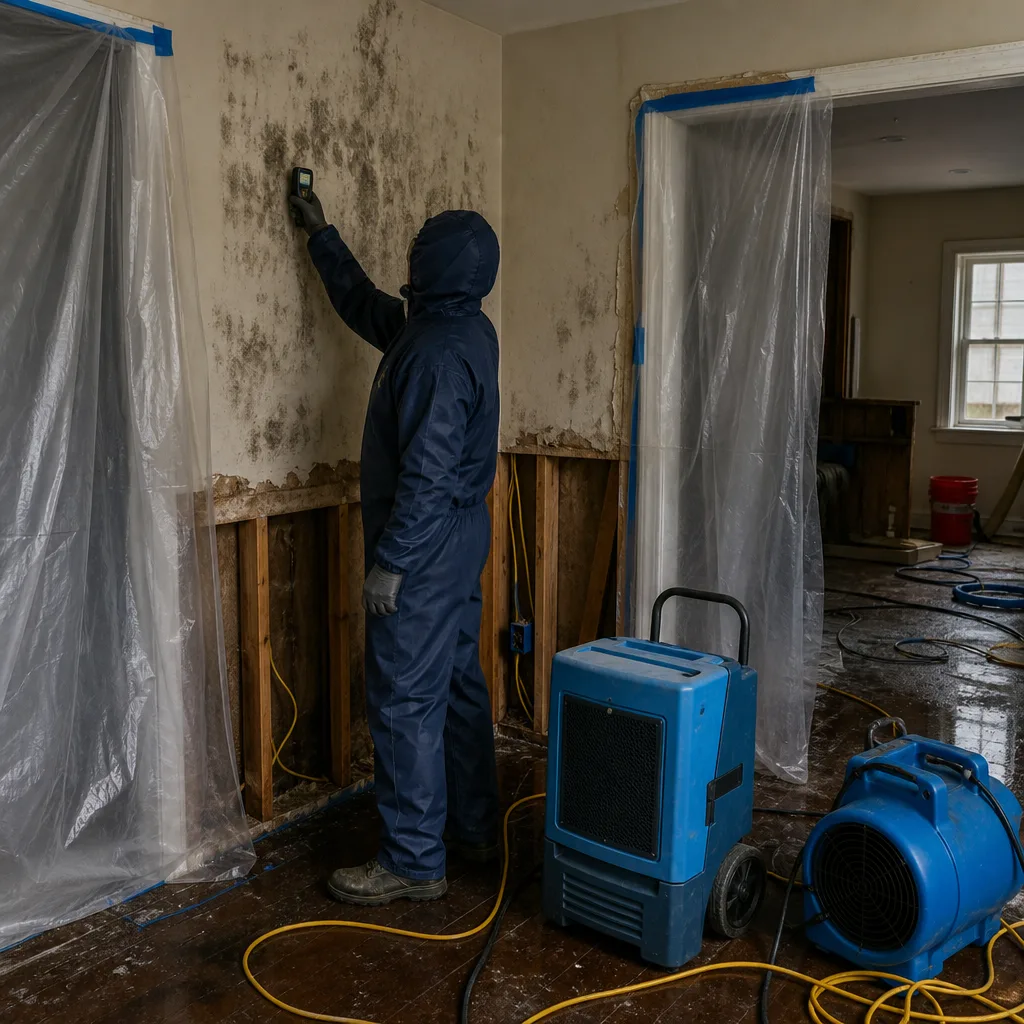 Before
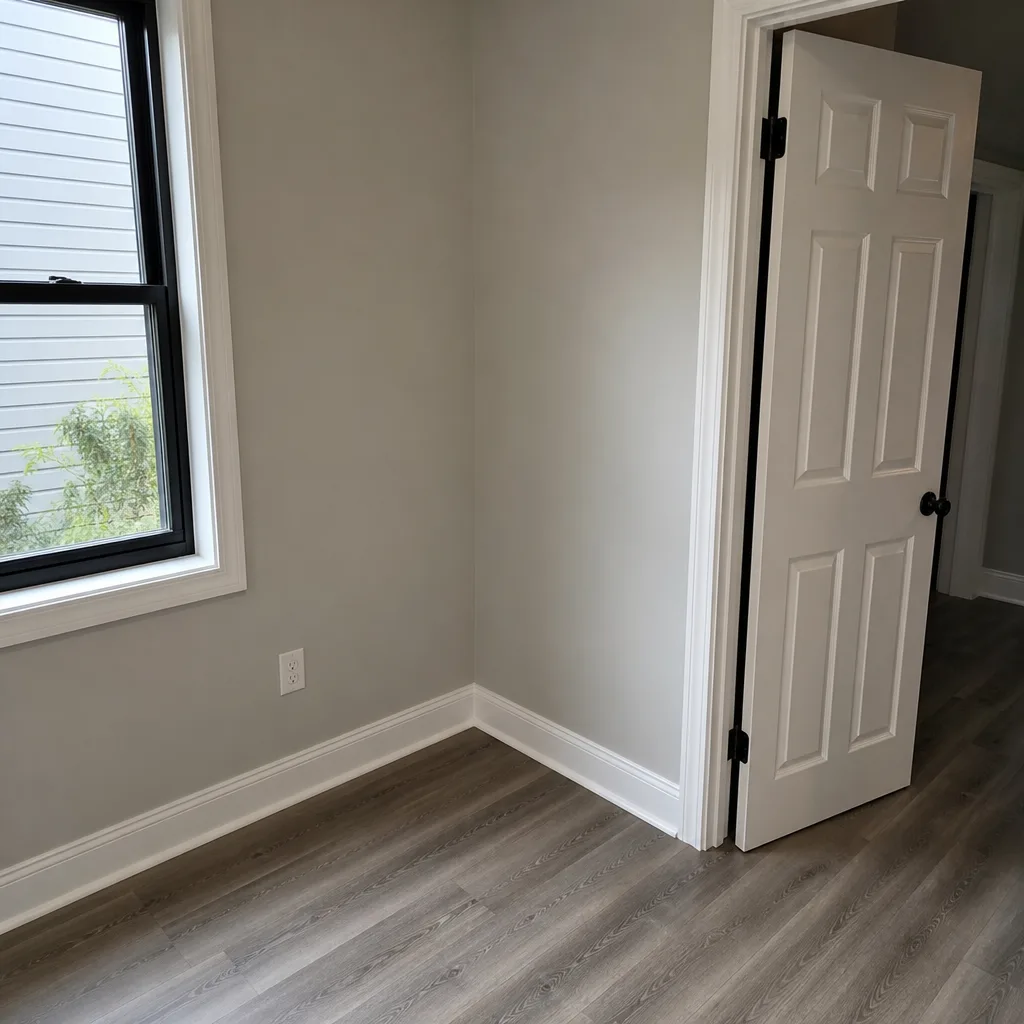 After
AfterDamage Restoration Warning Signs: A Jersey City Homeowner’s Reference Guide
A musty odor isn’t a warning sign. It’s a lagging indicator that active moisture has already been present long enough to support microbial growth, which means the clock on your insurance claim may have started weeks before you noticed anything. In Jersey City, where row houses share party walls and brownstones sit on century-old foundations, the gap between when damage begins and when a homeowner recognizes it is where claims get denied. This guide pairs every visible warning sign with the specific measurable indicator that documents it, and explains what that reading tells an adjuster about when the damage began, whether it’s covered, and what you need to photograph before calling anyone. For seasonal damage restoration care in Jersey City, regular monitoring prevents surprises.
Quick Answer
Water damage warning signs in Jersey City homes fall into three measurable categories: immediate indicators (standing water, active dripping, visible staining with moisture content above 16% in wood), developing indicators (efflorescence with active bloom, relative humidity sustained above 60% for 48+ hours, musty odors with airborne mold spore counts exceeding outdoor baseline), and structural indicators (differential settlement cracks versus moisture-movement cracks in party walls, subfloor deflection above 1/360 span). Document each with a dated photo and a moisture meter reading. Under standard New Jersey homeowner policies, damage reported within 14 days of discovery with contemporaneous documentation typically preserves coverage; damage left unreported after visible signs appear risks denial under the “known loss” doctrine.
Table of Contents
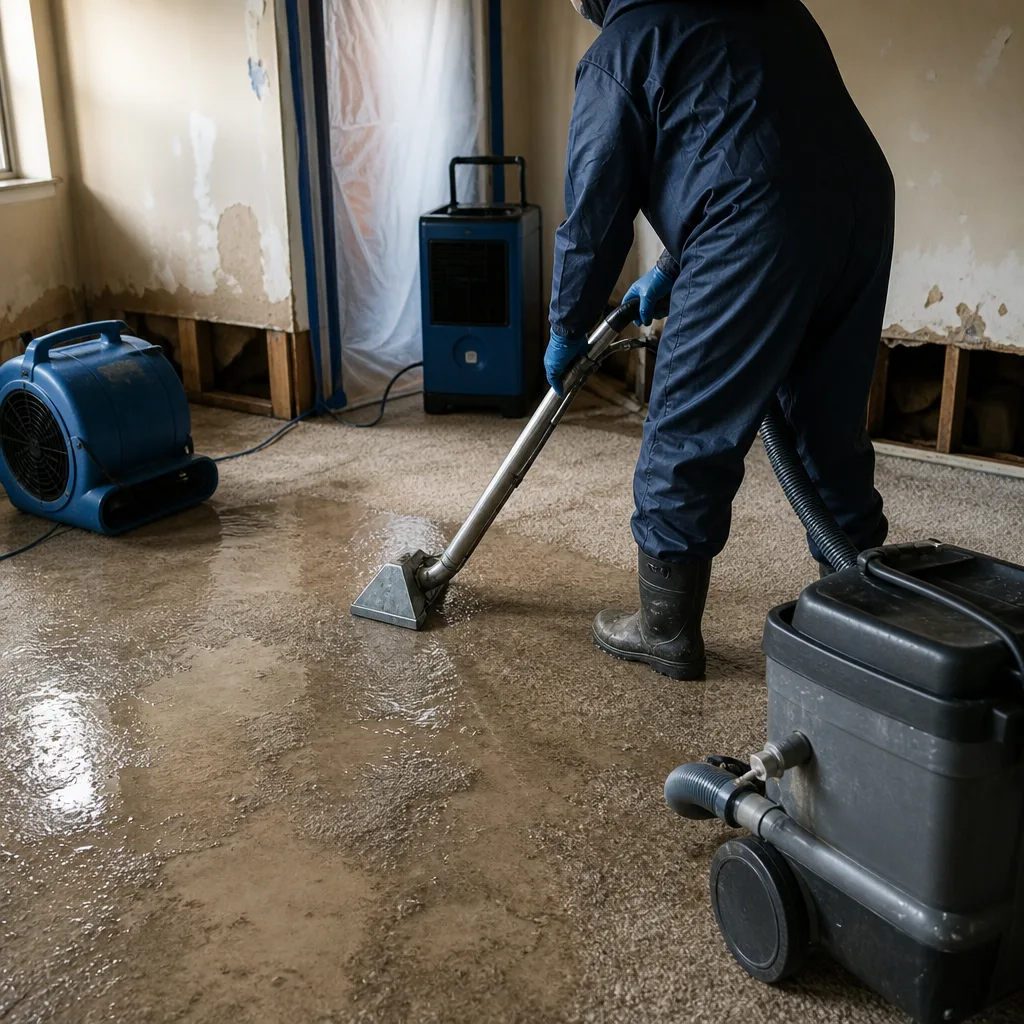
- How to Read Moisture: The Numbers That Determine Your Claim
- Efflorescence as a Timeline: What Your Basement Walls Are Actually Telling You
- Row House and Brownstone Warning Signs Specific to Jersey City
- The Documentation Habit That Turns a Warning Sign Into Usable Evidence
- Which Warning Signs Trigger the Claims Clock Under NJ Homeowner Policies
- Fire and Smoke Damage Warning Signs That Appear Before You Smell Anything
- Mold Remediation Thresholds: When a Smell Becomes a Scope
- Storm and Disaster Indicators in Jersey City’s Flood-Prone Zones
BeforeAfterHow to Read Moisture: The Numbers That Determine Your Claim
Every water damage claim hinges on one question: when did this start? Adjusters use moisture readings to answer it. If you understand the thresholds, you can document the answer yourself.
Wood moisture content (%MC) is measured with a pin-type meter. In Jersey City’s climate, baseline seasonal moisture in framing lumber runs 10-14% in winter, 12-16% in summer. A reading above 16% in structural wood indicates active water intrusion, not ambient humidity. A reading above 20% suggests the intrusion has been present long enough to risk mold colonization, which typically begins at 48-72 hours of sustained moisture above 16% on organic surfaces. When we arrive at a Jersey City brownstone and find oak flooring at 22% MC in a room with no visible leak, we know we’re looking at a chronic condition, not a fresh pipe break. The adjuster knows it too.
Airborne relative humidity (RH) tells a different story. Normal indoor RH in Jersey City ranges 40-55% in heated months, 50-65% in cooling months. Sustained RH above 60% for more than 48 hours creates conditions where mold can colonize dormant spores. But here’s what competitors miss: RH above 70% with no visible water source typically indicates a hidden reservoir, a drying system failure, or an HVAC imbalance. We document RH with a thermo-hygrometer, and we log the vapor pressure differential, the difference in moisture pressure between the affected room and an unaffected control room. A differential above 1.5 kPa tells us moisture is actively moving into that space from somewhere, not just lingering from a past event.
For drywall and plaster, we use a non-invasive meter that reads up to 3/4 inch deep. Drywall above 1.0% moisture content by weight is considered elevated; above 5% is saturated and requires removal. In Jersey City’s pre-war housing stock with horsehair plaster, the thresholds differ: plaster can read “elevated” at 2-3% without structural compromise, but readings above 8% with accompanying delamination indicate the scratch coat has separated from the brown coat, a repair that exceeds simple drying.
Key moisture thresholds to document:
- Wood framing and flooring: 10-14% baseline winter, 12-16% baseline summer; >16% = active intrusion; >20% = mold risk zone
- Relative humidity (sustained 48+ hours): >60% = mold colonization possible; >70% = hidden reservoir likely
- Vapor pressure differential: >1.5 kPa = active moisture movement into space
- Drywall: >1.0% = elevated; >5% = saturated, removal required
- Horsehair plaster (Jersey City brownstones): >8% with delamination = structural repair needed
The documentation that matters: a photo of the meter display showing the reading, the date stamp, the room location, and the material tested. One reading means little. A reading paired with a visible sign and a dated photo means everything to an adjuster reconstructing a timeline.
Efflorescence as a Timeline: What Your Basement Walls Are Actually Telling You
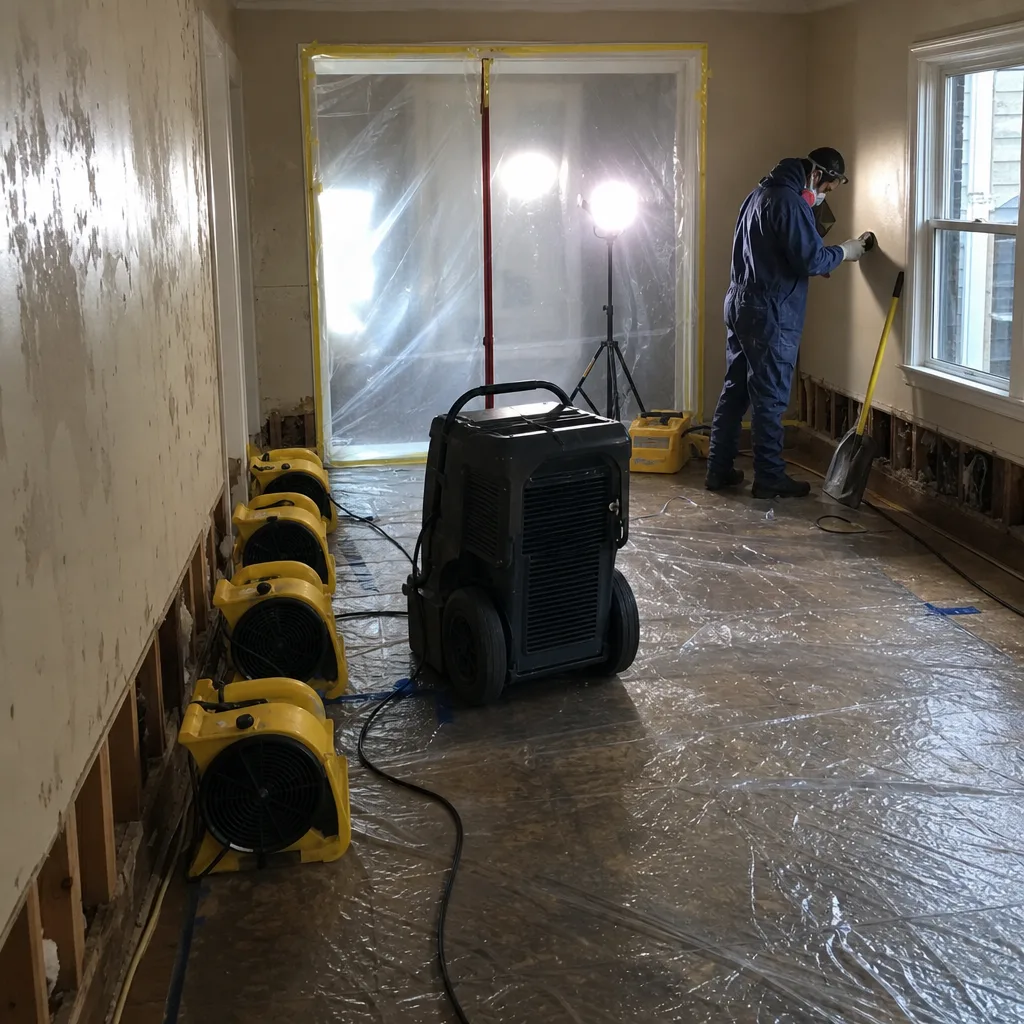
Efflorescence, the white crystalline deposit on masonry surfaces, is one of the most misread warning signs in Jersey City basements. Homeowners see white powder and assume current water intrusion. Adjusters see white powder and need to know which kind to determine coverage.
Crystalline efflorescence, hard and chalky, indicates historical moisture. The water that carried soluble salts to the surface evaporated long ago, leaving minerals behind. This is cosmetic, not active damage, and standard policies typically exclude it from coverage. Active white bloom, soft and powdery when touched, indicates current moisture movement through the masonry. The salts are still migrating; water is still present. This is active damage, and the date of your documentation becomes the date of discovery.
In Jersey City’s low-lying neighborhoods, particularly those built on former marshland, we see a third pattern: recurring efflorescence that appears after heavy rain and disappears in dry periods. This indicates cyclical hydrostatic pressure, not a one-time event. For insurance purposes, this pattern matters enormously. A one-time sump pump failure during a declared storm event is typically covered. Chronic hydrostatic pressure through a deteriorating foundation is maintenance, not peril, and is excluded. The difference is documented in your photos: dated images showing bloom presence after rain events, absence during dry spells, over a period of months.
Here’s how to read your basement wall:
- Touch the deposit. Crystalline and hard? Historical. Soft and powdery? Active. Wet or damp to touch? Current intrusion.
- Photograph with scale. Include a ruler or coin for size reference, and a newspaper date or phone timestamp.
- Check adjacent areas. Efflorescence at the base of the wall suggests rising damp; at mid-wall suggests a compromised waterproofing membrane; at the top near the sill suggests gutter or grading failure.
- Measure with a moisture meter. Masonry above 5% moisture content with active bloom confirms current water movement.
In our work across Jersey City, from the Heights to Bergen-Lafayette, we’ve found that homeowners who document efflorescence patterns seasonally, even when no active leak is present, build the timeline that protects them when a covered event finally overwhelms a compromised system. The Haven Standard, Clause 1, requires a written price before work begins; but before that price can be written, someone has to determine whether the work is covered. Your documentation makes that determination possible.
Row House and Brownstone Warning Signs Specific to Jersey City
Jersey City’s housing stock, built largely between 1870 and 1930, presents warning signs that don’t appear in suburban construction guides. Party walls, shared by adjacent row houses, transmit moisture and structural movement in ways that can be mistaken for active water damage, or vice versa. Knowing the difference saves thousands in unnecessary mitigation and preserves insurance coverage for actual damage.
Differential settlement at party walls shows as vertical cracks, typically stair-stepped in brick or straight in plaster, widest at the top and narrowing toward the floor. These cracks are structural, not moisture-related, and widening over months or years. They don’t change with rain events. Moisture-movement cracks, by contrast, appear suddenly after storms or pipe failures, often horizontal or diagonal, and may show staining or efflorescence. The critical documentation: measure crack width with a crack monitor, a simple device that records movement over time. Structural cracks widen slowly, 1/16 inch or less per year. Moisture-related cracks can open 1/8 inch or more in a single event.
In brownstones with brownstone facades, the stone itself is a warning system. Brownstone is a soft, porous sandstone that acts as a wick. When we see spalling, the flaking or peeling of the stone surface, we check whether the spalling is dry and powdery, indicating historical freeze-thaw damage, or dark and damp, indicating current moisture behind the facade. The repair differs by an order of magnitude: dry spalling requires repointing and coating; damp spalling requires identifying and eliminating the moisture source before any surface repair, or the stone will continue to deteriorate.
Subfloor conditions in Jersey City row houses reveal another local pattern. Original pine subfloors, often 3/4 inch thick and laid on sleepers over dirt cellars, deflect noticeably when moisture content rises above 18%. A homeowner feels “springy” floors and assumes structural failure. In fact, the wood has swollen and the fasteners have loosened. If caught below 20% MC, the subfloor can be dried in place with Injectidry panel systems and desiccant dehumidification. Above 22% MC for more than 72 hours, we typically find mold on the underside and recommend removal. The difference is a moisture reading and a dated photo, taken before anyone starts work.
Jersey City’s freeze-thaw cycle, more severe than Manhattan’s due to less heat-island effect in residential neighborhoods, creates another specific indicator: exterior mortar joints that deteriorate from the inside out. Sound mortar tapped with a hammer returns a sharp ring; deteriorated mortar sounds dull. When the deterioration is concentrated at the interior face of the wall, not the exterior, it indicates moisture migration from inside to out, a pattern associated with interior humidity problems or leaks, not weather exposure. We document this with hammer tests and photo sequences, because the repair scope, and its coverage, depends on the moisture direction.
The Documentation Habit That Turns a Warning Sign Into Usable Evidence
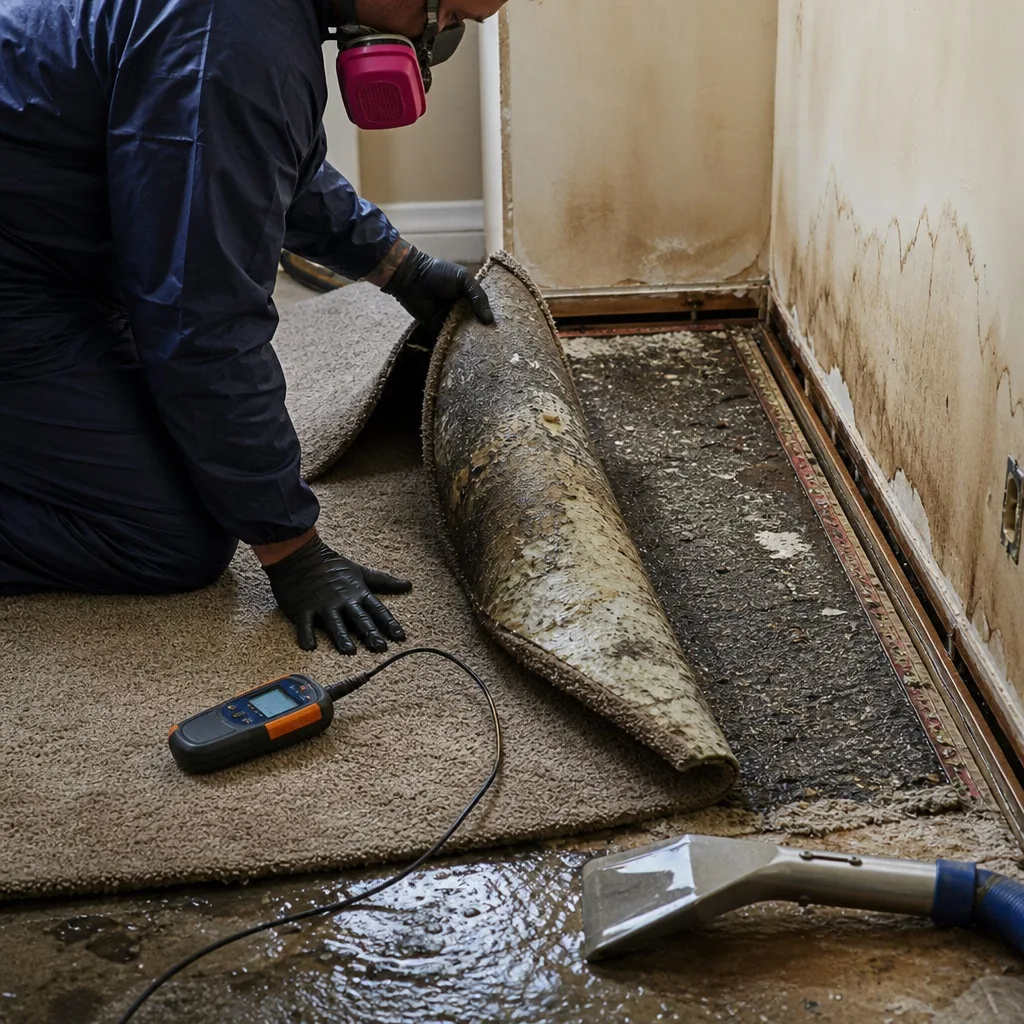
A dated photo proves you saw something. A moisture reading proves what it meant. Together, they create evidence that survives an adjuster’s review, a coverage challenge, and if necessary, a court’s examination. Neither alone is sufficient.
The documentation protocol we teach Jersey City homeowners is simple and takes less than ten minutes:
- Photograph the warning sign in context. Wide shot showing the room, the wall, the relation to windows and doors. Then a close-up with a ruler or coin for scale. Then a detail of any texture, color change, or material failure.
- Take a moisture reading of the affected material and an unaffected control. The control reading proves the elevation is localized, not ambient. Record both numbers in the photo frame or a dated note.
- Photograph the meter display with the reading visible. Include your foot, a newspaper, or a phone showing the date. This prevents later challenges that the reading was taken elsewhere or at another time.
- Write a one-sentence description: “March 15, 2024, 9:15 AM, northwest basement wall, 18% MC in pine sill, 12% MC in adjacent stud, active efflorescence bloom present.”
- Store in cloud backup with date in filename. Not on a single phone. Not in a drawer. Evidence that can’t be produced is evidence that doesn’t exist.
Why this matters for insurance: New Jersey’s standard homeowner policy form HO-3 requires “prompt” reporting of damage, typically interpreted as within 14 days of discovery. But “discovery” is a legal term. It means when a reasonable person knew or should have known of the damage. A photo of a stain you noticed six months ago but didn’t document undermines your claim that you “just discovered” active mold today. A photo with a moisture reading from today, showing 24% MC in wood that should read 14%, proves today’s discovery was genuine and the damage was concealed.
At Water Damage Restoration in Jersey City, we provide documented photo records on every visit as a standard deliverable, never an upsell. But the most powerful documentation is the homeowner’s own, created before any restoration company arrives. It establishes the baseline that all subsequent documentation must match or explain.
The equipment we deploy, Dri-Eaz and Phoenix dehumidifiers, XPOWER air movers, and Injectidry drying systems, produces psychrometric data, temperature, relative humidity, and vapor pressure, that we log daily. But that data documents the drying process. Your initial documentation documents the damage itself. Both are necessary. Neither replaces the other.
Which Warning Signs Trigger the Claims Clock Under NJ Homeowner Policies
Not every warning sign starts the clock. Understanding which do, and which don’t, shapes what you document and when you call.
Under standard New Jersey homeowner policies and the “known loss” doctrine, a loss is “known” when the insured discovers, or through reasonable diligence should have discovered, facts indicating that a covered peril has caused damage. The clock starts at discovery, not at the peril event. This distinction is where Jersey City homeowners lose coverage.
Warning signs that trigger the claims clock:
- Visible water staining with elevated moisture content. A stain alone might be old. A stain with >16% MC in adjacent wood is active damage. Document both; report within 14 days.
- Musty odor with airborne mold spore counts above outdoor baseline. The odor indicates microbial growth; the spore count confirms it. This is discovered damage, not impending damage. The clock is running.
- Active efflorescence bloom. Soft, powdery, or damp deposits confirm current moisture movement. Historical crystalline deposits do not trigger the clock unless they mask active bloom beneath.
- Sudden crack appearance after a storm or pipe event. Document the event date, the crack appearance date, and any moisture readings. The peril date and discovery date may differ; both matter.
- HVAC system failure with visible moisture in ductwork. Condensation in ducts after a cooling season startup indicates a system problem that has caused or will cause damage. The clock starts when visible moisture is observed.
Warning signs that do NOT trigger the claims clock, but should still be documented:
- Historical efflorescence, dry and crystalline. This is maintenance, not covered damage. Document it to prove it was not active when you purchased or when a covered event later occurred.
- Cosmetic paint failure without elevated moisture. Peeling paint in a bathroom with normal RH and no substrate moisture is ventilation or application failure, not water damage.
- Long-standing structural cracks without moisture. Differential settlement is not a covered peril. Document crack width over time to distinguish it from sudden moisture-related cracking.
The critical action: when a warning sign triggers the clock, document it and report it within 14 days. Delay beyond this period, with visible signs present, gives the insurer a “known loss” defense. We’ve reviewed competitor estimates where homeowners delayed 60, 90, 120 days, and the coverage fight consumed more resources than the repair. See our DIY vs Professional Damage Restoration: The Jersey City Homeowner’s Decision Guide to avoid costly delays. Haven Standard, Clause 1, requires a written price before work begins; but we can’t write a price for work that isn’t covered until we know whether it’s covered. Your prompt documentation and reporting makes that determination possible.
Fire and Smoke Damage Warning Signs That Appear Before You Smell Anything
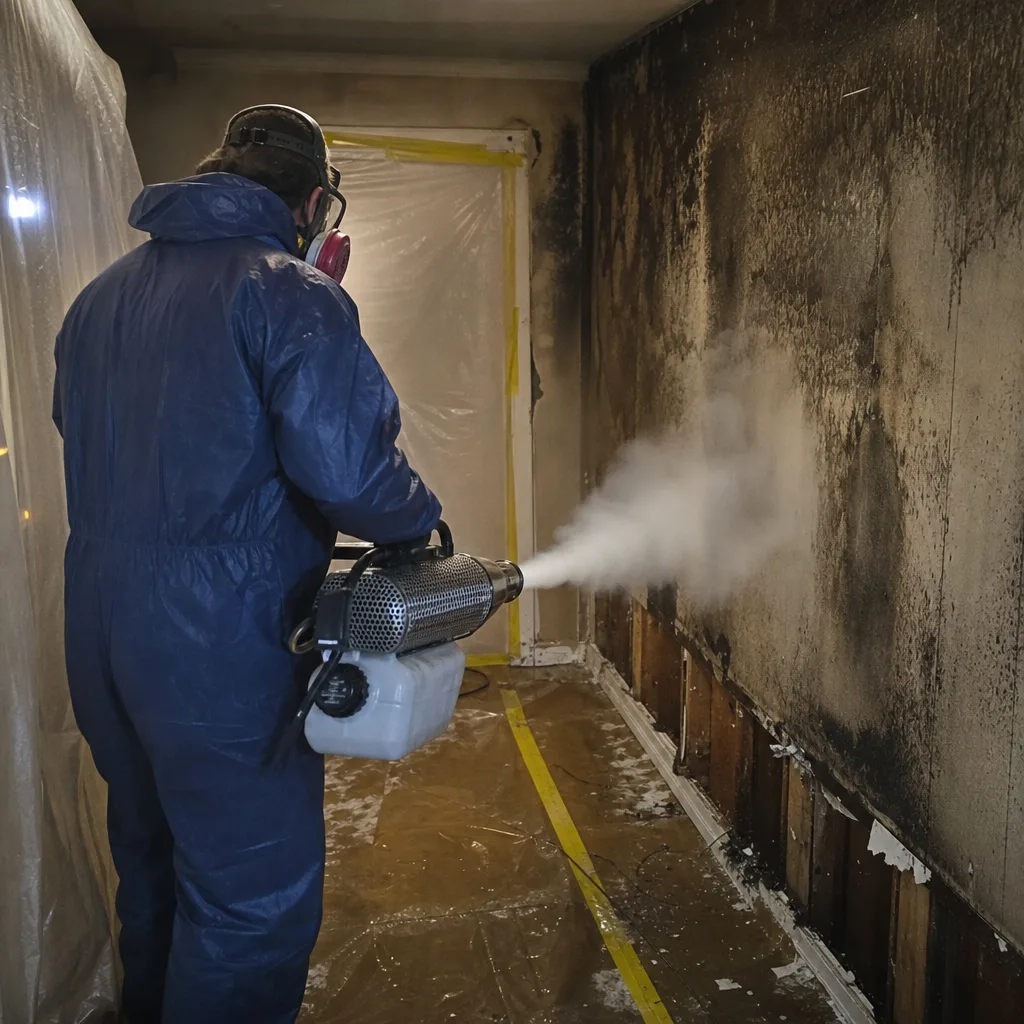
Smoke damage is invisible before it’s olfactory. The particulate that causes permanent odor and corrosion is 0.4 to 2.5 microns, smaller than mold spores, and deposits on surfaces hours before any smell is apparent. In Jersey City’s dense housing, where a kitchen fire in one unit can affect three adjacent row houses through shared attic spaces, early detection prevents secondary damage that exceeds the original fire loss.
The warning signs that precede odor:
- Tarnishing of brass fixtures and door hardware. Hydrogen chloride and sulfur dioxide in smoke react with copper alloys within 24-48 hours, producing a dark film before any smell is noticeable. Photograph with date; this is evidence of exposure timing.
- Corrosion at metal junctions. Galvanized steel ductwork, electrical outlet screws, and HVAC components show rust-colored oxidation at joints. This indicates acid gas exposure and predicts where wiring and systems will fail if not treated.
- Staining at ceiling penetrations. Smoke rises and follows pressure differentials through the smallest openings. A faint yellow-brown halo around recessed light fixtures, smoke detectors, or attic access panels indicates smoke migration before visible soot accumulation.
- Sticky residue on horizontal surfaces. Wet smoke from smoldering fires, common in polyester and synthetic furnishings, deposits a tacky film that attracts dust. It feels slightly greasy before it looks dirty.
In Jersey City row houses, the critical inspection point is the party wall attic. Fires in adjacent units can deposit smoke particulate in shared attic spaces without any visible damage to the occupied rooms below. We inspect with boroscopes and document with photo records, because the damage is real, the odor will develop, and the source, a neighbor’s fire, is a covered peril under most policies if documented promptly.
Fire & Smoke Damage Restoration in Jersey City requires specialized cleaning agents and thermal fogging equipment, but the first step is always documentation of the exposure pattern. The particulate type, wet smoke versus dry smoke versus protein smoke, determines the cleaning protocol. Wet smoke requires solvent-based cleaners; dry smoke responds to dry sponges and HEPA vacuuming; protein smoke from kitchen fires needs enzymatic breakdown. Misidentification causes permanent odor. Documentation prevents misidentification.
Mold Remediation Thresholds: When a Smell Becomes a Scope
Mold is the warning sign that generates the most anxiety and the most unnecessary work. Not every musty smell requires full remediation. Not every visible spot is toxic. The threshold that matters is the one that determines health impact, structural damage, and insurance coverage, and it’s measurable.
Airborne mold spore count, measured in colony-forming units per cubic meter (CFU/m³), is the primary metric. In Jersey City’s outdoor environment, baseline spore counts range 500-2,000 CFU/m³ seasonally. Indoor counts below outdoor baseline in the same season typically indicate no active growth, even if a musty odor is present, the odor may be from dormant spores or historical growth. Indoor counts 2-10x outdoor baseline indicate active growth requiring source removal. Counts above 10,000 CFU/m³ or any presence of Stachybotrys, Aspergillus fumigatus, or Chaetomium in occupied spaces trigger remediation regardless of total count.
Surface sampling with tape lifts or swabs identifies species but not extent. Bulk sampling of contaminated material, a piece of drywall or insulation, provides definitive identification and is required by most insurers before remediation approval. We collect these samples and deliver them to independent laboratories; the lab report becomes part of the documented record.
The moisture threshold for mold growth is well established: organic material at >16% MC with relative humidity >60% for 48-72 hours. Below these thresholds, mold cannot colonize. This is why rapid structural drying, using Phoenix LGR dehumidifiers and Dri-Eaz air movers to achieve 40% RH within 24 hours, prevents mold growth after water damage. It’s also why a musty smell in a dry room, RH 45%, MC 12%, does not indicate active mold and should not trigger unnecessary remediation.
At Mold Remediation in Jersey City, we follow IICRC S520 standards and document every remediation with pre- and post-remediation air sampling, moisture logs, and photo records. The Haven Standard, Clause 1, applies: written price before work begins, based on documented scope, not on fear of the unknown.
Jersey City’s humidity, particularly in summer months when Hudson River moisture combines with urban heat island effects, creates conditions where dormant mold can become active quickly. We see this pattern in unventilated basements and in units where HVAC systems were shut down during vacancy. The warning sign is not the humidity itself; it’s the humidity plus organic substrate plus time. Document all three.
Storm and Disaster Indicators in Jersey City’s Flood-Prone Zones
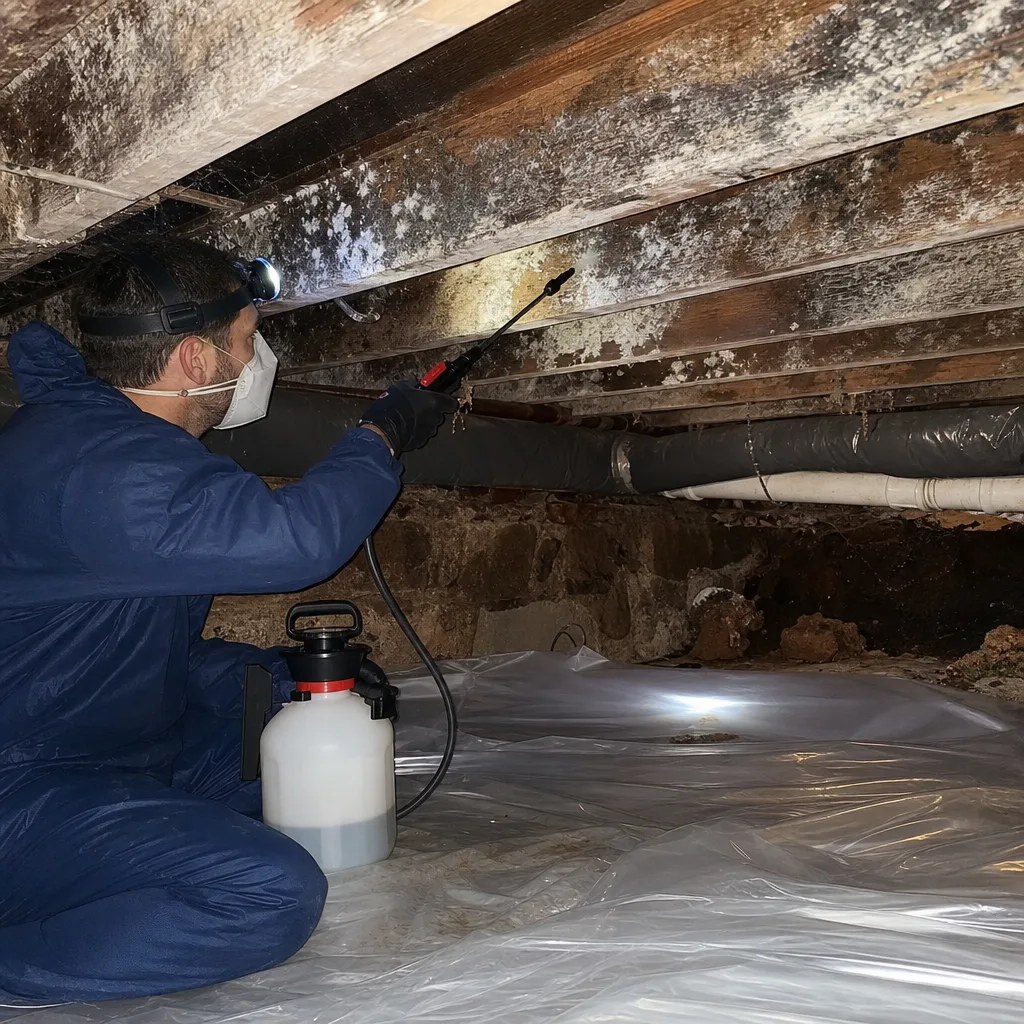
Jersey City’s flood risk is not uniform. FEMA Zone AE areas, including portions of Hoboken border neighborhoods and low-lying sections near the Hackensack River, have base flood elevations that determine building code requirements and insurance obligations. Zone X areas, including much of the Heights, carry lower risk but are not immune to localized flash flooding from overwhelmed combined sewer systems. The warning signs differ by zone, and the documentation requirements differ by insurance type, NFIP versus private flood, versus standard homeowner.
In Zone AE properties, the warning sign to watch is not flooding itself but hydrostatic pressure indicators before flooding: water marks on basement walls that rise seasonally, sump pump cycling frequency that increases before storms, and foundation seepage that appears at predictable tide levels. These patterns indicate that the foundation’s drainage system is at capacity, and a standard storm event will produce interior flooding that could have been prevented with maintenance. NFIP policies exclude damage that could have been prevented by reasonable maintenance; documentation that seepage was chronic and unaddressed can void coverage.
In Zone X areas, the warning sign is typically sewer backup, not overland flooding. Jersey City’s combined sewer system, portions of which date to the late 19th century, overflows during intense rainfall. Backflow preventers, required in some newer construction, fail or are absent in older buildings. The warning sign: gurgling drains, water rising in floor drains during rain, or sewage odor from fixtures. These indicate compromised or absent backflow protection. Standard homeowner policies typically exclude sewer backup unless specific endorsement HO-15 is purchased; documentation of the backup source determines whether coverage applies.
Storm-specific documentation protocol:
- Photograph water levels before removal. The height of water on walls, measured from the floor, determines the extent of material removal required and documents the event severity.
- Sample water type. Clear water from a pipe break, gray water from sump or appliance, black water from sewer or flooding, each requires different remediation and carries different coverage implications. Photograph color, odor, and source.
- Document pre-existing conditions. Photos of basement contents before the storm, stored on cloud backup, prove what was damaged and what was not. Post-storm photos without pre-storm documentation invite disputes.
- Record sump pump and drainage system function. A sump pump that failed during the storm is equipment failure, potentially covered. A sump pump that was never maintained and failed due to switch corrosion is maintenance exclusion. The difference is in your maintenance records.
We deploy B-Air and XPOWER equipment for initial water extraction in storm events, with capacity to handle multiple simultaneous losses across Jersey City. But the equipment only works after documentation establishes the scope. In declared disaster events, FEMA and SBA documentation requirements layer onto insurance requirements; the photo record we create serves all three.
Common Mistakes to Avoid
- Assuming a dry surface means dry structure. We regularly find 28% MC in wall cavities behind drywall that reads normal on the surface. Surface dryness conceals active damage; always verify with invasive or non-invasive metering at depth.
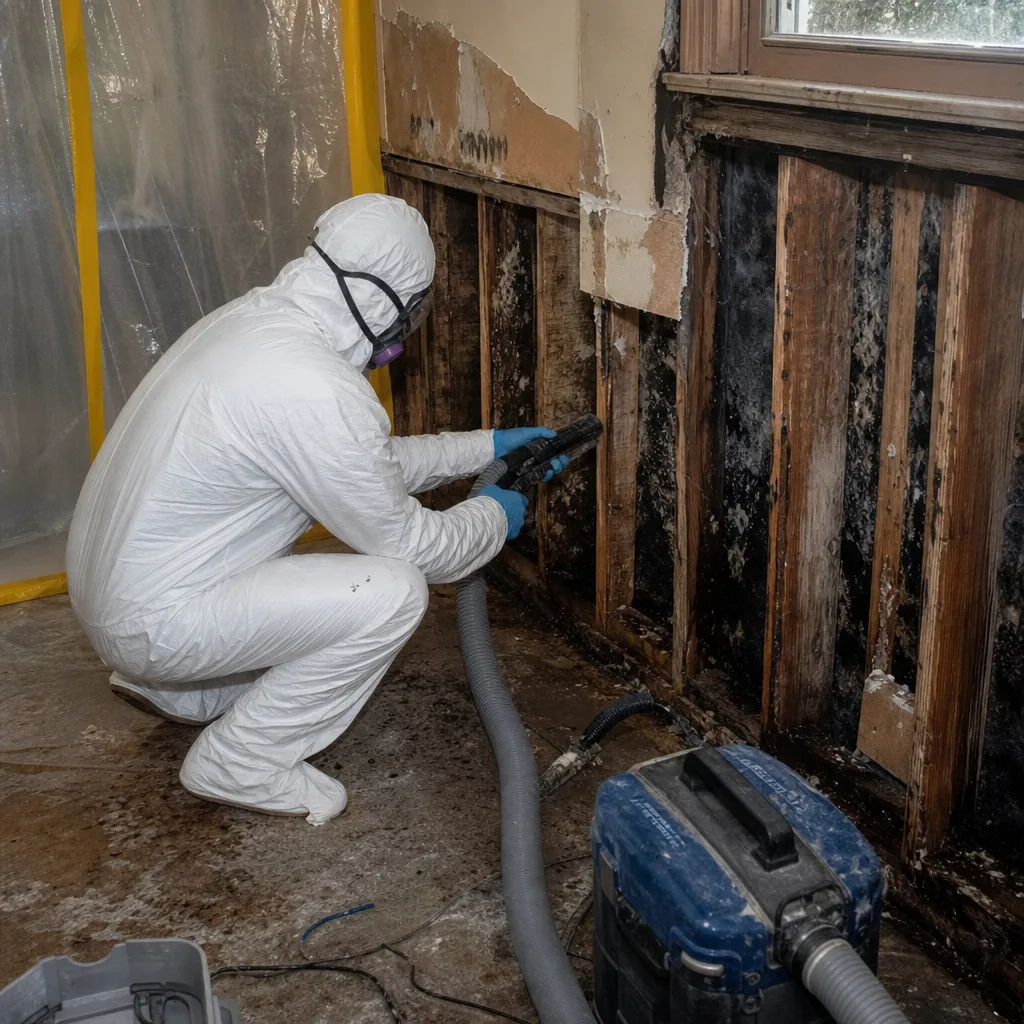
- Cleaning mold with bleach and calling it remediated. Bleach kills surface growth but leaves roots in porous material and adds moisture that fuels regrowth. Proper remediation requires source removal, HEPA containment, and post-remediation verification sampling.
- Delaying documentation to “see if it gets worse.” Under the known loss doctrine, the damage date is your discovery date, not the event date. Waiting worsens the damage and voids coverage. Document immediately; report within 14 days.
- Hiring a contractor who won’t provide a written price before work begins. Haven Standard, Clause 1 exists because scope creep is the most common complaint in restoration. Verbal estimates become invoices 40% higher. Written prices, agreed before work, prevent this.
- Ignoring party wall symptoms because “it’s the neighbor’s problem.” Moisture and smoke move through party walls regardless of ownership. Document symptoms on your side; coverage determination follows, but documentation must precede.
- Discarding damaged materials before photo documentation. Insurers require proof of loss. A bag of moldy drywall on the curb is evidence destroyed. Photo document, then remove, with chain-of-custody records for hazardous materials.
- Accepting a restoration company’s word without documented equipment and standards. Ask for the daily drying log, the psychrometric data, the equipment serial numbers. IICRC, RIA, and IFA standards exist to be cited, not assumed.
When to Call a Professional
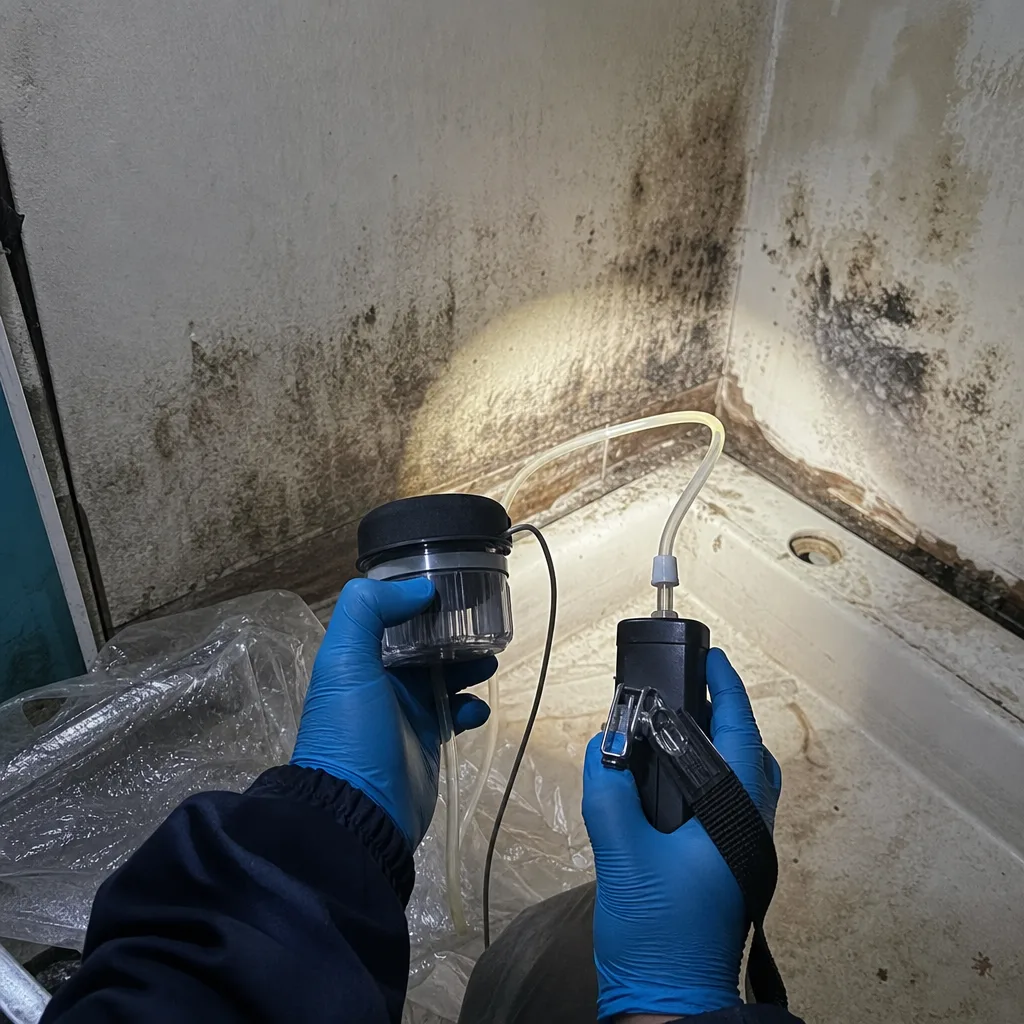
Call when a warning sign is documented but its cause is not identified. Call when moisture readings exceed thresholds and the source is hidden. Call when multiple warning signs appear simultaneously, indicating systemic failure rather than isolated damage. Call when insurance coverage is uncertain and documentation needs to be unimpeachable.
DryMark Restoration Jersey City offers free estimates in Jersey City. Browse our more guides & resources for additional homeowner tips. A trained technician arrives with meters, cameras, and the protocol to document what you have, what caused it, and what it will take to restore it, all in a written scope delivered before any work begins. For emergency situations, live phone coverage is available 24 hours a day, 7 days a week with no voicemail on emergency lines. Call (862) 298-5256.
Frequently Asked Questions
Water damage restoration in Jersey City typically ranges from $3,200 for a localized Category 1 pipe break with limited drywall damage, to $18,000+ for a Category 3 basement flood with full material removal, drying, and reconstruction. Category 2 gray water losses with 2-4 rooms affected generally fall in the $7,500-$14,000 range. Every job is quoted in writing before work begins under Haven Standard, Clause 1, with no scope additions once the crew is inside. Call (862) 298-5256 for an exact quote, estimates are free.
Mold remediation is covered when it results from a covered peril, such as a sudden pipe break or storm damage, and is reported promptly with documentation. It is typically excluded when it results from long-term moisture, maintenance failure, or humidity control neglect. The key factor is the documented date of discovery and the moisture timeline: mold from a leak reported within 14 days of discovery is usually covered; mold from a leak visible for months is usually denied under known loss. We provide free second opinions on any competitor’s written estimate to review coverage questions.
For emergency water and storm damage, live dispatch answers every call 24 hours a day, 7 days a week, with no voicemail trees. Response time depends on current storm volume and your location within Jersey City, but we maintain capacity for multiple simultaneous losses. For reconstruction and non-emergency work, we schedule within 48-72 hours of scope approval, because that work requires written pricing and material ordering under Haven Standard, Clause 1. Call (862) 298-5256 to confirm current availability.
Surface mold on non-porous materials, tile or glass, in areas under 10 square feet, can sometimes be addressed with proper PPE and cleaning agents. Mold on porous materials, drywall, insulation, carpet, or any area exceeding 10 square feet, requires professional remediation with containment and air filtration to prevent cross-contamination. The health risk is not the visible mold; it’s the airborne spores released during disturbance. We provide documented photo records and post-remediation air sampling to verify safe conditions.
We coordinate directly with adjusters as part of our standard service, providing the documented photo records, daily drying logs, and written scopes that turn restoration invoices into payable claims. You remain the policyholder and must authorize all communications, but our documentation-first approach, developed by a former claims adjuster, means we speak the language adjusters need. Direct adjuster coordination is included; it’s not an upsell.
Consumer pin-type meters, $30-80, measure moisture content in wood accurately but only at the penetration depth. Professional meters add non-invasive scanning to 3/4 inch depth, thermo-hygrometry for air readings, and psychrometric calculation for vapor pressure differential. The critical difference is not the meter; it’s the protocol, where to measure, what control to establish, how to document, and how to interpret readings in the context of insurance requirements. We train homeowners on basic documentation but recommend professional assessment for any reading above 16% MC in structural materials.
The Bottom Line
Warning signs are not alarms. They are data points that require measurement, documentation, and interpretation. In Jersey City’s specific building stock and insurance environment, the homeowner who documents moisture readings, photographs efflorescence patterns, and records crack widths before calling anyone is the homeowner whose claim proceeds without dispute. The Haven Standard was built on this principle: evidence before action, written price before work, documented result before invoice. Every warning sign in this guide can be measured. Every measurement can be documented. Every documentation habit protects your investment and your coverage.
Written by Alicia Brennan, Owner at DryMark Restoration Jersey City, serving Jersey City since 2011.