

Free visual inspection and a written scope of work before any mitigation begins - photos, moisture readings, and drying logs go in your claim file
The scope we write is the scope we bill. Anything new gets shown to you, in writing, before we touch it.
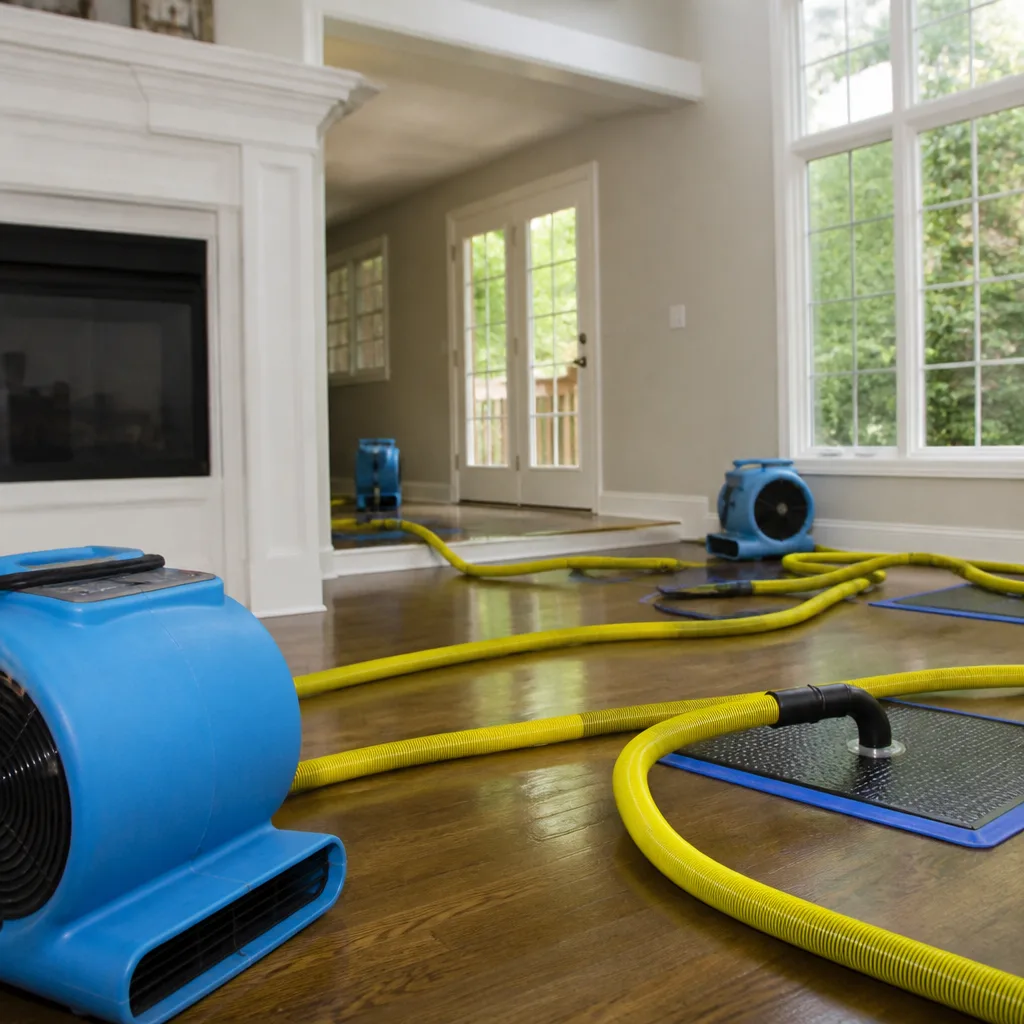
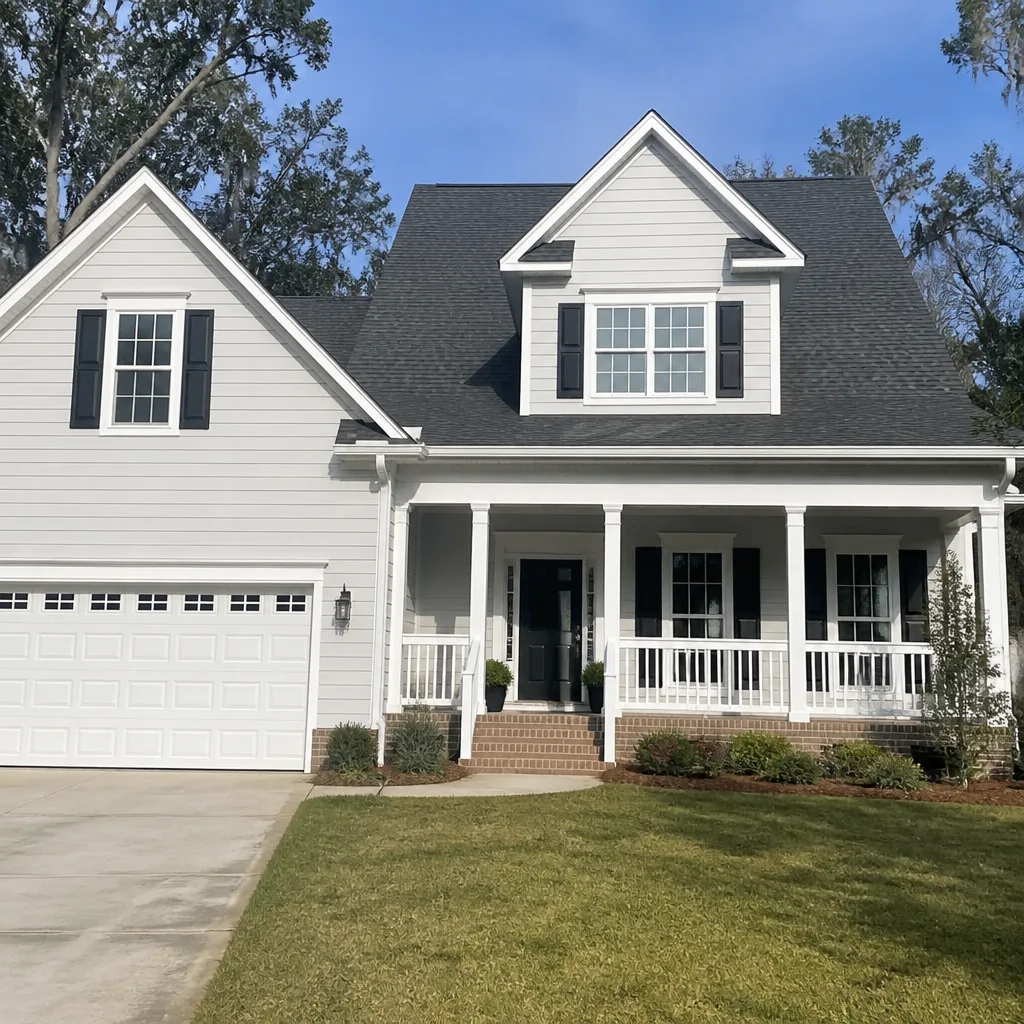
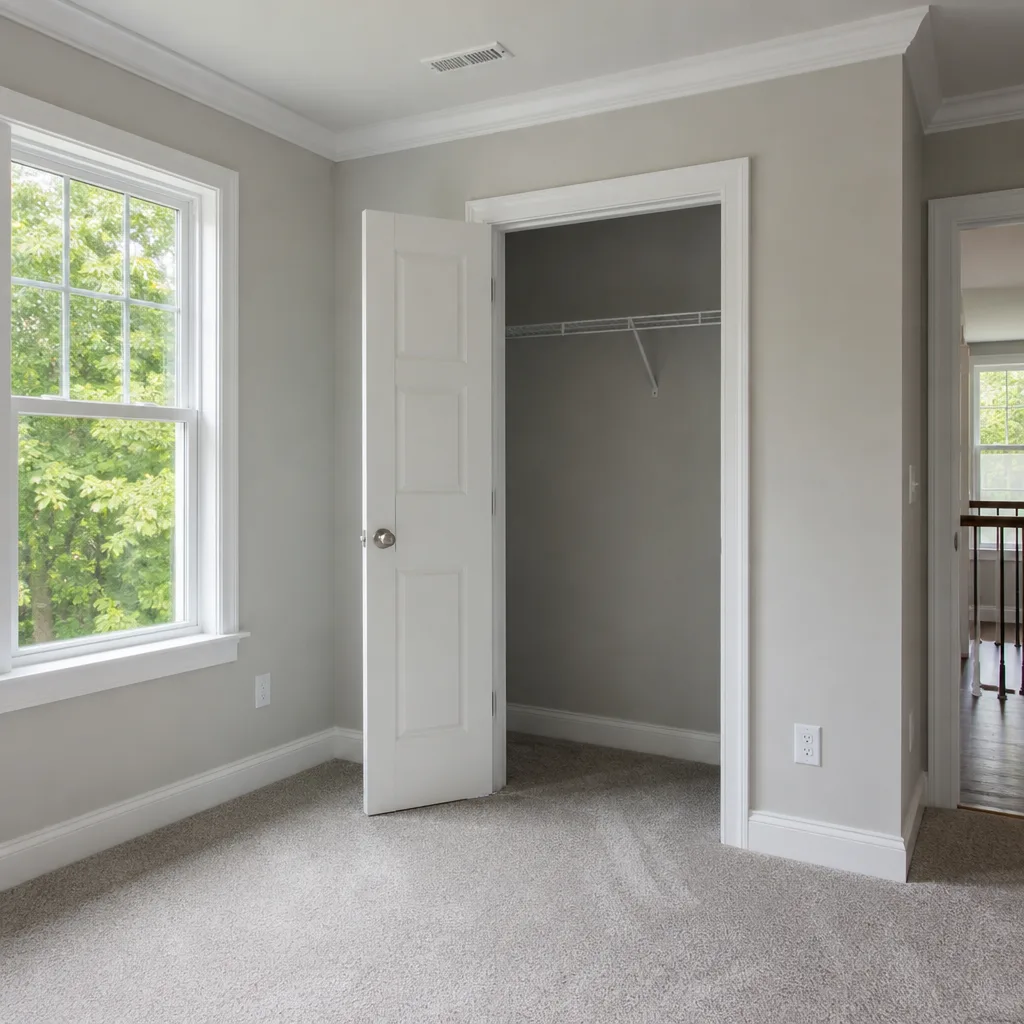
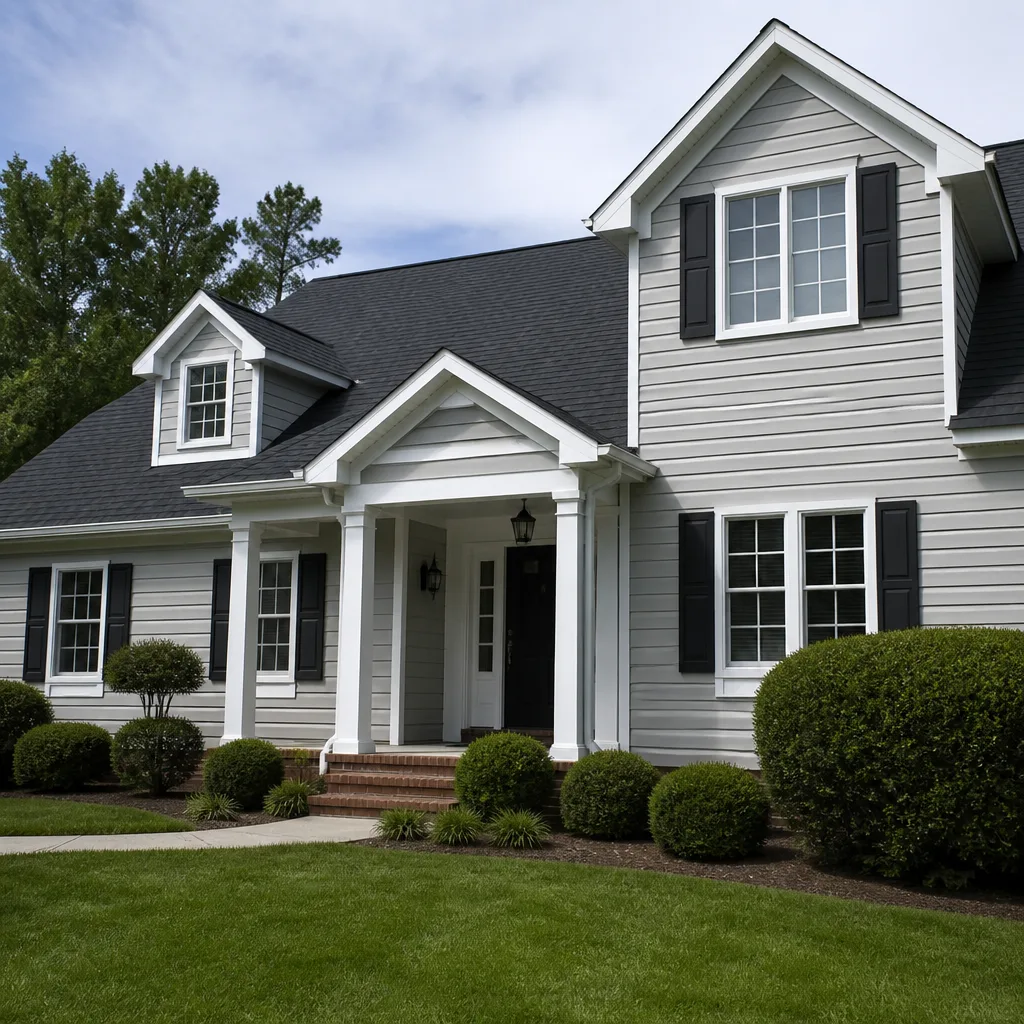
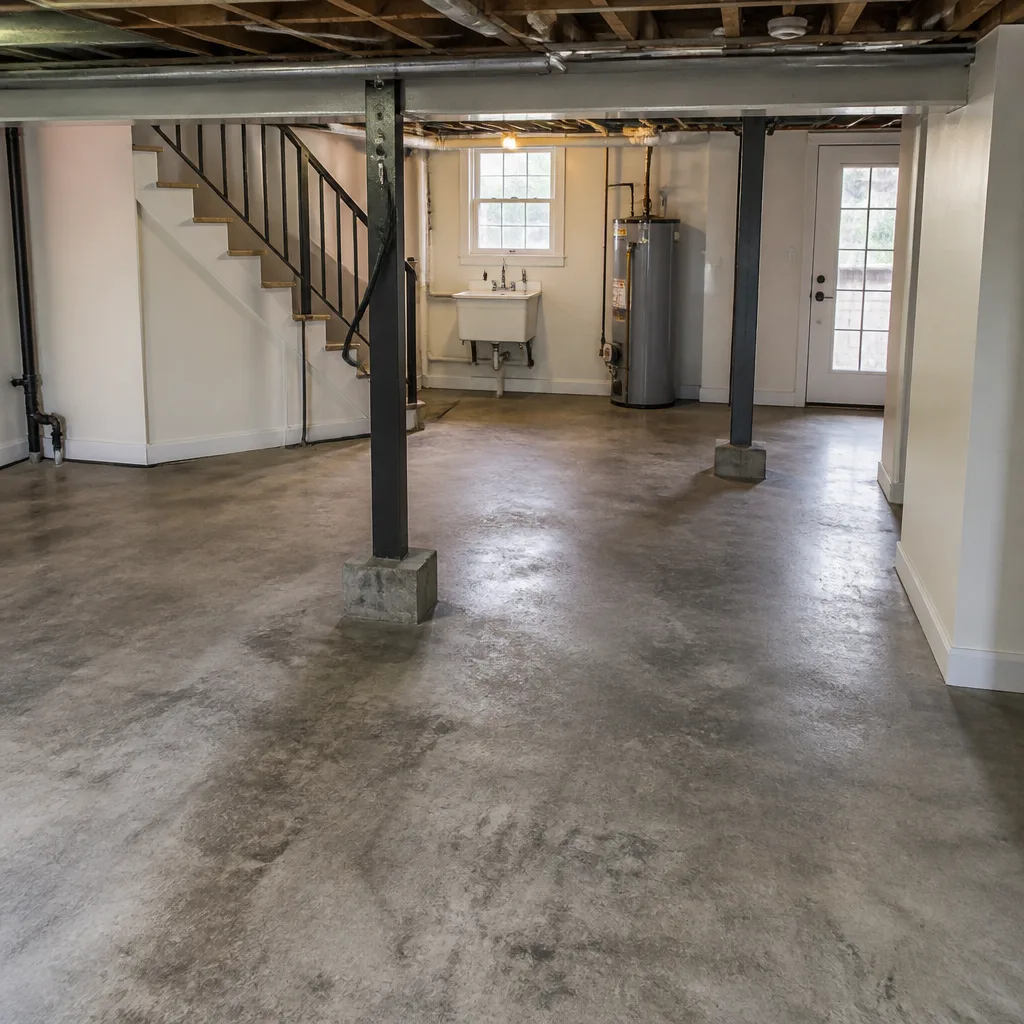
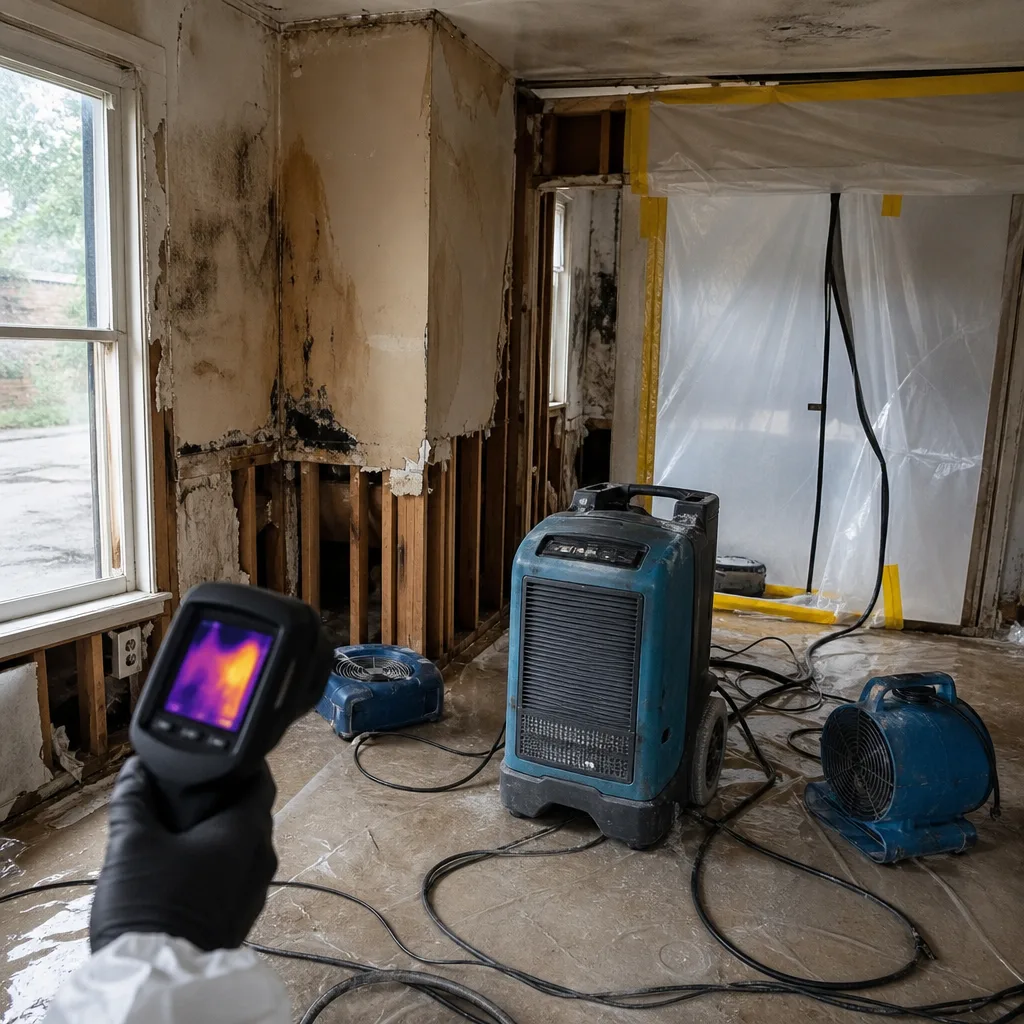 Before
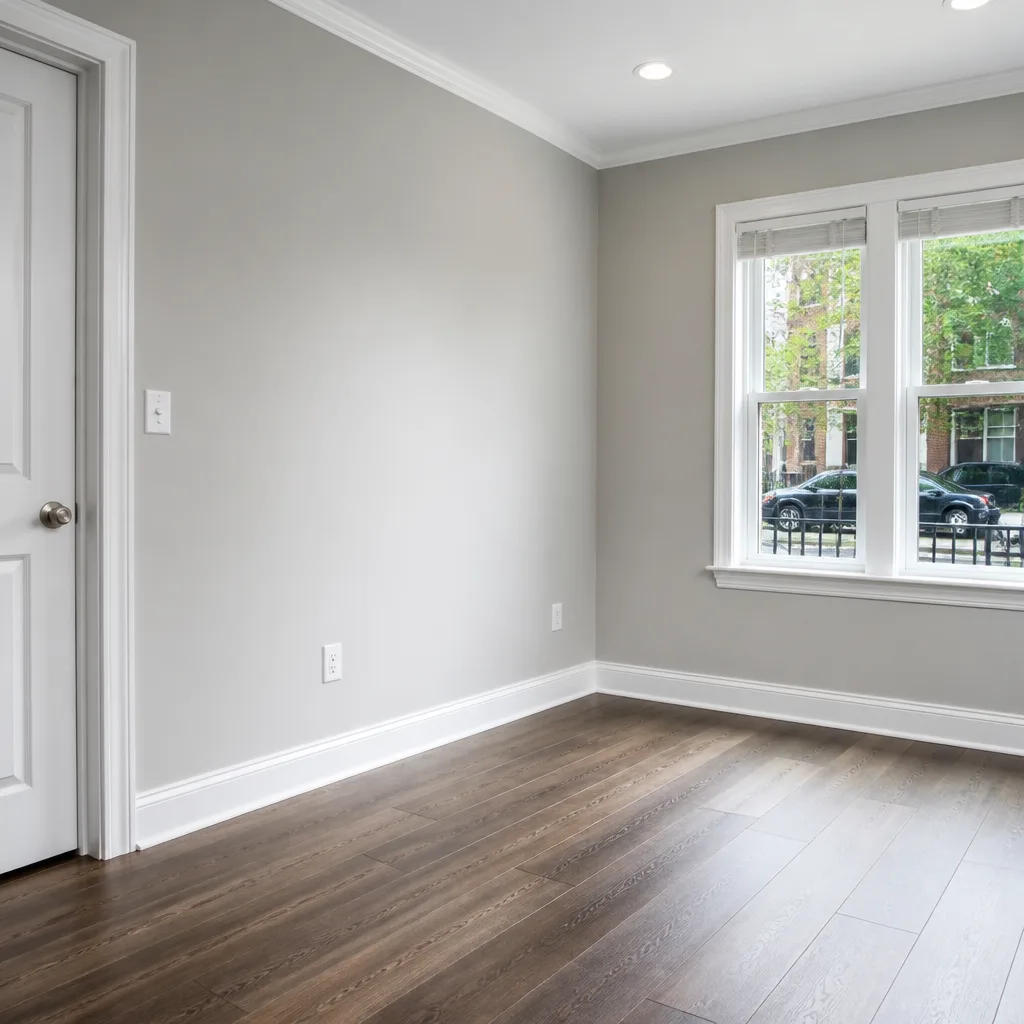 After
After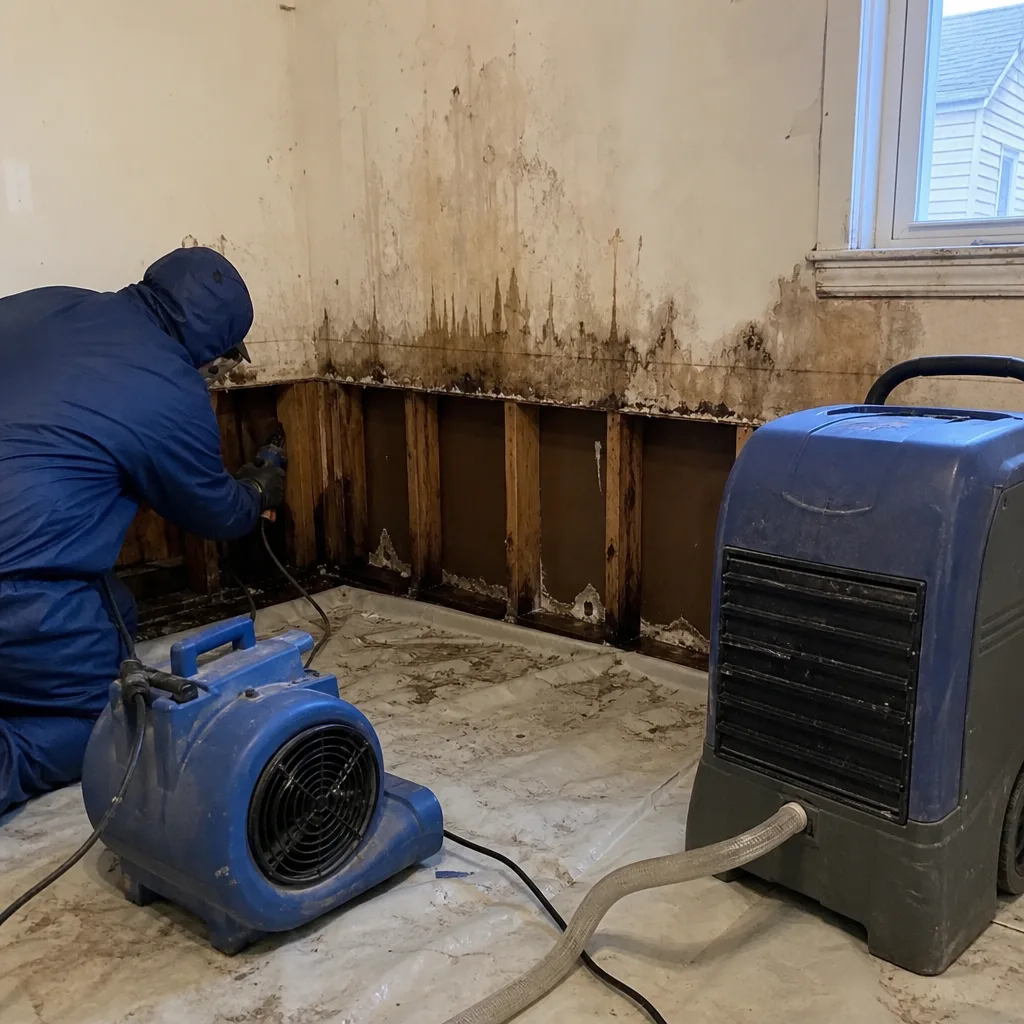 Before
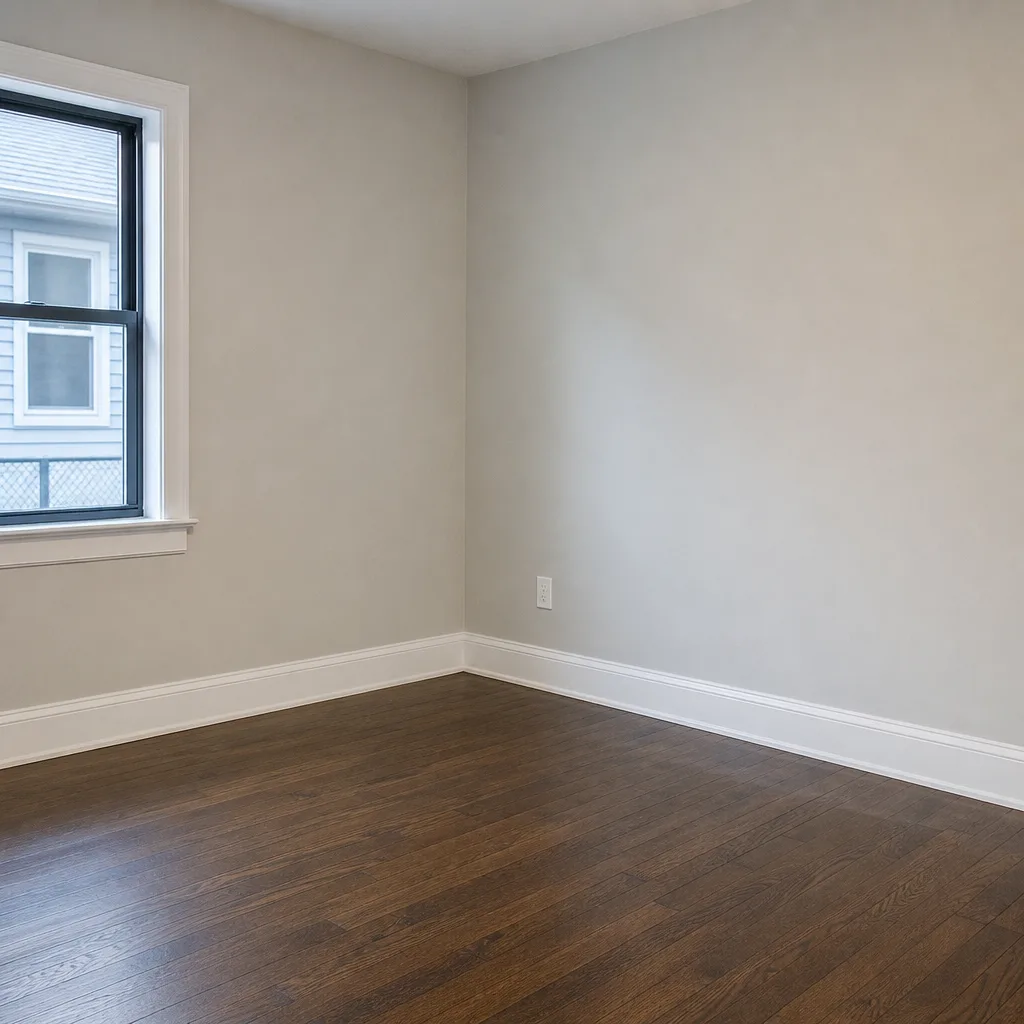 After
After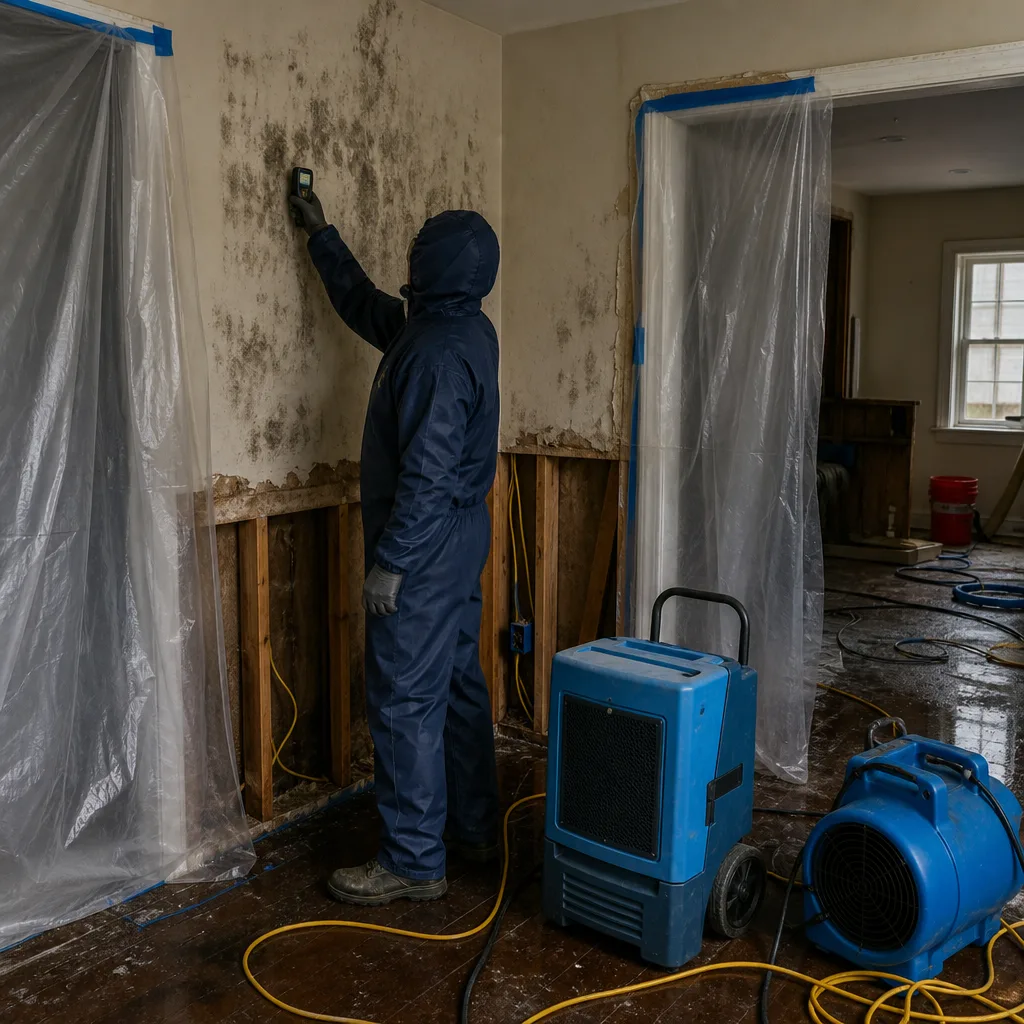 Before
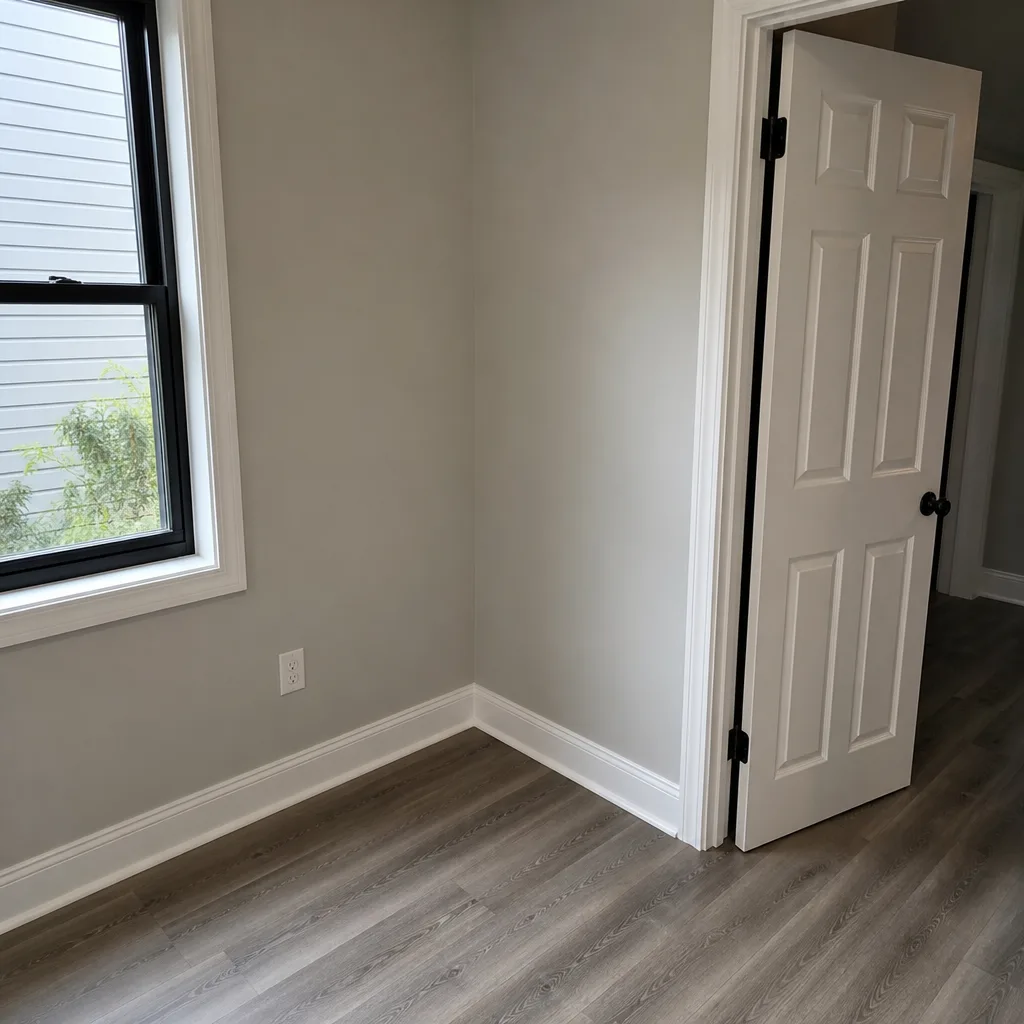 After
After24/7 Emergency Mold Remediation in Kearny
Call (862) 298-5256 now and a live person answers, 24 hours a day, 7 days a week. Crews serving Kearny are dispatched within minutes of your call, and we arrive with containment materials, HEPA filtration, and moisture-detection equipment already loaded. The first hour matters because mold colonization in porous materials begins within 24 to 48 hours of water intrusion, and in Kearny’s low-lying Meadowlands blocks, that clock often starts after the storm has already passed. We provide a free visual inspection on arrival, document what we find with photos, and give you a written scope and price before any work begins - Haven Standard, Clause 1.
Understanding Mold Remediation Severity in Kearny Properties
Mold severity in Kearny is graded by affected square footage, material porosity, and whether the water source was Category 1 (clean), Category 2 (gray), or Category 3 (black water with sewage). Most Kearny basement floods involve Category 3 water because the town’s aging combined sewer infrastructure surcharges during heavy rain, making full biohazard antimicrobial protocols standard on our Mold Remediation jobs. Containment with 6-mil polyethylene sheeting and negative air pressure prevents cross-contamination during removal. Air scrubbing with HEPA filtration captures spores down to 0.3 microns. Clearance testing with air and surface samples confirms remediation completeness before we release containment.
Kearny’s housing stock - two-family rowhouses and detached homes built 1890 to 1930 with plaster-over-lath walls and porous brick or stone foundations - creates unique severity patterns. Original plaster walls trap moisture invisibly behind their hard surface. Masonry foundations wick groundwater continuously through capillary action. By the time visible mold appears, colonization is often well established in wall cavities and framing bays, requiring full demolition to the studs rather than surface treatment.
Why Kearny Property Owners Choose DryMark Restoration Jersey City
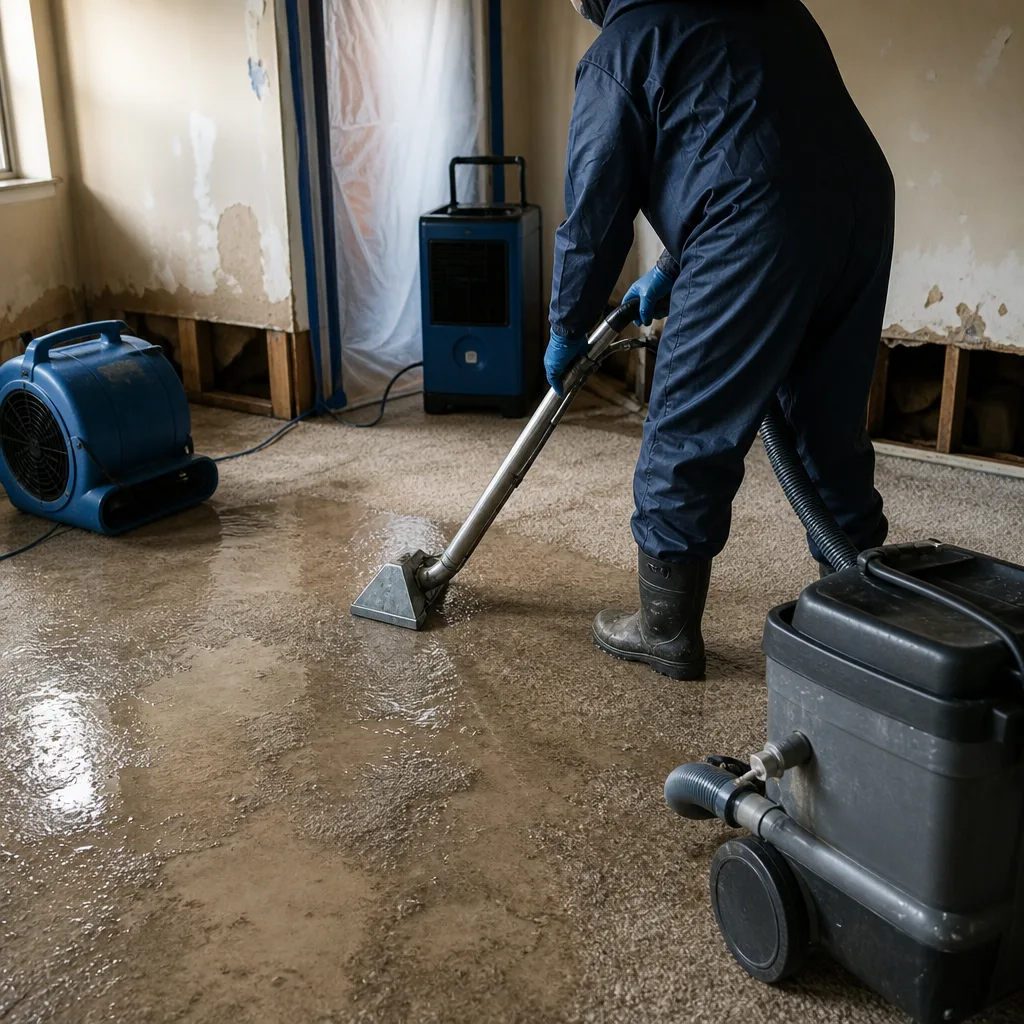
- 45-minute response commitment to Kearny addresses - our crews know the local routes and traffic patterns.
- 24/7 live answer: a real person, never an automated system or voicemail tree, on every call.
- IICRC-certified crews holding WRT (Water Damage Restoration Technician), AMRT (Applied Microbial Remediation Technician), and other relevant certifications.
- Free visual inspection on arrival - no charge to assess what you’re dealing with.
- Direct insurance billing with photo-documented estimates your adjuster can read without follow-up calls.
- One team from containment to reconstruction - no handoffs between subcontractors that lose documentation.
BeforeAfterOur Mold Remediation Process
1. Inspection & Assessment
We moisture-map every room with thermal imaging and calibrated hygrometers, identifying hidden colonization in plaster-over-lath cavities and behind masonry foundations. You receive a written scope, line-item pricing, and a photo record before any containment goes up - Haven Standard, Clause 1.
2. Containment & Stabilization
6-mil poly barriers seal the work zone. Negative air machines with HEPA filtration maintain inward airflow, preventing spore migration to unaffected areas. We establish this before disturbing any mold-laden material.
3. Demolition & Material Removal
Non-salvageable plaster, lath, insulation, and subflooring are removed to expose framing. Porous materials that absorbed Category 3 water cannot be cleaned in place - they must come out. Every removal is photo-documented for your insurer.
4. Cleaning & Antimicrobial Treatment
Exposed framing and masonry receive EPA-registered antimicrobial application. HEPA vacuuming captures settled spores. We clean to IICRC S520 standards for professional mold remediation, with RIA and IFA documentation protocols.
5. Drying & Dehumidification
Dri-Eaz and Phoenix dehumidifiers establish target equilibrium moisture content, monitored daily with psychrometric data - temperature, relative humidity, and vapor pressure differential readings that prove drying progress to your adjuster. Injectidry systems dry wall cavities and ceiling plenums without additional demolition.
6. Clearance Testing & Restoration
Independent air and surface samples confirm spore counts at or below outdoor baseline levels. Only then do we release containment and begin reconstruction - drywall, flooring, trim - with the same crew, same documentation standard, and the 365-Day Done Right Promise stamped on your file.
Need Emergency Mold Remediation in Kearny Now?
Crews minutes away, answering live 24 hours a day. The sooner we start, the less it costs.
Working With Your Insurance Company
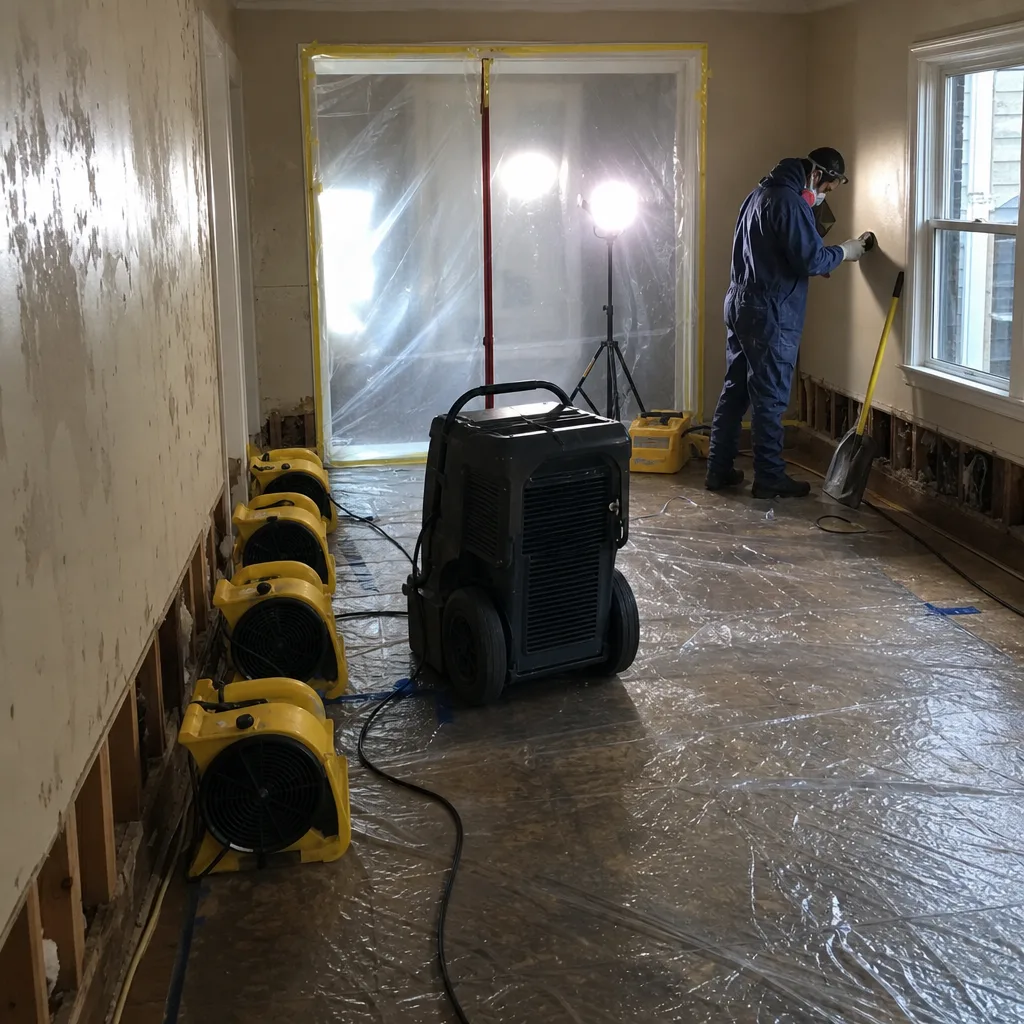
We document from the first hour because Alicia Brennan founded this company in 2011 after watching homeowners lose claims to incomplete paperwork. Every Kearny job produces a claim file an adjuster can pay without dispute: dated photos of all visible damage, moisture readings with equipment serial numbers, daily drying logs with psychrometric data, and a detailed line-item scope written to industry-standard estimating platforms. We coordinate directly with your carrier, answer their documentation requests within 24 hours, and never ask you to front costs beyond your deductible when coverage applies.
What We Provide Your Insurer
- Thorough documentation of the loss
- Photos of all damage, room by room
- Moisture readings and drying logs
- A detailed, line-item scope of work
- Direct coordination with your carrier
Built for Kearny’s Loss Calendar
January deep freezes split supply lines in unheated Kearny basements, particularly in converted below-grade rental units where tenants control thermostats. Spring thaw saturates the Meadowlands peat soils, raising the water table and overwhelming sump pumps on Schuyler Avenue and near the Passaic River corridor. Summer thunderstorms trigger combined sewer surcharge - not clean water, but Category 3 black water requiring full biohazard protocols. Nor’easters and tropical systems bring the delayed crest: Hurricane Ida’s floodwaters hit Kearny’s lowest blocks hours after the rain stopped, when homeowners had already assumed they were safe.
Our crew was called to a two-family rowhouse near the Passaic River waterfront after Ida, where the first-floor plaster-and-lath had been dried but never torn out after Sandy. Moisture mapping with thermal imaging found active mold behind the intact plaster, so we set up containment with 6-mil poly and negative air, removed the walls to the studs, applied antimicrobial treatment to the exposed framing, and ran Dri-Eaz dehumidifiers with Injectidry wall-cavity drying. The homeowner had no visible mold before we opened the wall - the 2012 inoculants had colonized behind the plaster for nine years.
Mold Remediation Across Kearny’s Neighborhoods
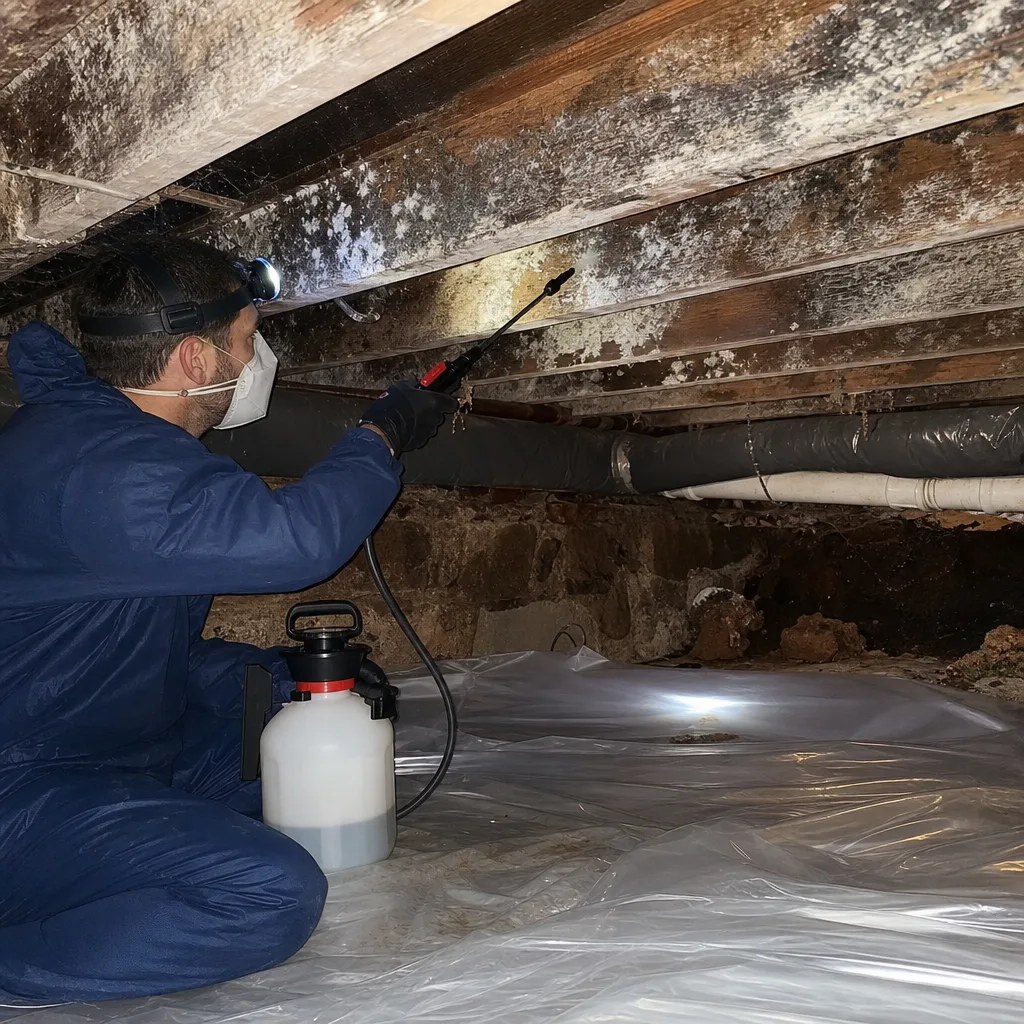
The Manor section, with its earliest 1890s frame and masonry homes, sees chronic basement infiltration from the elevated peat-soil water table - not dramatic floods, but constant capillary wicking that breeds mold invisibly behind finished walls. Arlington, along the Belleville Turnpike corridor, took significant Passaic River flooding in both Sandy and Ida; blocks here have the highest incidence of failed “restoration” jobs where plaster was dried in place rather than removed. South Kearny’s industrial-adjacent residential pockets face combined sewer surcharge as a routine event, not an exception. The Kearny Uplands area, slightly higher in elevation, escapes riverine flooding but still contends with spring water table rise and aging supply lines in pre-war construction.
We dispatch crews through Kearny from our New York City coordination office, with response routes optimized for the town’s bridge-and-corridor geography: the Belleville Turnpike, Passaic Avenue, and the NJ-7 corridor each present different traffic patterns we account for in our 45-minute commitment.
Specialized Mold Remediation Services We Offer in Kearny
Mold Inspection & Testing
We start with moisture mapping, not guesswork. Thermal imaging identifies temperature differentials behind Kearny’s plaster walls that indicate hidden moisture. Air sampling and surface swabs go to independent labs. You get the lab report, our interpretation, and a written remediation scope if action is warranted - no charge for the initial visual assessment.
Mold Removal
Removal in Kearny means full containment, negative air, and demolition of non-salvageable materials - not spraying bleach on visible spots. Plaster-over-lath that has absorbed Category 3 water cannot be cleaned; it must be removed to expose framing for treatment and drying. We document every square foot for your claim file.
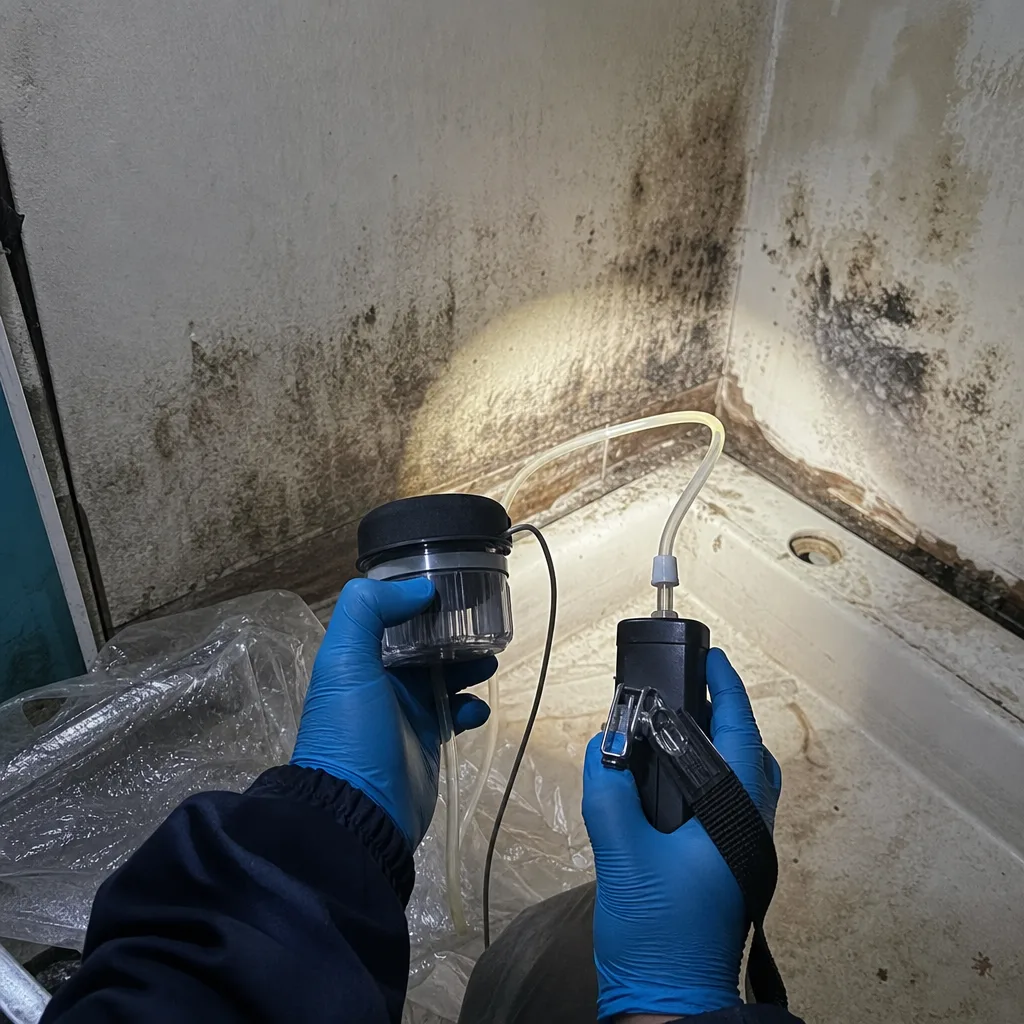
Black Mold Remediation
Stachybotrys and other toxigenic species require the same containment and removal protocols as any mold, with additional PPE and decontamination procedures. We do not use scare tactics - we use moisture readings, lab identification, and written scopes. If black mold is confirmed, the remediation plan specifies exactly where, how much, and at what cost.
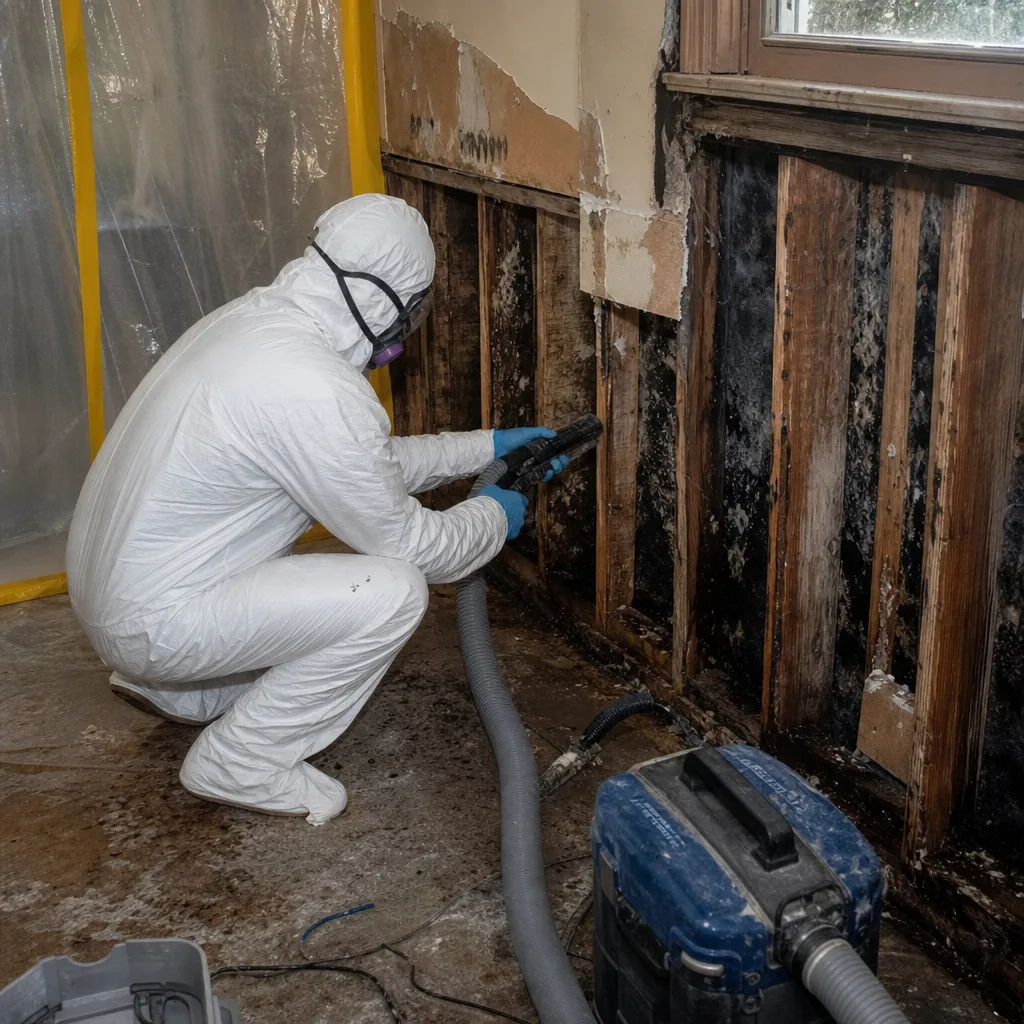
Air Quality Restoration
Post-remediation, HEPA air scrubbers run until independent clearance testing confirms spore counts at or below outdoor baseline. For Kearny homes with chronic infiltration issues, we specify humidity control equipment sized to the basement volume and ventilation rate.
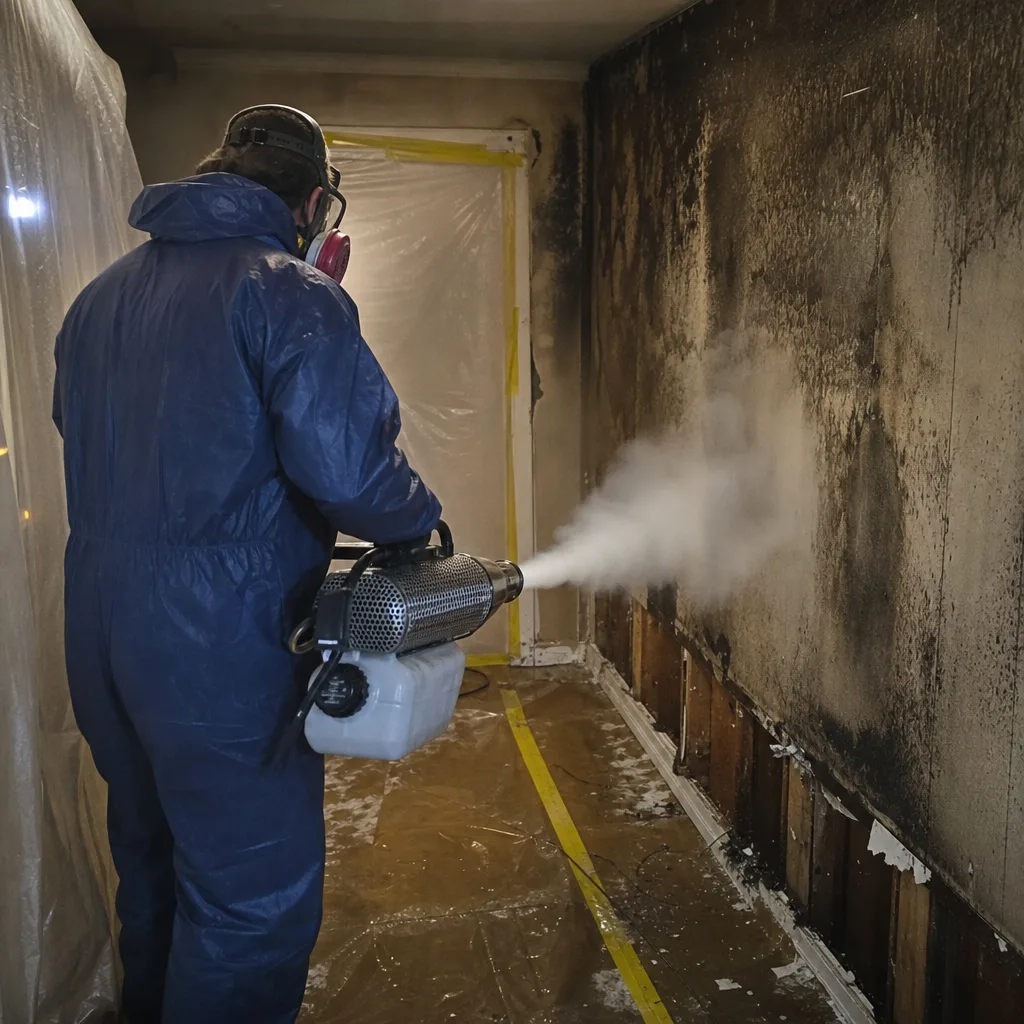
Crawl Space Treatment
Kearny’s older homes with dirt-floored crawl spaces face ground moisture evaporation directly into the subfloor structure. We install vapor barriers, dehumidification, and conditioned-air supply where appropriate - always with a written scope and price before work begins.
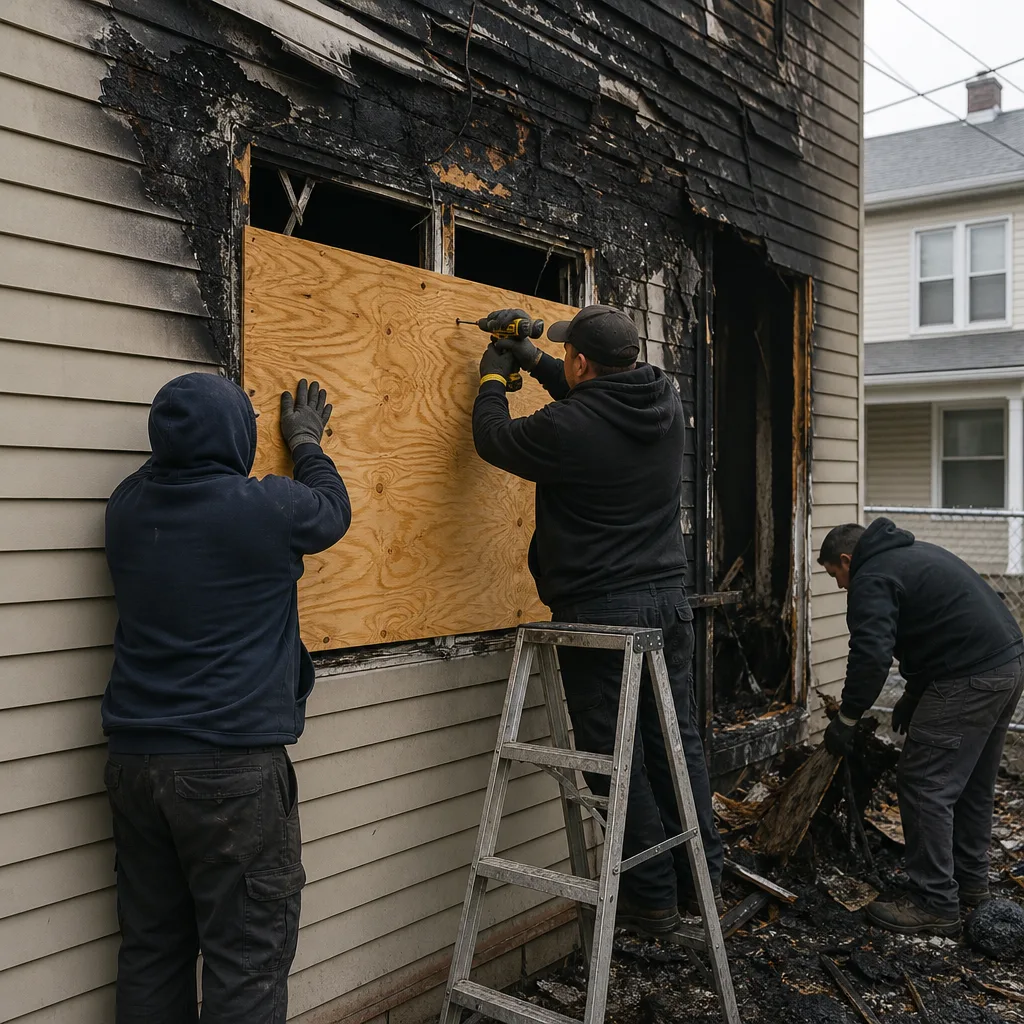
What happens when you call
- 1
A real person answersNo phone trees - you reach a local pro.
- 2
You get an upfront price rangeHonest numbers before anyone is dispatched.
- 3
A background-checked tech heads outLicensed & insured, dispatched right away.
- 4
You approve before work beginsNothing starts until you say go.
Mold Remediation Costs in Kearny, NJ
A typical mold inspection with moisture mapping and thermal imaging in Kearny runs $0-$250 - we waive this when you proceed with remediation. Containment and removal for a standard basement with visible mold on finished surfaces: $2,800-$5,500. Full tearout to studs in a flooded rowhouse basement with Category 3 water, including antimicrobial treatment and drying: $6,500-$14,000. Whole-house remediation after delayed flood response with extensive hidden colonization: $15,000-$35,000+.
What moves the price: square footage affected, whether demolition reaches the studs, Category 3 water requiring biohazard protocols, and whether the foundation needs ongoing moisture control after remediation. Most Kearny jobs with documented sudden water damage carry insurance coverage; we bill your carrier directly and provide the documentation they require. Out-of-pocket costs typically apply to maintenance-related chronic moisture issues without a sudden event. Call (862) 298-5256 for a free inspection and exact written scope - estimates are free, and we offer a Free Second Opinion on any competitor’s written estimate.
We Also Serve Cities Near Kearny
Our crews respond throughout the immediate metro area: Kearny, Harrison, Jersey City, Newark, and Secaucus. Each city carries distinct flooding patterns, building ages, and municipal requirements; we adjust our documentation and scope accordingly.
Serving Kearny, NJ - Our Local Coverage Area
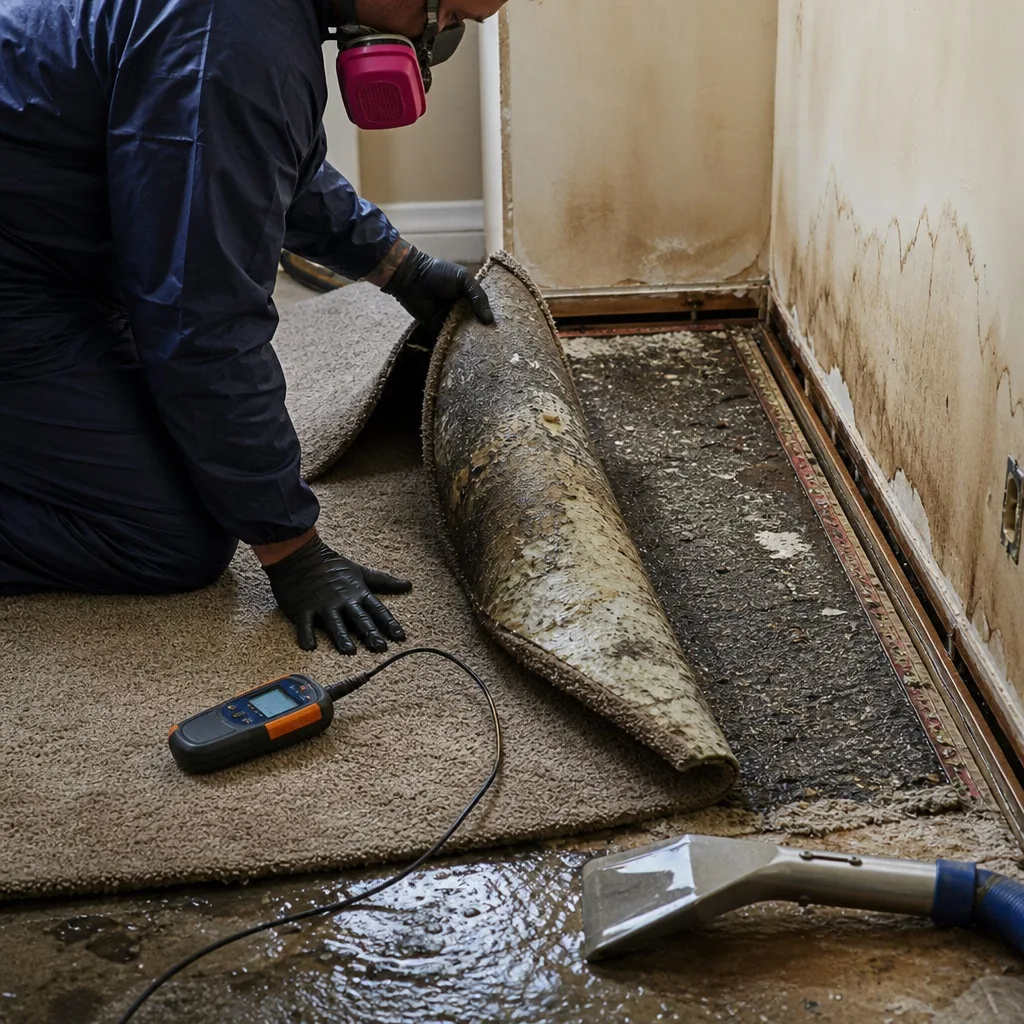
We’re based in the Kearny area and know this community well. Use the map below to see our service coverage - if you’re nearby, we can almost certainly help.
Kearny Mold Remediation Questions, Answered
Why does mold show up in my Kearny basement weeks after the floodwater was pumped out?
Because the Passaic River’s watershed drains from far upstream, floodwater in Kearny’s low-lying Meadowlands blocks can crest hours to a full day after the storm has passed, so the 24-48 hour window against mold growth often starts while the weather is already clear. With the peat-soil water table keeping foundations under constant hydrostatic pressure, sump pumps here run continuously and slow chronic infiltration molds the porous brick foundations independently of any storm. The mold was likely growing before you noticed it. Call (862) 298-5256 for moisture mapping that finds hidden colonization - estimates are free.
Why is my Kearny basement flood always treated as Category 3 water instead of just wet?
Kearny’s aging combined sewer infrastructure surcharges during heavy rain, meaning wastewater backs up through floor drains and fixtures into basements. Category 3 water contains pathogens requiring full biohazard remediation, not standard drying. Treating it as clean water leaves sewage contaminants and creates worse mold problems. We test and document the water classification for your insurer. Call (862) 298-5256 for a free inspection.
The previous restoration company dried my walls after Sandy. Do I still need a full remediation tearout after Ida?
If your plaster-and-lath walls were dried in place after Sandy and never demolished to the studs, 2012 mold inoculants likely remained sealed behind the intact plaster. Our thermal imaging on post-Ida Kearny jobs regularly finds active mold in walls that looked fine. The next flood reactivates dormant colonization. A full tearout, antimicrobial treatment, and proper drying is the only remediation that satisfies IICRC S520. Call (862) 298-5256 - we’ll moisture-map and show you what’s actually in your walls.
Our sump pump runs constantly in our Kearny basement - is that normal, and does it cause mold?
Constant sump pump operation is normal in Kearny due to the Meadowlands peat-soil water table and near-continuous hydrostatic pressure on foundations. The pump itself does not cause mold, but it indicates persistent moisture that can create mold conditions if air circulation and humidity control are inadequate. We specify dehumidification capacity and ventilation rates as part of remediation scopes for chronically damp Kearny basements. Call (862) 298-5256 for a humidity assessment.
How does mold remediation in Kearny’s old rowhouses differ from a newer home?
Kearny’s 1890-1930 rowhouses have plaster-over-lath walls that trap moisture invisibly, porous brick foundations that wick groundwater continuously, and full basements often converted to living space. These materials cannot be cleaned in place after Category 3 water exposure - they must be demolished to the studs. Newer homes with drywall, concrete foundations, and vapor barriers allow more targeted remediation. Our scopes specify material by material. Call (862) 298-5256 for a written assessment of your specific property.
Will my insurance cover mold remediation in Kearny?
Sudden water damage from covered perils - burst pipes, storm flooding with separate flood coverage, sewer backup with endorsement - typically covers mold remediation as a secondary loss. Maintenance-related chronic moisture usually does not. We document the cause, timeline, and water classification to support your claim, coordinate directly with your adjuster, and provide the photo records and drying logs carriers require. Call (862) 298-5256 and we’ll review your policy’s likely coverage at no charge.
How long does mold remediation take in Kearny?
Containment and removal: 2-4 days. Drying to target moisture content: 3-7 days depending on material depth and ambient conditions. Clearance testing and reporting: 1-2 days. Reconstruction: varies by scope. We provide a written timeline with your scope, update daily drying logs, and never release containment until independent testing confirms clearance. Call (862) 298-5256 for a schedule specific to your loss.
Can we stay in our home during mold remediation?
Small, contained areas with no HVAC cross-contamination may allow occupancy with containment in place. Whole-basement or multi-room remediation with Category 3 water typically requires temporary relocation due to demolition dust, antimicrobial application, and equipment noise. We specify occupancy status in your written scope before work begins - no surprises. Call (862) 298-5256 to discuss your specific situation.
Written by Alicia Brennan, Owner at Back to Dry Restoration, serving Kearny since 2011 under The Haven Standard.
Mold Remediation in Nearby Areas