
Last updated September 22, 2026
Free visual inspection and a written scope of work before any mitigation begins - photos, moisture readings, and drying logs go in your claim file
The scope we write is the scope we bill. Anything new gets shown to you, in writing, before we touch it.
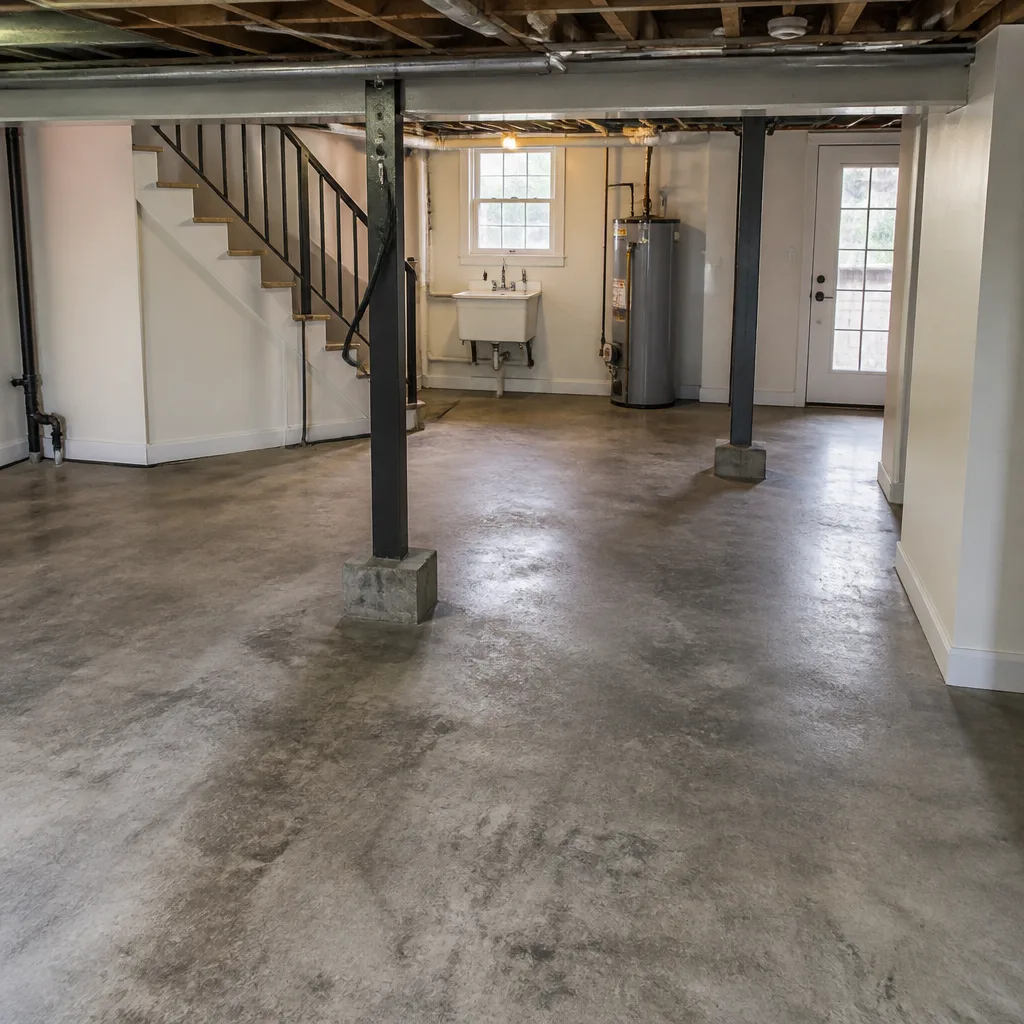
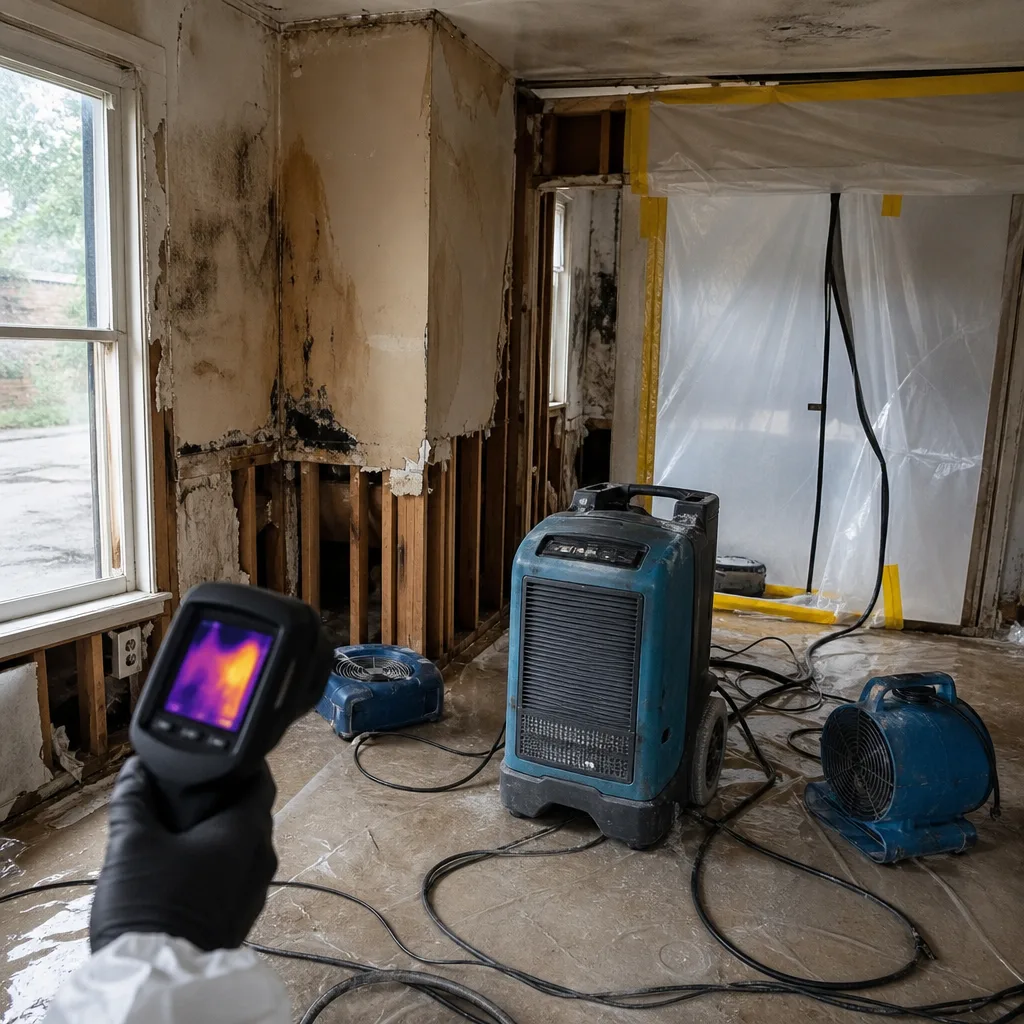 Before
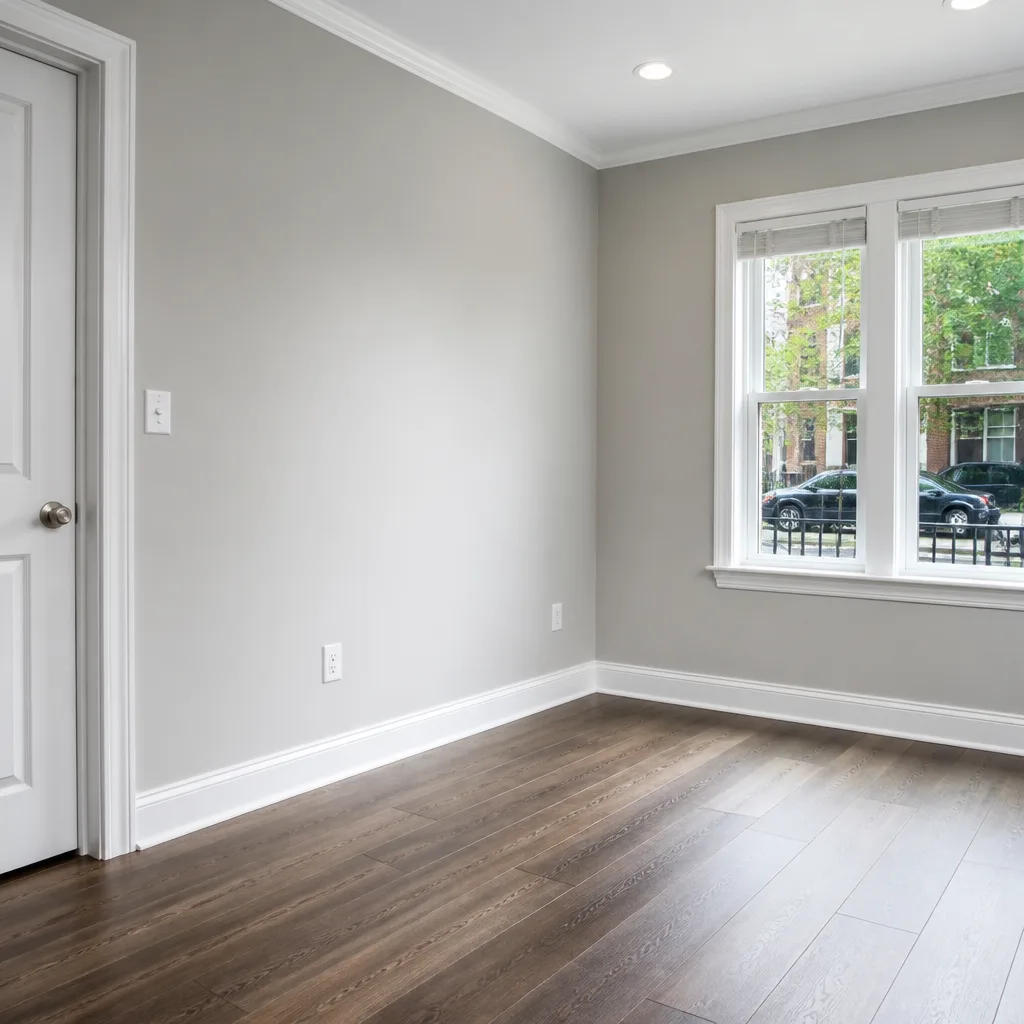 After
After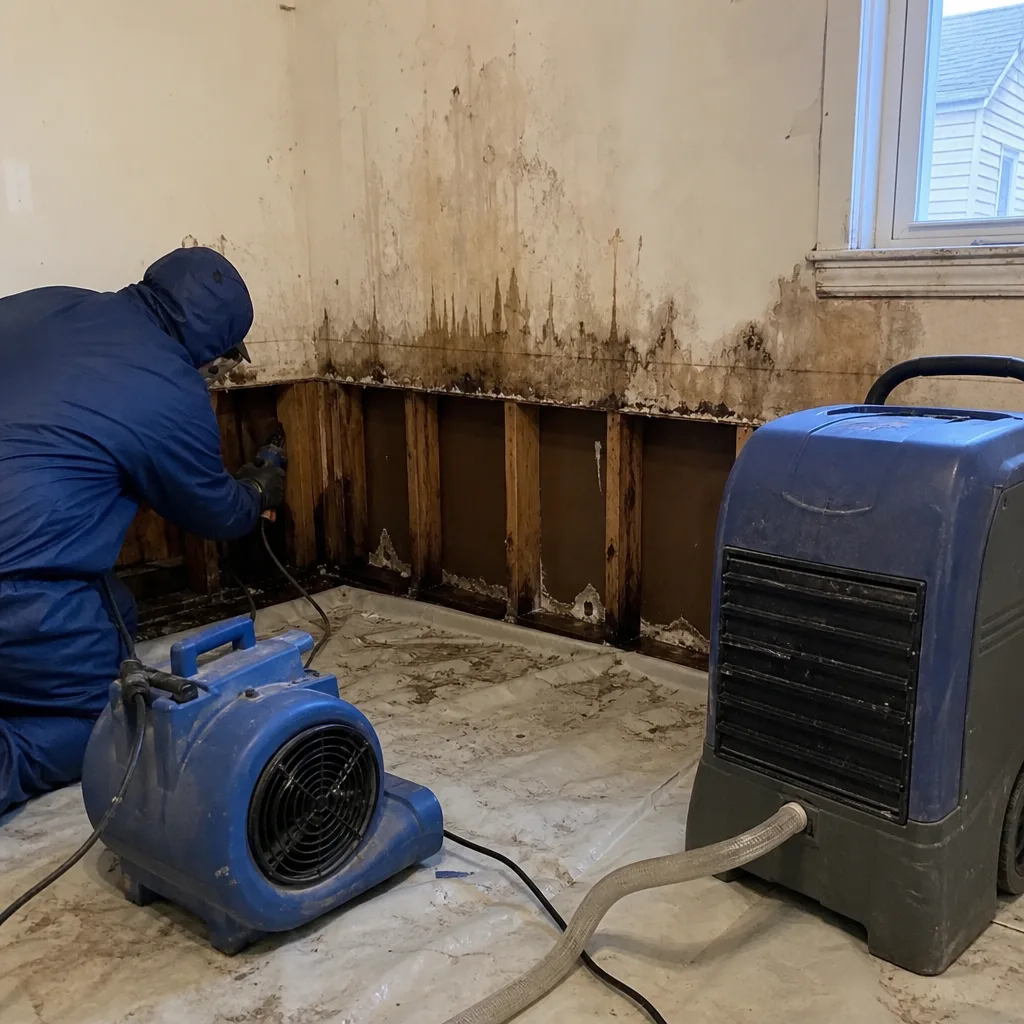 Before
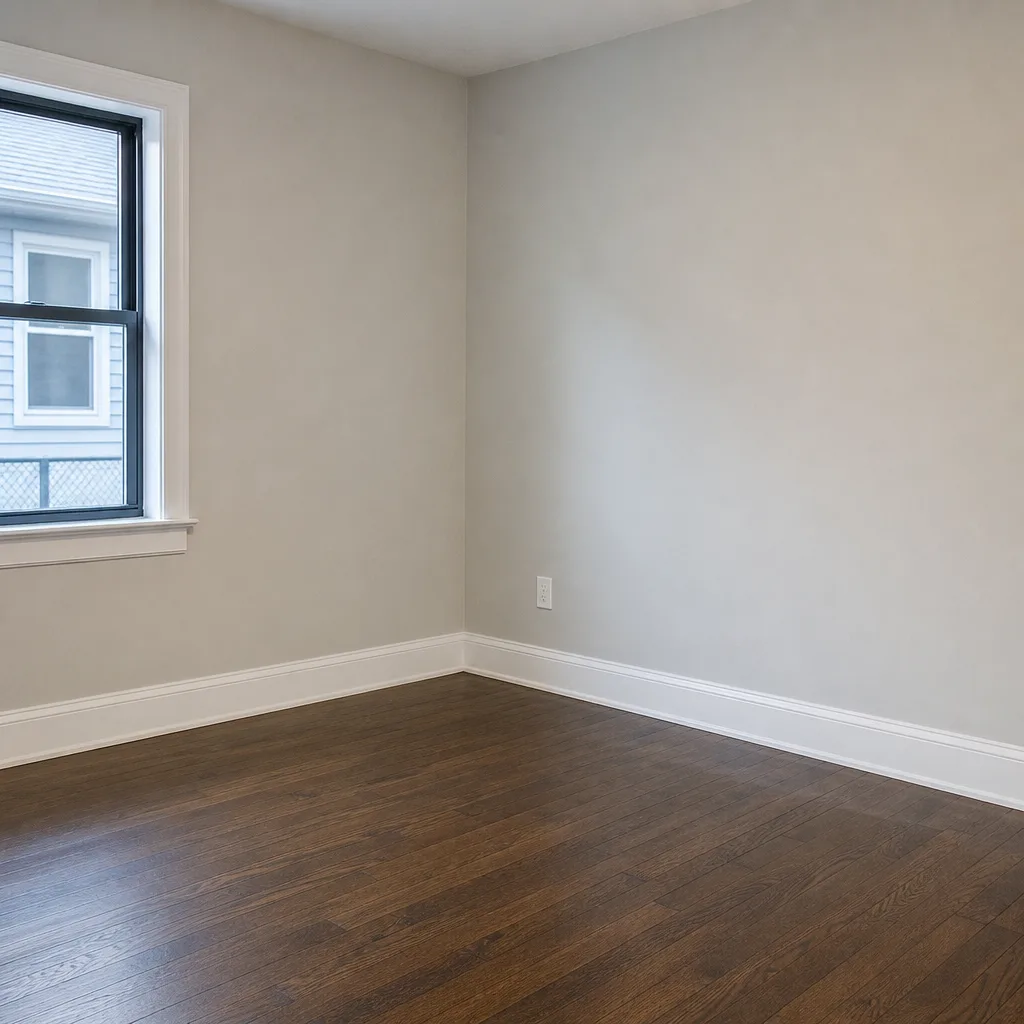 After
After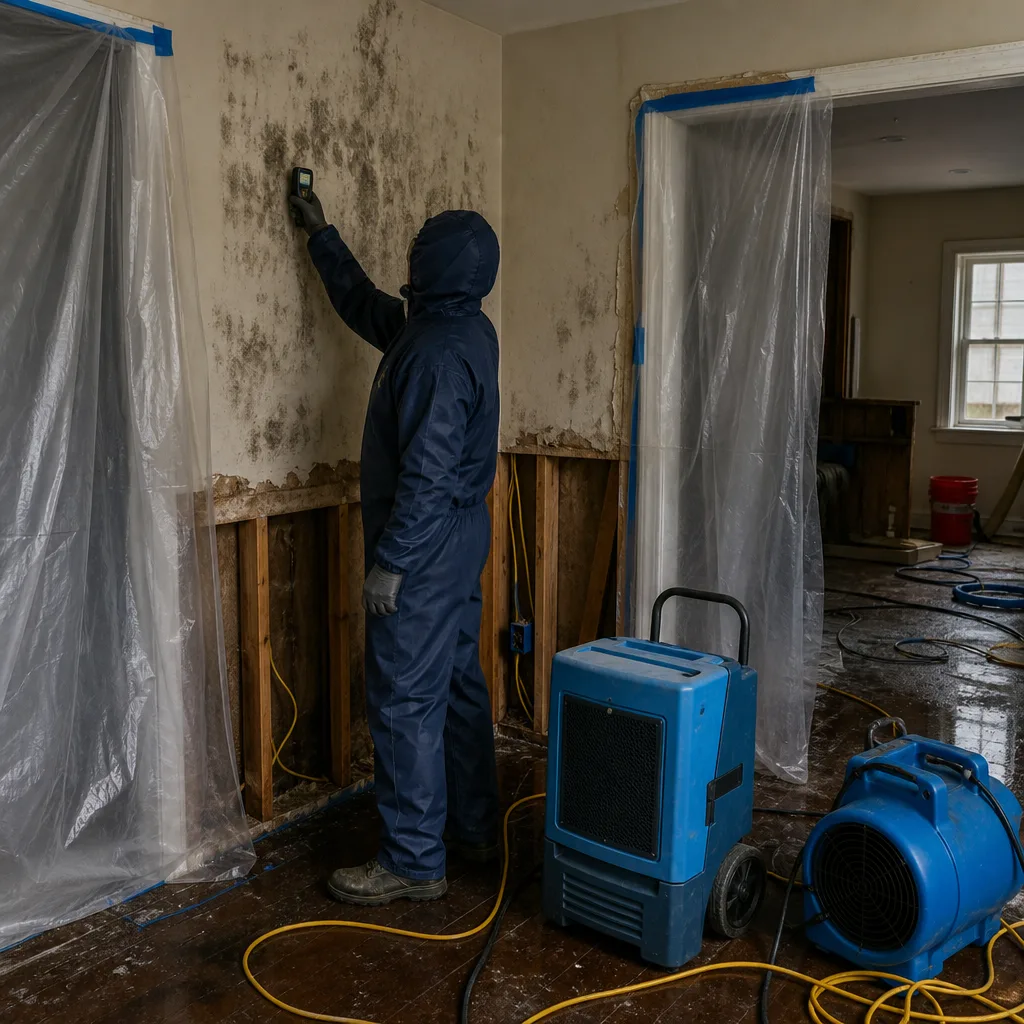 Before
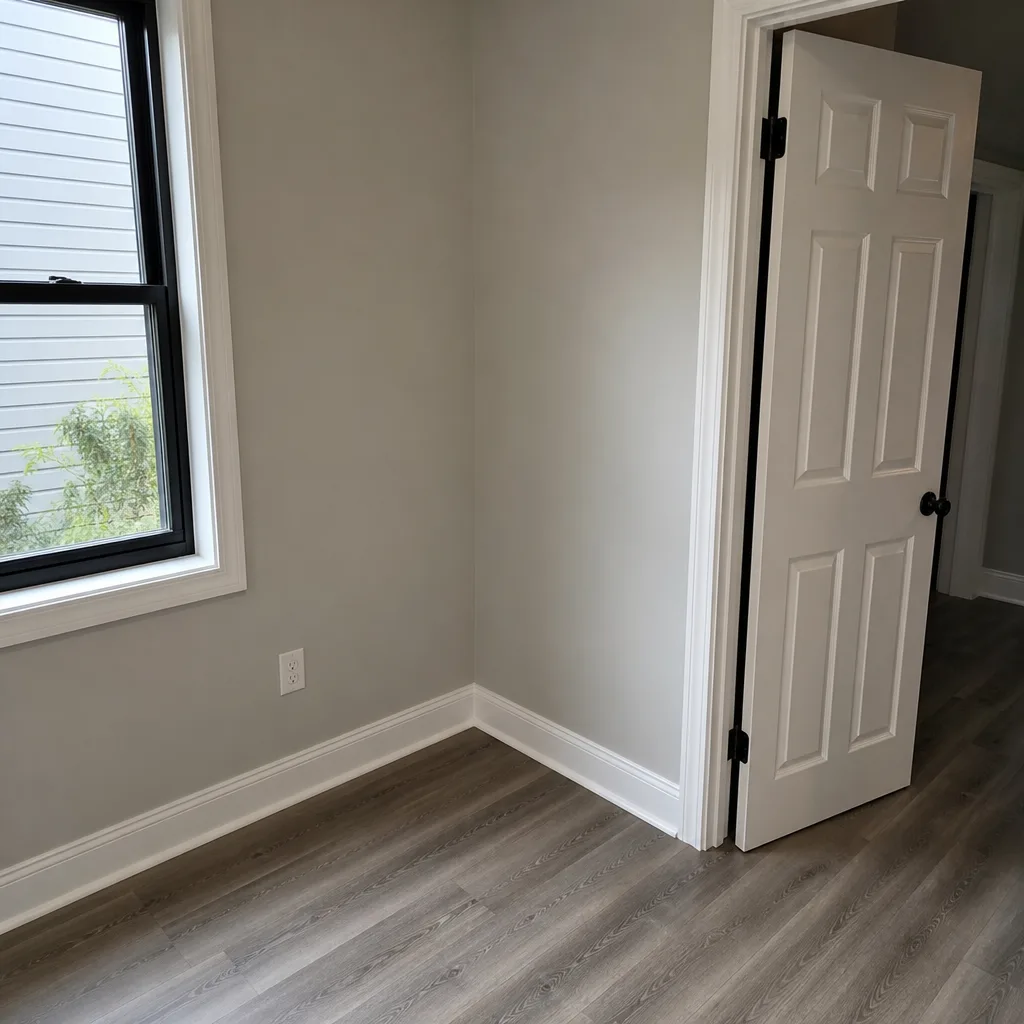 After
AfterDamage Restoration Permits, Codes & Inspections in NJ: What You Need to Know
A Jersey City homeowner sold their brownstone in 2023, two years after a water damage repair in the basement. At closing, the title search flagged unpermitted structural drying and framing work. The transaction stalled for six weeks. The buyer’s lender required a retroactive permit, two inspections, and a $4,200 remediation certification fee before releasing funds. The original restoration company had closed. The homeowner paid twice for documentation that should have been handled during the first job.
This is not an edge case. In Hudson County, unpermitted restoration work creates a property encumbrance that survives the repair itself. What feels like paperwork during a crisis becomes a lien on your equity later. This guide maps exactly when New Jersey law requires a permit for damage restoration, how Jersey City’s construction office processes emergency repairs differently from standard permits, and what skipping that step costs you on a future insurance claim or sale. For more context, see our Damage Restoration Warning Signs: A Jersey City Homeowner’s Reference Guide.
Quick Answer
Most structural, electrical, or HVAC restoration work in New Jersey requires a permit under the Uniform Construction Code. Ordinary maintenance, like surface drywall replacement under 200 square feet or carpet removal, typically does not. In Jersey City, emergency repair permits can be filed within 72 hours of work starting, but standard permits must be obtained before any work begins. Unpermitted restoration can void future insurance claims and block property sales.
Table of Contents
- When Permits Are Required for Restoration Work in NJ
- How Jersey City Processes Emergency vs. Standard Restoration Permits
- FEMA Substantial Damage Rules for Jersey City Flood Zones
- The Inspection Sequence for Water-Damaged Structures
- How Unpermitted Restoration Affects Future Insurance Claims
- Documentation Required for Permit Approval
- Common Mistakes to Avoid
- When to Call a Professional
- Frequently Asked Questions
BeforeAfterWhen Permits Are Required for Restoration Work in NJ
New Jersey’s Uniform Construction Code (UCC), adopted under N.J.A.C. 5:23, divides restoration work into two categories: ordinary maintenance, which needs no permit, and construction, which does. The line between them is specific, and restoration companies that misclassify work expose homeowners to liability that surfaces years later.
Work That Requires a Permit
- Structural member repair or replacement: Any load-bearing wall, floor joist, beam, column, or foundation element damaged by water, fire, or impact. This includes sistering joists in a flooded Jersey City basement or replacing fire-compromised floor decking.
- Electrical system restoration: Replacement of service panels, branch circuits, outlets, or wiring damaged by water or fire. Even rewiring a single flooded circuit in a Journal Square condo triggers the permit requirement.
- HVAC equipment replacement: Furnaces, boilers, air handlers, or ductwork replacement. A flooded boiler in a Bergen-Lafayette brownstone requires mechanical permit approval.
- Drywall replacement exceeding 200 square feet in a single room: The UCC uses this threshold to distinguish maintenance from construction. A 12×16 foot basement room (192 sq ft) stays under; a 15×15 room (225 sq ft) triggers the permit.
- Plumbing system modification: Replacement of water heaters, relocation of fixtures, or repair of drainage systems beyond a single trap or valve.
- Roof structural repair: Decking replacement exceeding 100 square feet, or any rafter or truss repair after storm damage.
Work That Typically Does Not Require a Permit
- Surface drywall patching under 200 square feet per room
- Carpet, pad, or vinyl flooring removal and replacement (non-structural)
- Cosmetic painting, trim replacement, or cabinet reinstallation
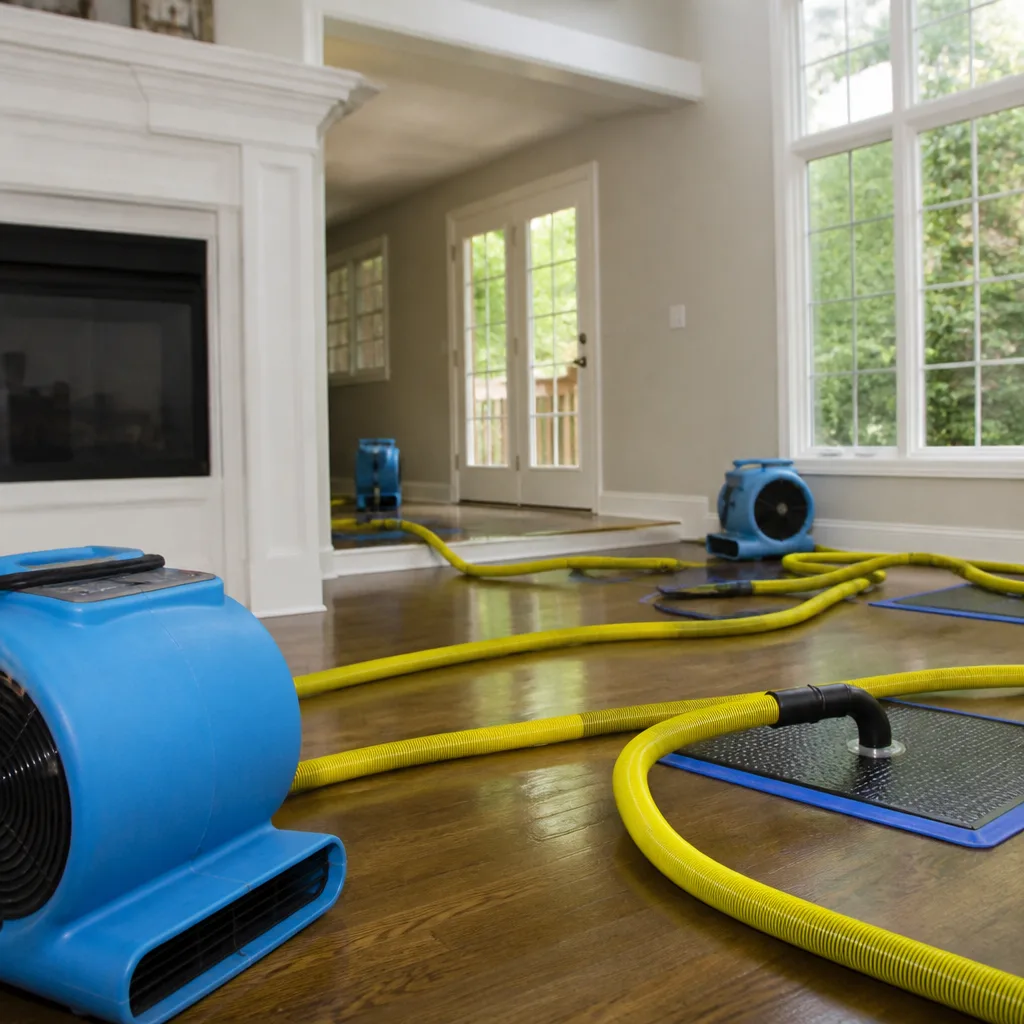
- Dehumidification and air movement equipment placement (the drying process itself, not structural repair)
- Content cleaning and pack-out services
The critical distinction: drying is not construction. A crew placing Phoenix LGR dehumidifiers and XPOWER air movers in a flooded Downtown Jersey City loft performs mitigation, which requires no permit. But if that same crew removes saturated drywall, discovers compromised studs, and replaces them, the work has crossed into construction territory.
We’ve documented this threshold on hundreds of jobs. In 2019, a water loss on Mercer Street in Jersey City started as a simple pipe break. Our initial moisture readings showed 18.2% wood moisture content in the baseplate, within salvageable range. Three days later, secondary damage from delayed response by the initial vendor pushed structural members to 28.7%, past the point of structural integrity. The scope shifted from mitigation to reconstruction. The permit requirement shifted with it. We filed the emergency repair permit that evening, before framing work began.
The UCC grants local construction officials authority to interpret these thresholds. Jersey City’s Division of Construction Code Enforcement has historically applied a stricter standard than suburban municipalities, particularly in pre-war housing stock where balloon framing and plaster-and-lath construction complicate damage assessment. A construction official in Jersey City is more likely to classify drywall removal in a 1940s brownstone as structural work requiring permit oversight, where a newer suburb might treat the same scope as maintenance.
How Jersey City Processes Emergency vs. Standard Restoration Permits
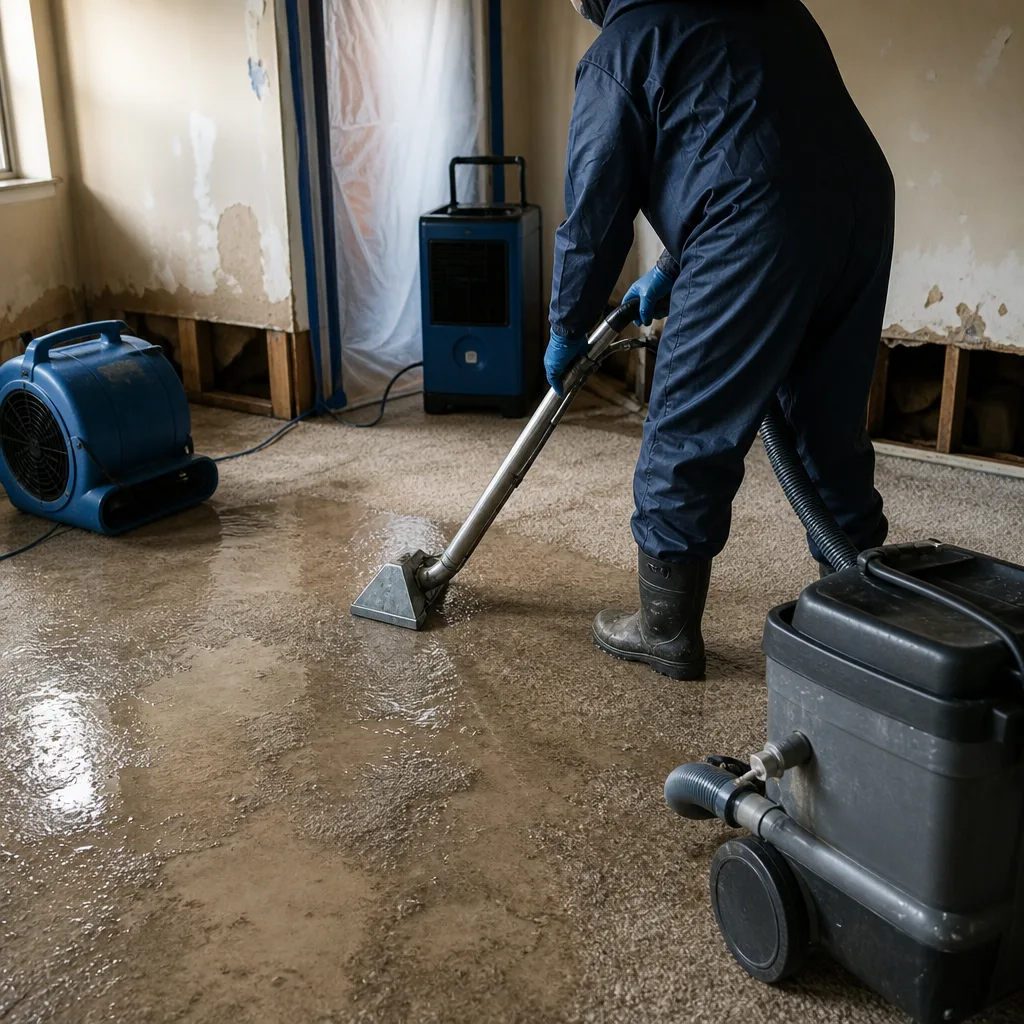
Jersey City maintains two permit tracks for restoration work: standard permits, obtained before work begins, and emergency repair permits, filed within 72 hours of work starting. Understanding which track applies, and how to navigate each, determines whether your drying logs translate to a closed permit or an open violation.
Standard Permit Track
- Application submission: Licensed contractor submits construction documents, including scope of work, floor plans, and specifications. For restoration, this means the written scope we provide before work begins under Haven Standard, Clause 1.
- Plan review: Jersey City’s plan review division examines documents for UCC compliance. Standard review takes 10-15 business days; complex structural repairs may require 20.
- Permit issuance: Upon approval, the permit is posted on-site. Work cannot legally begin before this step.
- Inspection scheduling: Rough-in, progress, and final inspections are scheduled through Jersey City’s online portal or by phone.
- Certificate of approval: Issued after final inspection passes. This document is required for property sale or refinance.
Emergency Repair Permit Track
Jersey City recognizes that water damage, fire damage, and storm damage create conditions where delay risks structural collapse, mold proliferation, or secondary damage. The emergency repair permit allows work to commence immediately, with documentation filed retroactively within 72 hours.
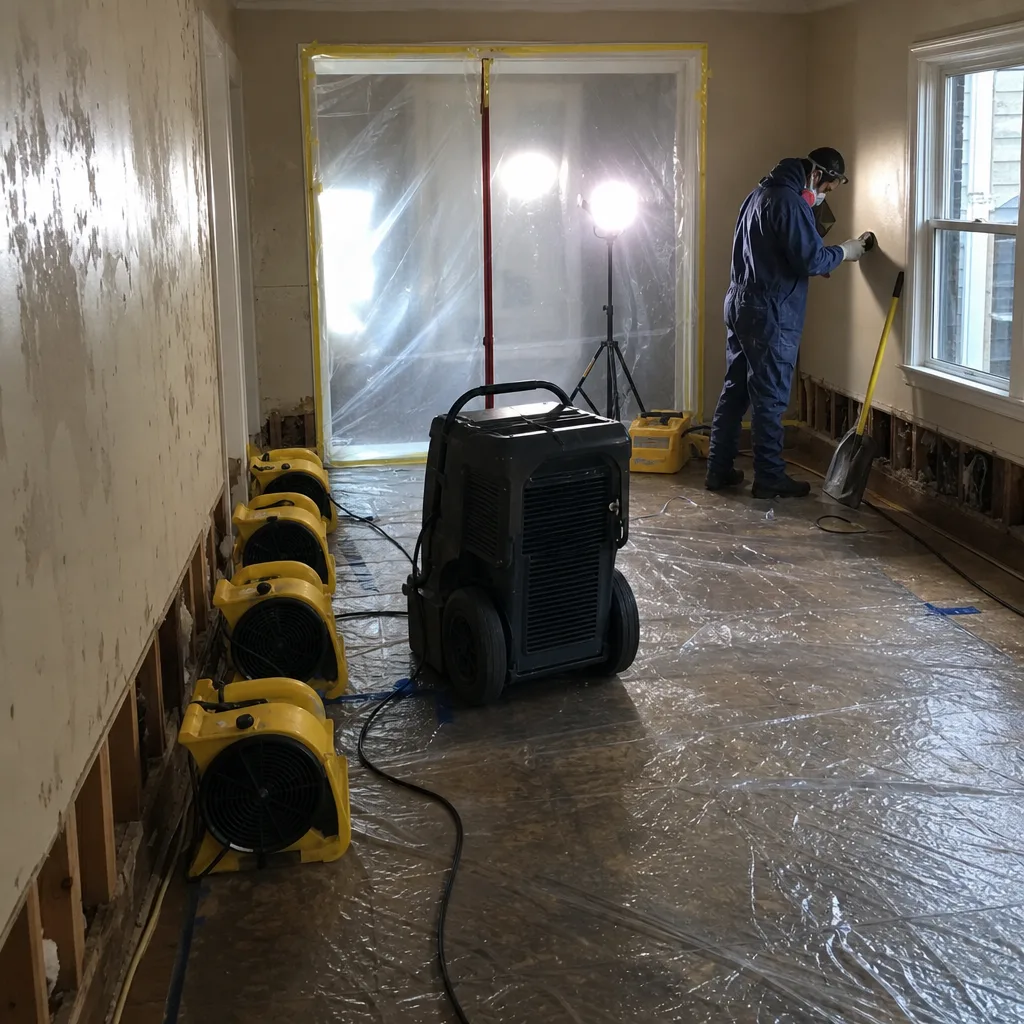
- Immediate work authorization: Licensed contractor begins stabilization work: water extraction, structural drying with B-Air and Injectidry systems, board-up, or temporary weatherproofing.
- 72-hour filing window: Complete permit application, including as-built documentation of work already performed, must be submitted to the construction office.
- Supplemental inspection: Construction official inspects work to date, identifies any code deficiencies, and issues correction notices if needed.
- Standard inspection sequence resumes: Rough-in and final inspections proceed as with standard permits.
The emergency track is not a free pass. In 2021, a storm damage job on Palisade Avenue in the Heights began under emergency authorization. The contractor failed to file within 72 hours. Jersey City issued a stop-work order, required removal of completed framing for inspection access, and imposed a $1,500 penalty before allowing resumption. The delay added eleven days to a job that was already disrupting a family of four.
Jersey City’s construction office, located at 2 Jackson Square, processes emergency permits with a dedicated intake desk for restoration contractors. Phone coverage exists for after-hours emergencies, but the 72-hour filing requirement is absolute. We maintain a direct line to the emergency permit desk and file documentation before the window closes on every qualifying job.
One Jersey City-specific complication: properties in historic districts, including portions of Paulus Hook, Van Vorst Park, and Hamilton Park, require additional review by the Historic Preservation Commission for any exterior alteration. Interior restoration work generally bypasses HPC review, but window replacement, facade repair, or roofline modification after fire or storm damage triggers dual approval tracks. We’ve navigated this overlap on jobs where storm damage compromised both interior structure and historic exterior elements.
FEMA Substantial Damage Rules for Jersey City Flood Zones
Jersey City contains two FEMA flood zone designations that directly affect restoration permit requirements: Zone AE, the Special Flood Hazard Area along the Hudson River waterfront and Hackensack River corridor, and Zone X, the moderate-risk areas inland. The distinction matters because FEMA’s “substantial damage” threshold triggers mandatory elevation, relocation, or demolition requirements that override ordinary permit calculations.
Substantial damage is defined as damage of any origin where the cost to restore the structure to its pre-damage condition equals or exceeds 50% of the structure’s market value. For a Jersey City brownstone valued at $800,000, substantial damage begins at $400,000 in restoration costs. For a condo unit with proportional structural value of $200,000, the threshold is $100,000.
When substantial damage is declared in Zone AE, the property must be brought into compliance with current Base Flood Elevation requirements. For many Jersey City waterfront properties built before the 1983 flood map updates, this means elevation above grade, wet floodproofing below BFE, or relocation. The permit process becomes a FEMA-municipal coordination rather than a simple construction permit.
We’ve encountered this scenario twice in Jersey City since 2011. In 2012, post-Sandy restoration of a commercial property on Newark Avenue required FEMA substantial damage assessment before Jersey City would issue reconstruction permits. The assessment took 34 days. The property owner had business interruption coverage but no expedited assessment rider, and lost six weeks of revenue. In 2021, a residential property in Zone X near Lincoln Park sustained sewer backup damage that approached the substantial damage threshold. Because Zone X carries lower regulatory requirements, the property avoided FEMA elevation mandates and proceeded under standard UCC permits.
The practical implication: restoration contractors working in Jersey City’s AE zones must document damage costs with precision that supports or refutes a substantial damage determination. Our written scopes, itemized by room and trade, provide this documentation. A vague estimate invites a conservative assessor to declare substantial damage, triggering requirements that may exceed the property owner’s intent or budget.
Jersey City’s floodplain administrator, housed in the Division of Engineering, reviews all restoration permits in AE zones for substantial damage compliance. This review adds 5-10 business days to permit processing. Contractors unfamiliar with this layer often promise unrealistic timelines to homeowners already displaced by flooding.
The Inspection Sequence for Water-Damaged Structures
A water-damaged structure in New Jersey must pass a defined inspection sequence before occupancy is legally restored. Skipping steps, or performing work that obscures inspection access, creates the permit violations that surface at sale or claim time.
Phase 1: Pre-Mitigation Assessment
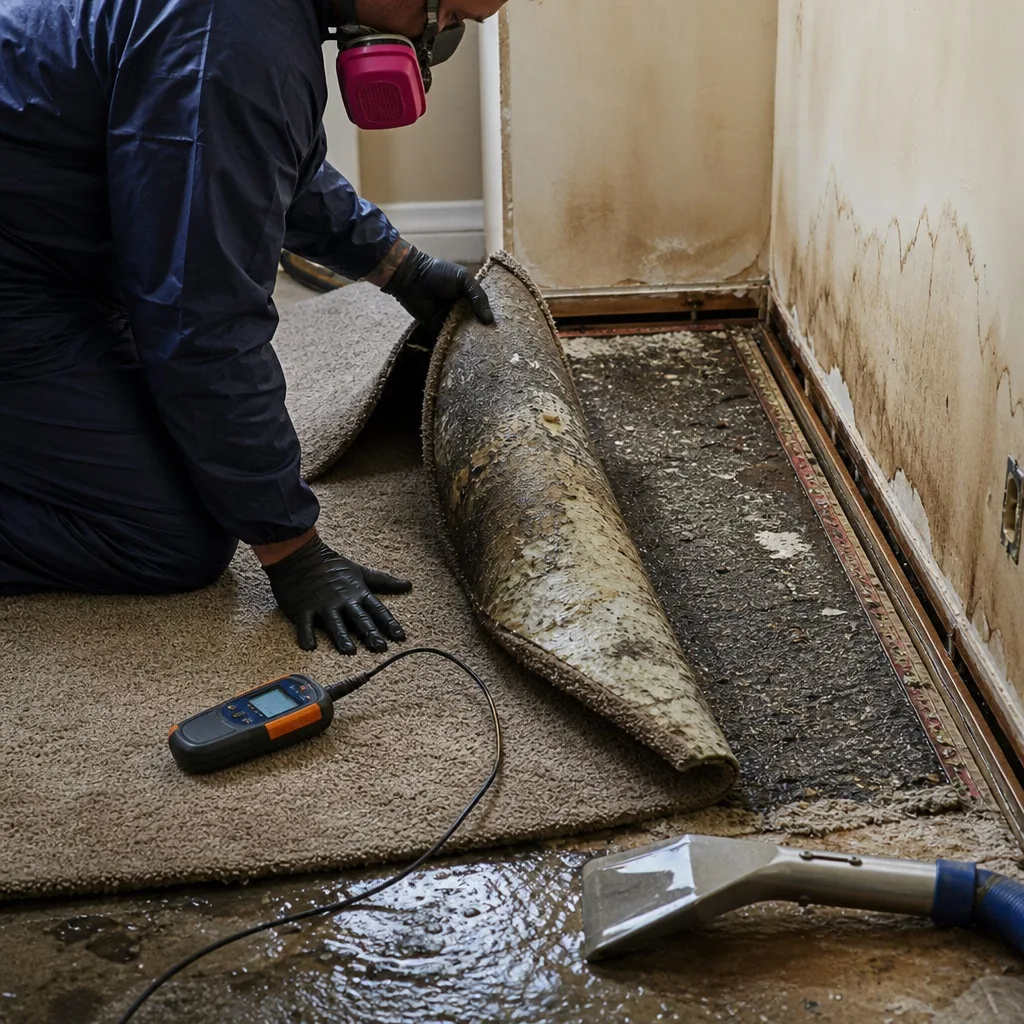
Before any drying equipment is placed, we document the structure’s condition with moisture readings, thermal imaging, and photographic record. This baseline serves two purposes: it establishes the pre-loss condition for insurance, and it identifies concealed damage that may trigger permit requirements. In a 2022 job on Montgomery Street in Jersey City, pre-mitigation thermal imaging revealed saturated insulation behind intact plaster, leading to discovery of compromised electrical conduit. The permit scope expanded before work began, avoiding the retroactive filing that would have delayed the job.
Phase 2: Rough-In Inspection
Required before any wall or ceiling cavity is closed. The inspector verifies:
- Structural member condition and replacement quality
- Electical rough-in: wire gauge, junction box placement, grounding compliance
- Plumbing rough-in: pressure testing, venting, material specifications
- HVAC ductwork: material rating, sealing, support
- Moisture content verification: structural wood below 16%, per IICRC S500 standards
The rough-in is the critical control point. We’ve seen contractors close walls with moisture readings at 22%, relying on paint to hide the problem. Six months later, mold blooms behind the surface, and the homeowner faces a second remediation with no insurance coverage because the original work was unpermitted and undocumented.
Our drying logs, produced with Phoenix and Dri-Eaz equipment documented to IICRC standards, provide the moisture data inspectors require. We do not close cavities until readings meet specification, and we do not schedule rough-in inspections until our documentation supports approval.
Phase 3: Progress Inspections
For complex restoration jobs, Jersey City may require intermediate inspections: insulation placement, fireblocking, or flood-resistant material verification in AE zones. Each requires 24-hour scheduling notice and contractor presence.
Phase 4: Final Inspection
The construction official examines finished work against approved plans and UCC requirements. Passing final inspection generates a Certificate of Approval or Certificate of Occupancy, depending on scope. This document is the legal proof that restoration was performed to code.
We deliver this certificate to the homeowner with our final documentation package, alongside the photo record, drying logs, and signed 365-Day Done Right Promise. In twelve years and 12,000 homes, we’ve never had a homeowner request this certificate at completion and fail to receive it. We’ve had dozens request it two years later, when selling, and thank us for filing it with their closing documents.
How Unpermitted Restoration Affects Future Insurance Claims
This is the consequence homeowners rarely anticipate. New Jersey insurance policies contain specific exclusions for loss arising from faulty, inadequate, or illegal construction. Unpermitted restoration work falls into all three categories simultaneously, and carriers have become aggressive in invoking these exclusions.
The standard language, found in ISO form HO-3 and HO-5 policies used by major New Jersey carriers, excludes coverage for “loss caused by faulty, inadequate, or defective… design, specifications, workmanship, repair, construction, or renovation.” A separate exclusion, increasingly common in post-Sandy policies, voids coverage for “loss arising from work performed without required permits or inspections.”
The mechanism works like this: a homeowner suffers water damage in 2022, hires an unlicensed or careless contractor who performs structural repairs without permits. In 2024, a second water loss occurs. The adjuster reviews prior claims, discovers the unpermitted work, and denies the new claim on the basis that the prior restoration created the conditions for the current loss, or that the policy’s illegal-work exclusion applies to the entire property.
We’ve reviewed competitor estimates under our Free Second Opinion service where this exposure was obvious. In 2023, a Jersey City Heights homeowner brought us a $34,000 estimate for fire damage restoration. The scope included structural framing, electrical rewiring, and HVAC replacement. No permit was listed in the estimate. We identified the omission, explained the insurance exposure, and the homeowner selected a permit-compliant scope. The original contractor’s price was lower by $2,800, but the permit and inspection costs were genuine expenses that protect against future claim denial worth multiples of that amount.
Carriers also use unpermitted work to challenge the causation of current losses. A 2022 case in Downtown Jersey City: a pipe burst caused $180,000 in damage. The carrier’s adjuster discovered unpermitted basement finishing from 2019, including illegal electrical work. The carrier denied the claim, arguing the unpermitted electrical created the fire risk that caused the pipe to overheat and fail. The causation was scientifically dubious, but the homeowner lacked the documentation to rebut it. Litigation followed, lasting 18 months before settlement at 60% of claimed damages.
The documentation we produce, including permit numbers, inspection dates, and certificate of approval copies, becomes evidence in these disputes. We file permits. We pass inspections. We deliver proof. This is why our daily drying logs and photo records matter beyond the immediate job: they create a paper trail that survives the contractor’s departure and the homeowner’s memory.
Documentation Required for Permit Approval
Jersey City’s construction office requires specific documentation for restoration permit approval. Incomplete applications are the primary cause of delay, and many restoration contractors treat permit filing as the homeowner’s responsibility. Under The Haven Standard, permit documentation is our responsibility, delivered as part of every qualifying job.
Required Documentation for Standard Permits
- Licensed contractor registration: New Jersey Home Improvement Contractor license, or appropriate trade license (electrical, plumbing, HVAC). We are state-licensed, insured, and bonded; license numbers are provided on request.
- Construction documents: Scope of work, plans or sketches showing affected areas, material specifications. Our written scope, delivered before work begins under Haven Standard, Clause 1, satisfies this requirement.
- Insurance certificate: General liability and workers compensation coverage naming the property owner and municipality as additional insureds where required.
- Property owner authorization: Signed permit application authorizing the contractor to act on owner’s behalf.
- Prior permit history: Disclosure of open or expired permits on the property, which must be resolved before new permits issue.
Additional Documentation for Emergency Repair Permits
- Emergency narrative: Description of the damage event, immediate hazards, and work necessary to stabilize the structure.
- As-built documentation: Photographs and descriptions of work performed before permit filing. Our photo record on every visit provides this automatically.
- Proof of 72-hour filing: Timestamped submission record. We file electronically with confirmation numbers.
Documentation for FEMA-Involved Properties
- Elevation certificate: Current FEMA elevation certificate, or survey if certificate is outdated.
- Substantial damage worksheet: Itemized cost breakdown supporting or refuting substantial damage determination.
- Flood insurance documentation: NFIP policy declarations page, or private flood insurance equivalent.
We maintain these documents in a job file that we deliver to the homeowner at completion, with copies retained for our records. When a Jersey City homeowner calls us two years later, selling the property, we can produce the permit number, inspection dates, and certificate of approval from our archives. This service has no separate charge; it is standard under The Haven Standard.
Common Mistakes to Avoid
- Assuming mitigation equals restoration: Water extraction and drying require no permit. Replacing the saturated subfloor beneath does. Many contractors blur this line, performing construction work under a mitigation contract to avoid permit delays. The homeowner bears the liability.
- Accepting a verbal permit status: “My guy says he pulled the permit” is not documentation. Request the permit number, verify it on Jersey City’s online permit portal, and confirm inspection appointments are scheduled.
- Ignoring the 72-hour emergency window: Jersey City’s emergency repair permit is a grace period, not an exemption. Work started Monday must be filed by Thursday. Contractors who miss this window face stop-work orders and penalties that delay drying.
- Failing to disclose prior unpermitted work: When selling, a title search or buyer’s inspection reveals permit gaps. Proactive disclosure with retroactive permitting costs less than discovery at closing. We’ve assisted homeowners with this remediation, though prevention is simpler.
- Using unlicensed contractors for permitted work: New Jersey law requires HIC licensure for restoration work exceeding $500. Unlicensed contractors cannot legally pull permits. Their work is uninsurable and creates liability for the homeowner who hired them.
- Neglecting flood zone compliance: Jersey City waterfront properties in AE zones have additional FEMA requirements. Standard restoration contractors without floodplain experience miss these layers, leading to permit rejection or future elevation mandates.
- Discarding documentation at job completion: Permits, inspection certificates, and contractor warranties should be retained for the property’s ownership period. We provide organized digital and physical copies for this purpose.
When to Call a Professional
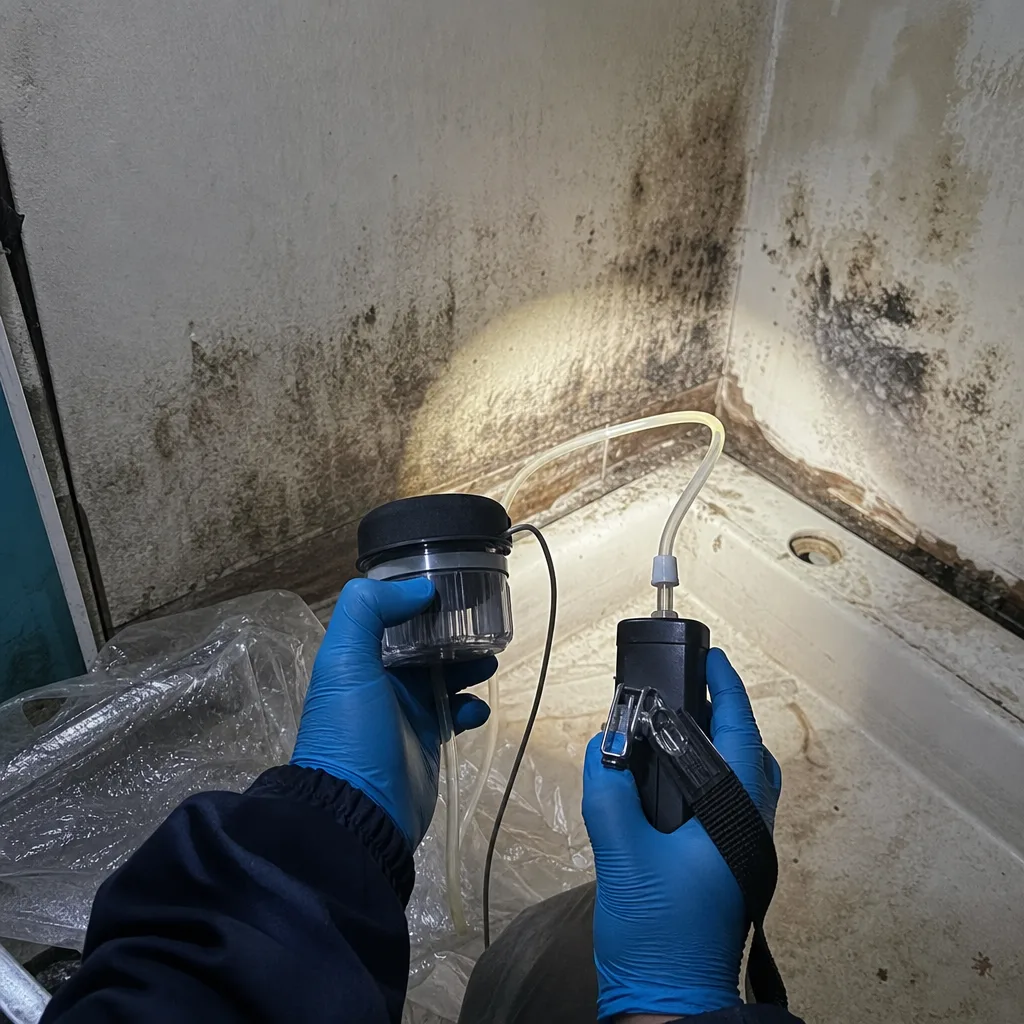
Call a licensed restoration contractor when any of the following apply: water has affected structural members (framing, subfloor, sheathing); electrical outlets, panels, or wiring have been submerged; HVAC equipment requires replacement; drywall removal exceeds 200 square feet per room; or the property is located in a FEMA AE flood zone. These conditions trigger permit requirements that unlicensed or inexperienced contractors routinely mishandle.
DryMark Restoration Jersey City offers free estimates in Jersey City. We assess damage, identify permit requirements, and provide a written scope before any work begins. Our documentation-first approach, developed from twelve years of restoration work and former claims adjustment experience, protects your property value and insurability. If you’re still evaluating contractors, our How to Hire a Damage Restoration Contractor in Jersey City: A Step-by-Step Guide can help. Call (862) 298-5256 for assessment.
Frequently Asked Questions
You need a permit for structural, electrical, HVAC, or extensive drywall replacement work; you do not need a permit for water extraction, drying, or surface cosmetic repairs. The specific threshold is 200 square feet of drywall replacement per room under New Jersey’s Uniform Construction Code. Call (862) 298-5256 for a free assessment of your specific damage.
Standard permits require 10-15 business days for plan review; emergency repair permits must be filed within 72 hours of work starting but allow immediate stabilization. Properties in historic districts or FEMA flood zones face additional review periods of 5-10 business days. We file emergency permits the same day we begin work.
Most New Jersey homeowners policies include ordinance or law coverage, a sublimit (typically 10-25% of dwelling coverage) that pays for code upgrade costs including permits required by damage restoration. The coverage applies only to permits for work directly caused by the covered loss, not pre-existing code deficiencies. We document this allocation in our written scopes for direct adjuster coordination.
Unpermitted restoration work creates a title encumbrance that can delay or block sale. Buyers’ lenders typically require permit verification for structural, electrical, or HVAC work. Remediation requires retroactive permitting, inspection, and certification, often at higher cost than original compliance. We have assisted homeowners with this process, though prevention is substantially less expensive. Browse our more guides & resources for additional homeowner support.
Request the permit number and verify it through Jersey City’s online permit portal or by calling the Division of Construction Code Enforcement at 2 Jackson Square. Active permits show inspection schedules and results. We provide permit numbers and verification instructions with every job file.
Properties in FEMA Zone AE face additional substantial damage assessment that can trigger mandatory elevation or wet floodproofing requirements if restoration costs exceed 50% of structural value. Zone X properties proceed under standard UCC permits without FEMA involvement. Jersey City’s floodplain administrator reviews all AE zone restoration permits for compliance. We identify flood zone status in our initial assessment and adjust permit strategy accordingly.
The Bottom Line
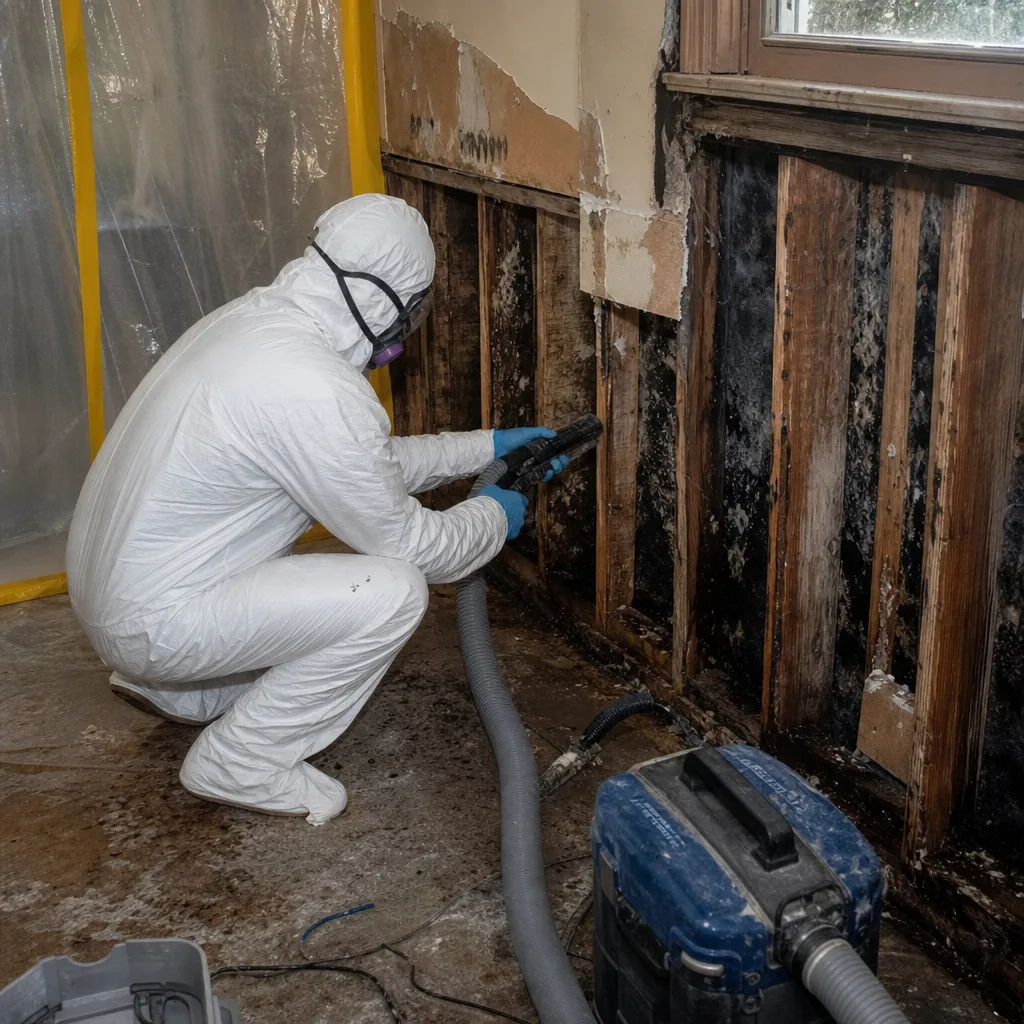
Permits are not bureaucratic obstacles. In New Jersey’s restoration environment, they are property protection instruments that preserve insurability, marketability, and structural safety. Jersey City’s construction office enforces these requirements with particular attention to historic housing stock and flood-zone properties. The homeowner who treats permits as optional discovers the cost at closing or at the next loss, when documentation gaps become financial liabilities. The restoration company that treats permits as standard practice, documented and delivered with every job file, protects the homeowner’s equity beyond the immediate repair. That documentation-first approach is The Haven Standard, and it has governed our work since 2011.
Written by Alicia Brennan, Owner at DryMark Restoration Jersey City, serving Jersey City since 2011.