
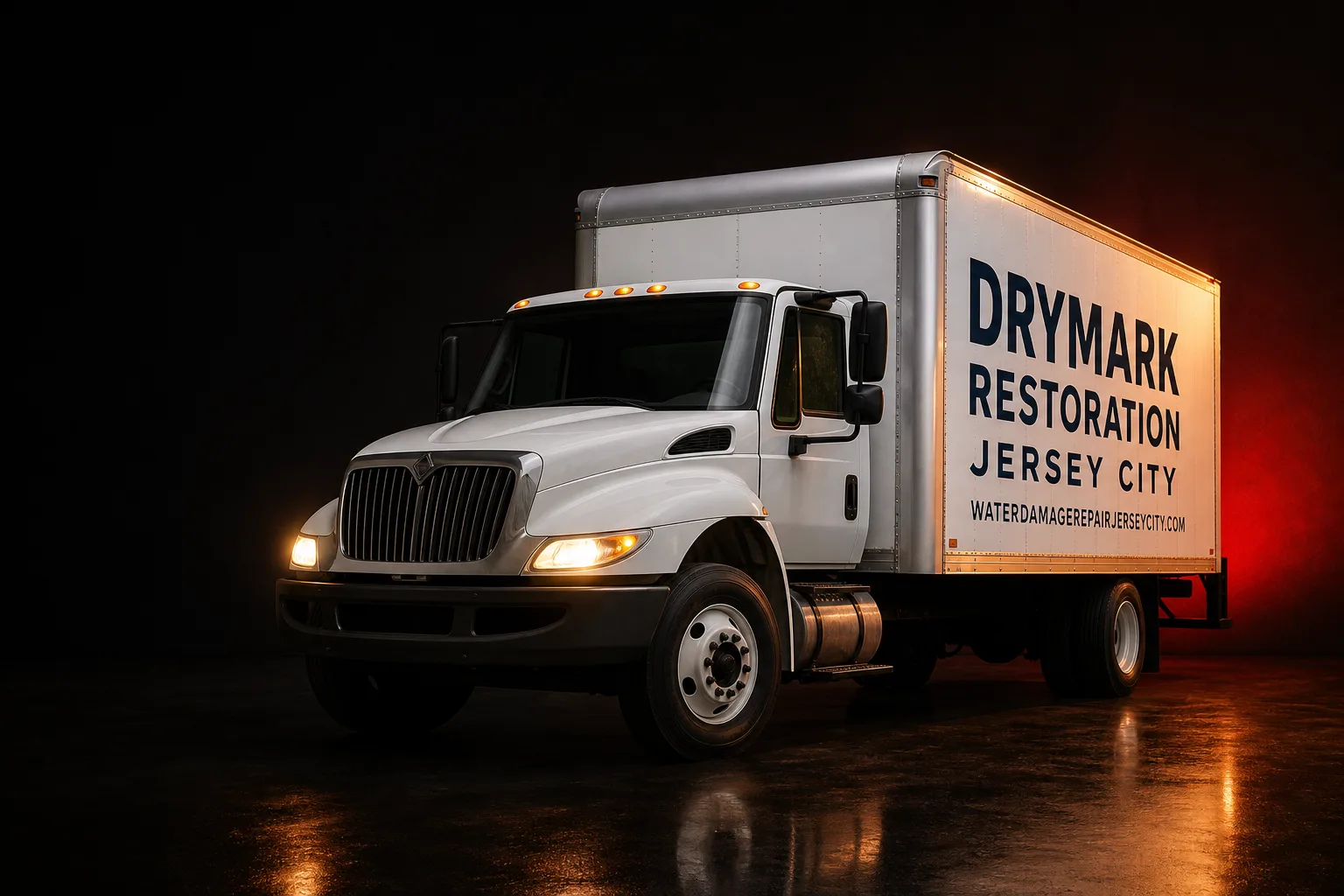
Free visual inspection and a written scope of work before any mitigation begins - photos, moisture readings, and drying logs go in your claim file
The scope we write is the scope we bill. Anything new gets shown to you, in writing, before we touch it.
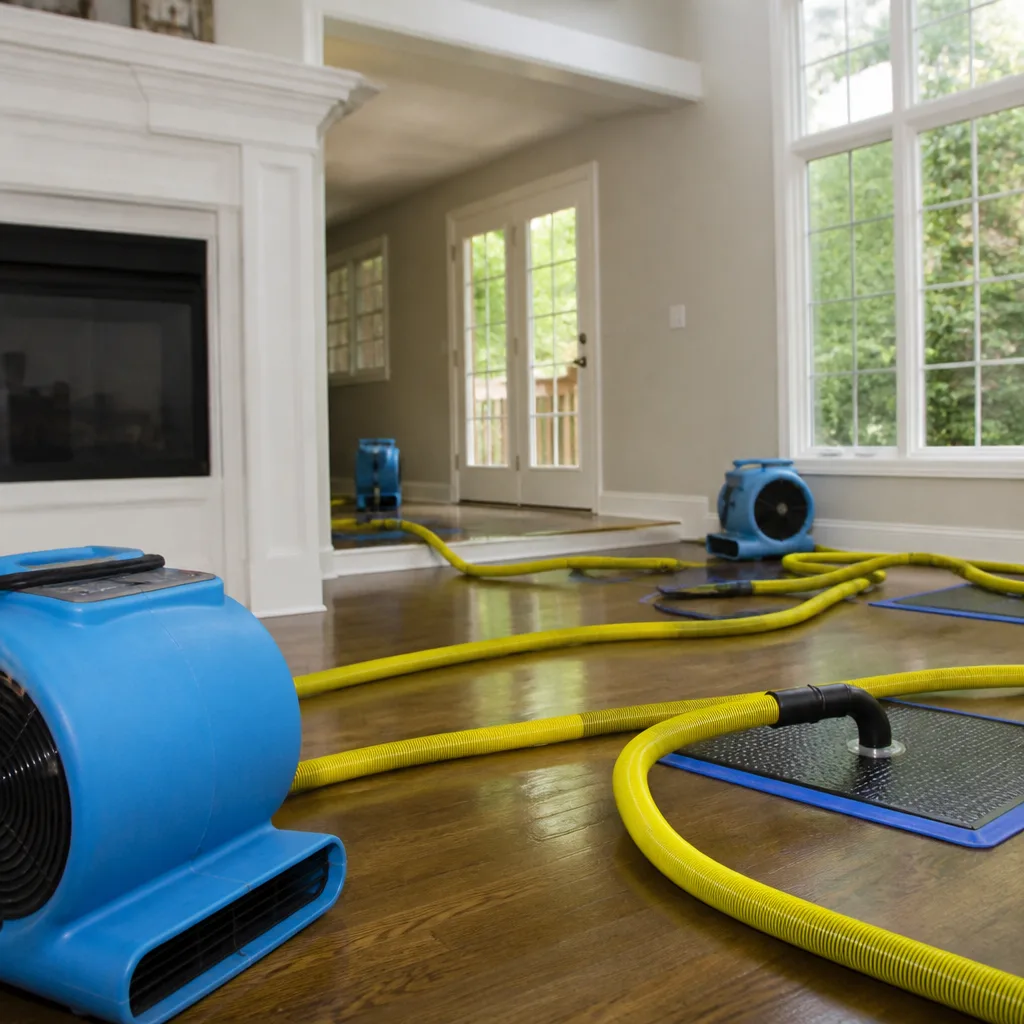
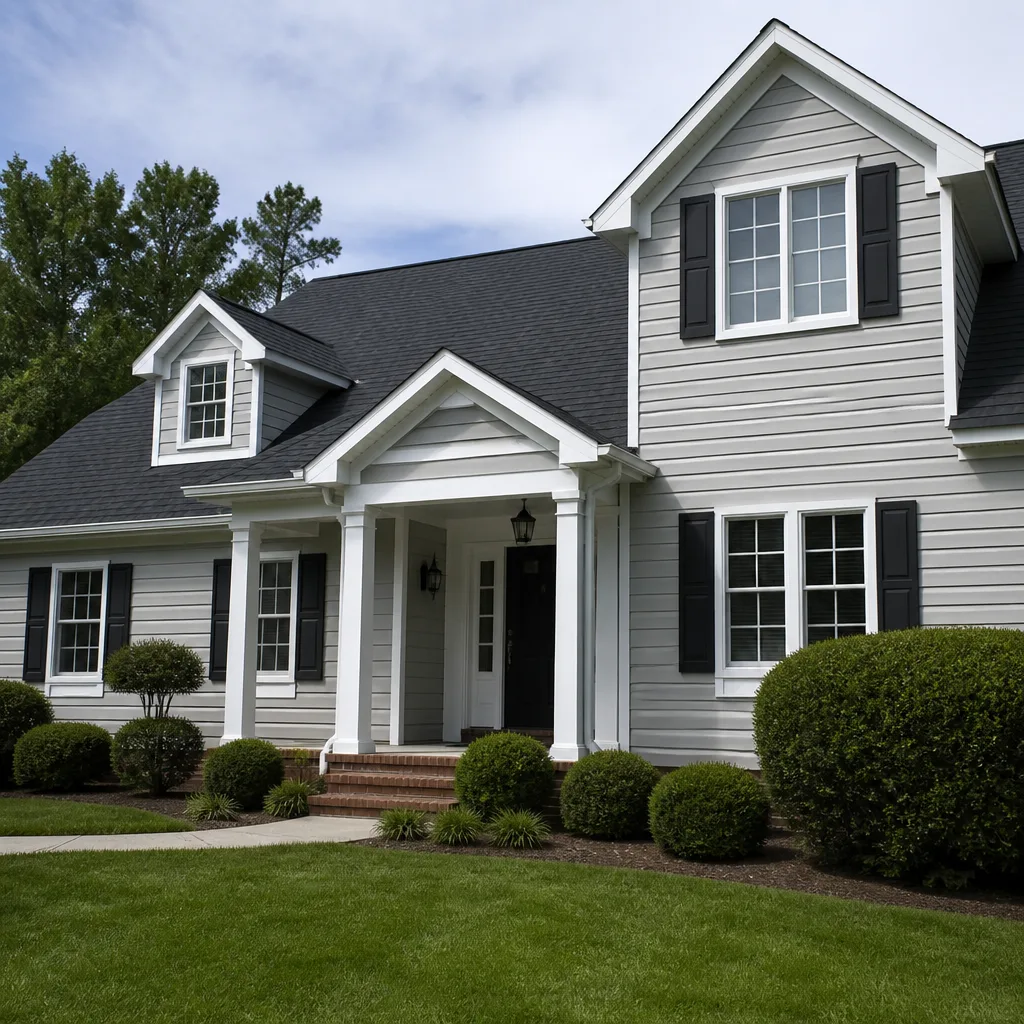
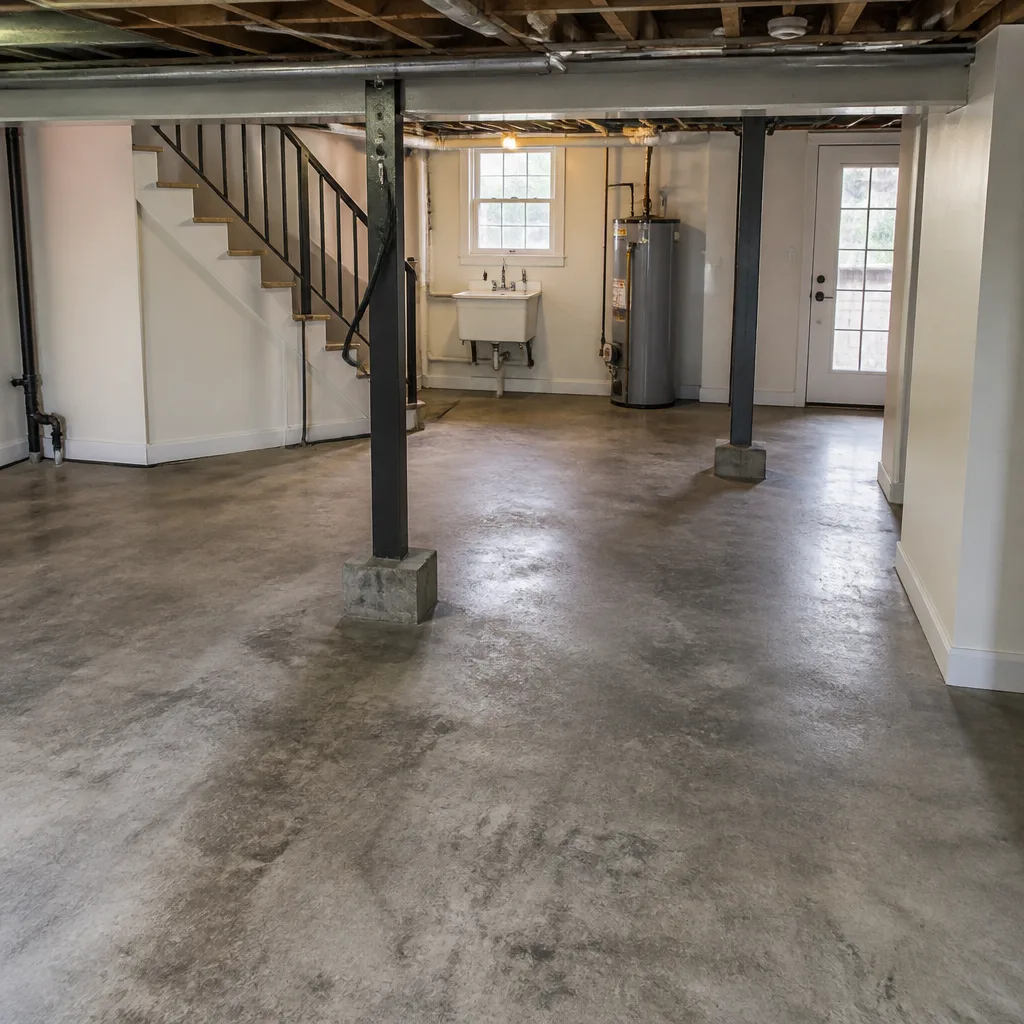
 Before
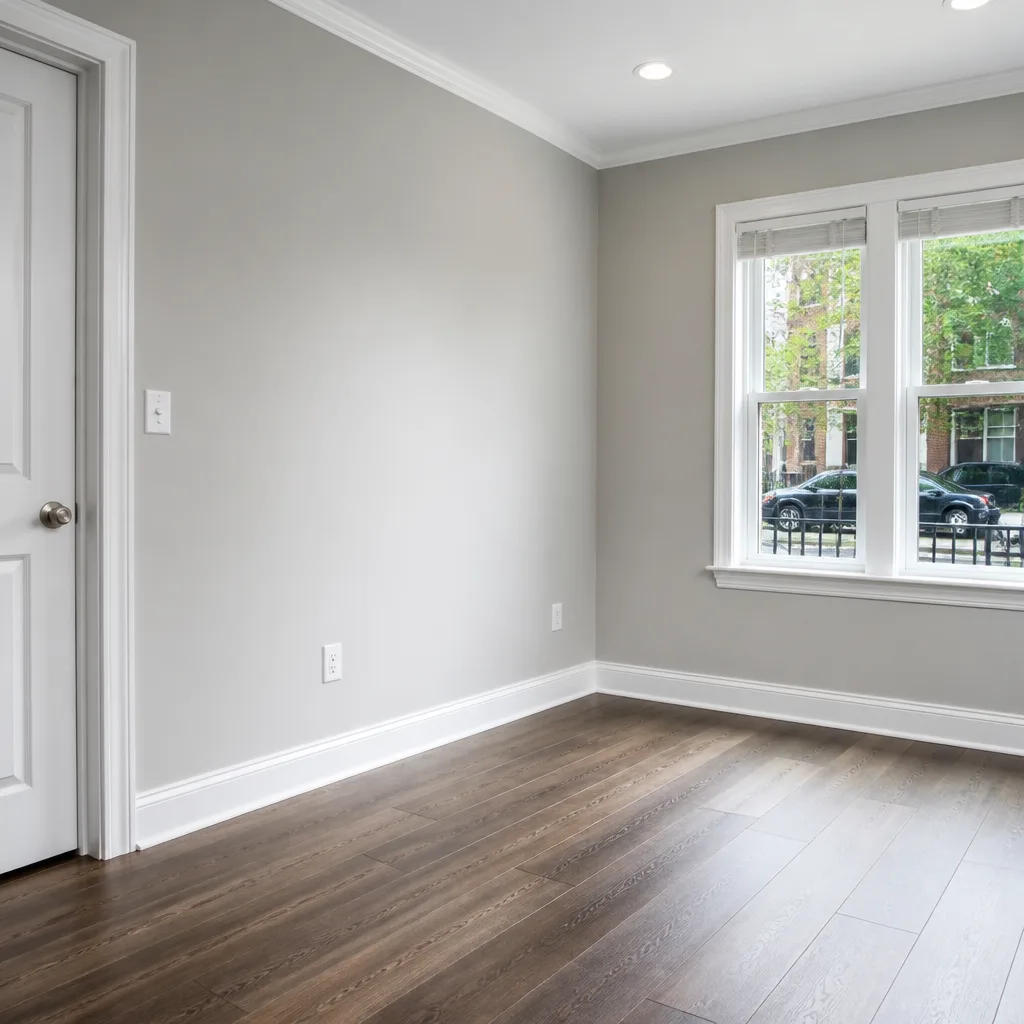 After
After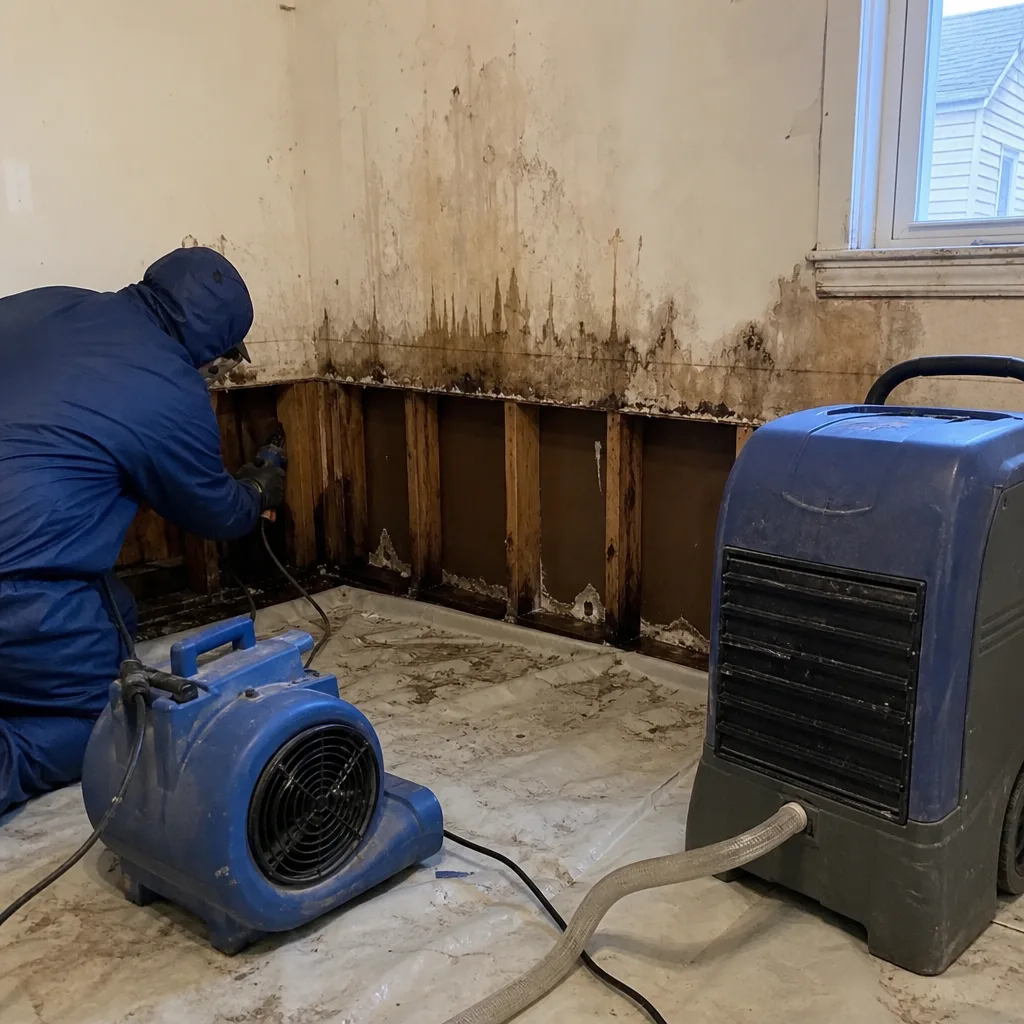 Before
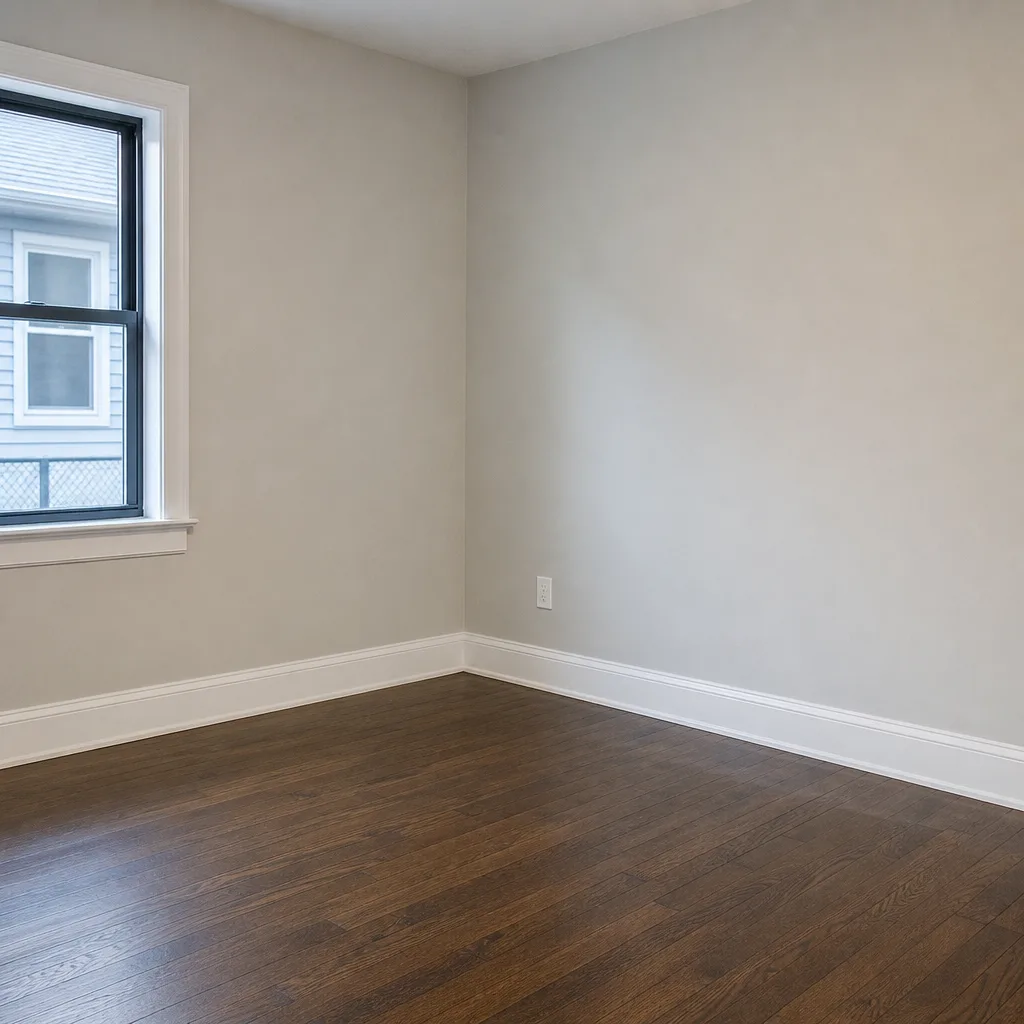 After
After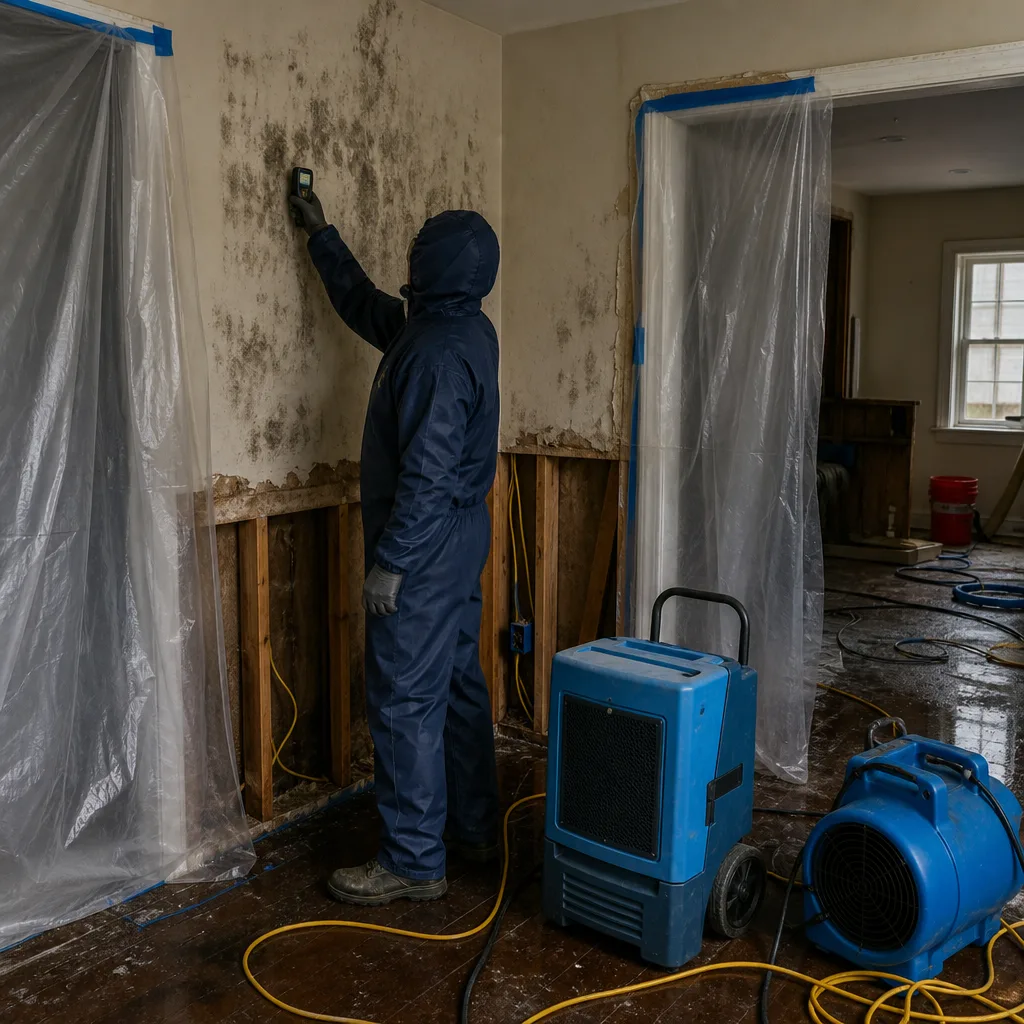 Before
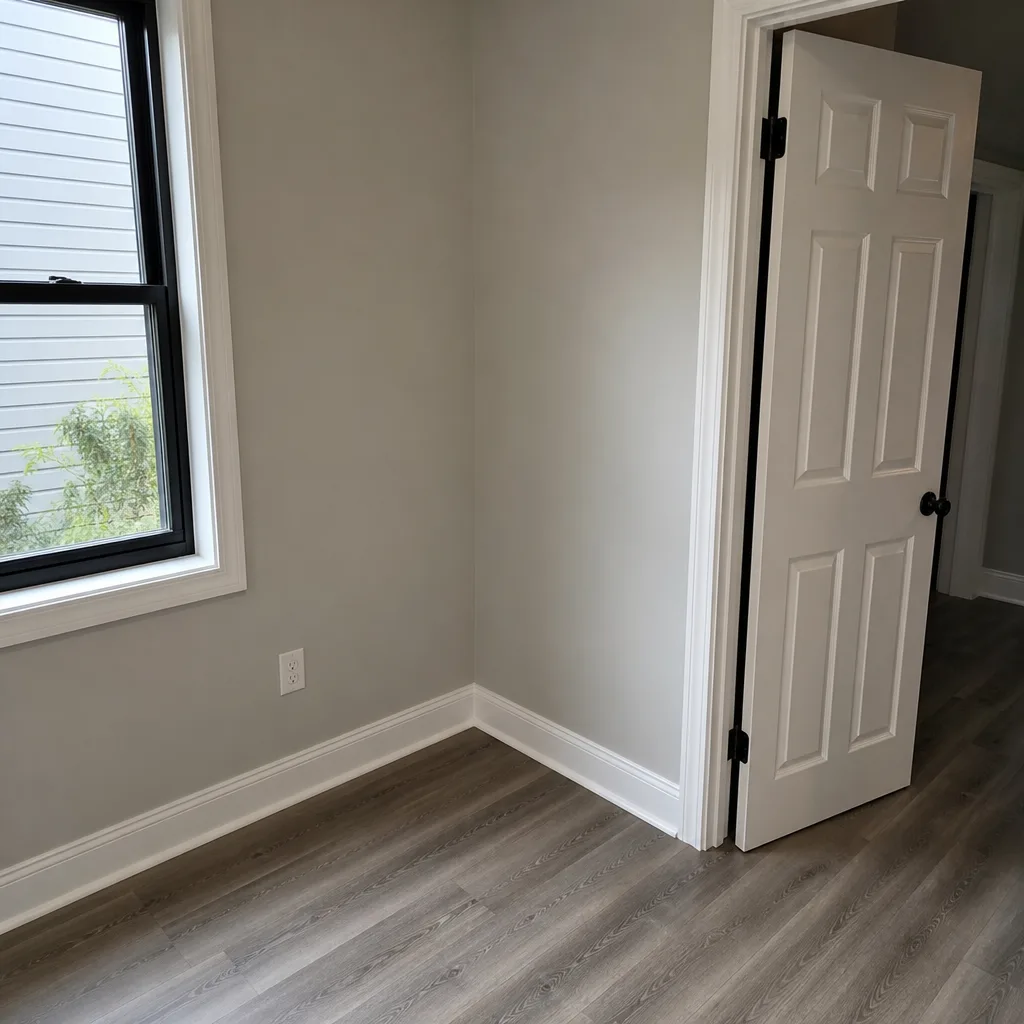 After
After24/7 Emergency Water Damage Restoration in Harrison
Water damage restoration in Harrison, NJ typically runs $2,800-$7,500 for most residential losses, with emergency extraction starting at $1,200-$2,400 and full structural drying adding $1,600-$5,100 depending on contamination level and square footage. Our crews answer live at (862) 298-5256 every hour of every day, including holidays, because water doesn’t wait for business hours. When a Harrison basement floods, the first 60 minutes determine whether you’re looking at extraction and drying or a full gut, mold remediation, and reconstruction. We dispatch from our metro-area coordination office and can have a crew to properties near Harrison Avenue, Frank E. Rodgers Boulevard, or the neighborhoods off I-280 within 45 minutes of your call. The free visual inspection includes moisture mapping and a written scope before any equipment runs.
Understanding Water Damage Restoration Severity in Harrison Properties
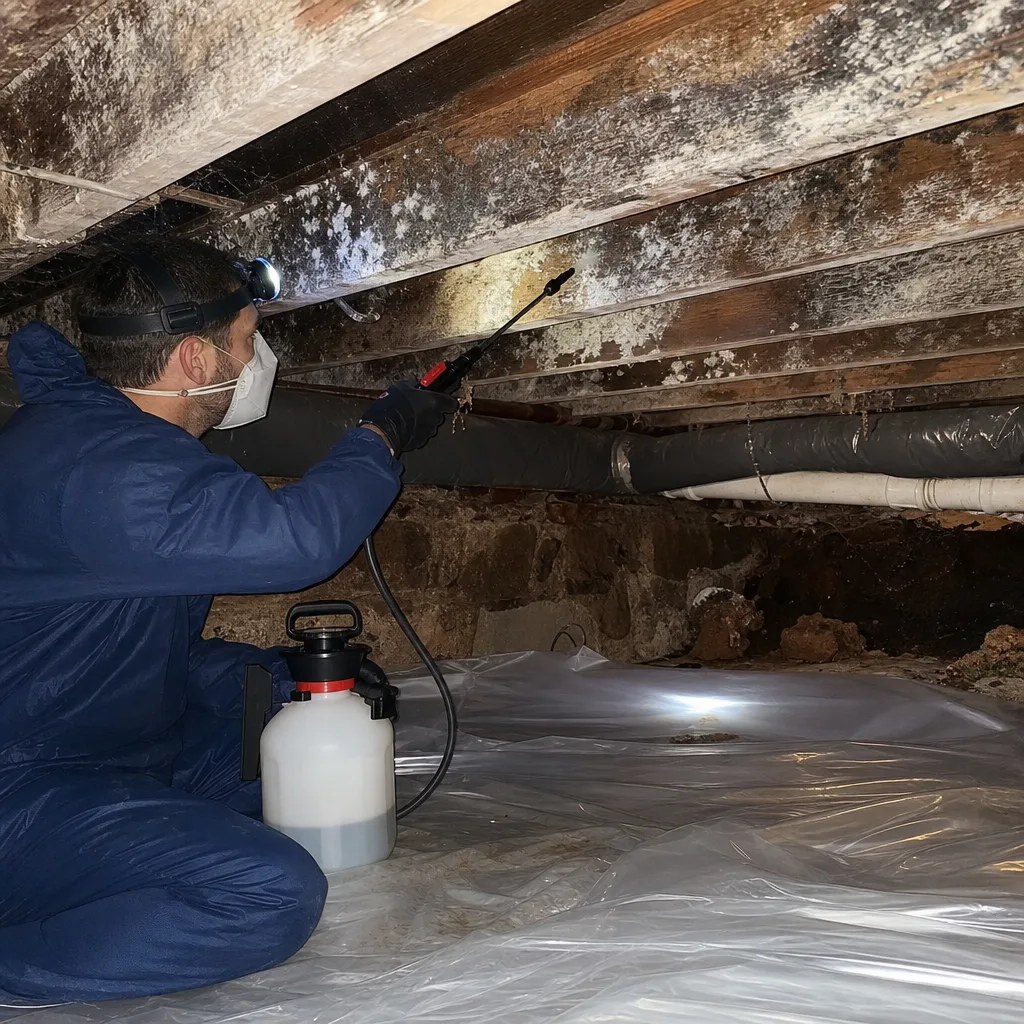
Water damage breaks into three categories under IICRC standards, and Harrison’s geography pushes most flood events straight to Category 3, black water. Category 1 is clean supply-line water. Category 2 carries chemical or biological load, like dishwasher discharge. Category 3 contains sewage, river water, or ground-surface contaminants, and demands full PPE, antimicrobial treatment, and regulated disposal. In Harrison, the Passaic River and the combined storm-sewer system virtually guarantee that any basement flood carries Category 3 contamination.
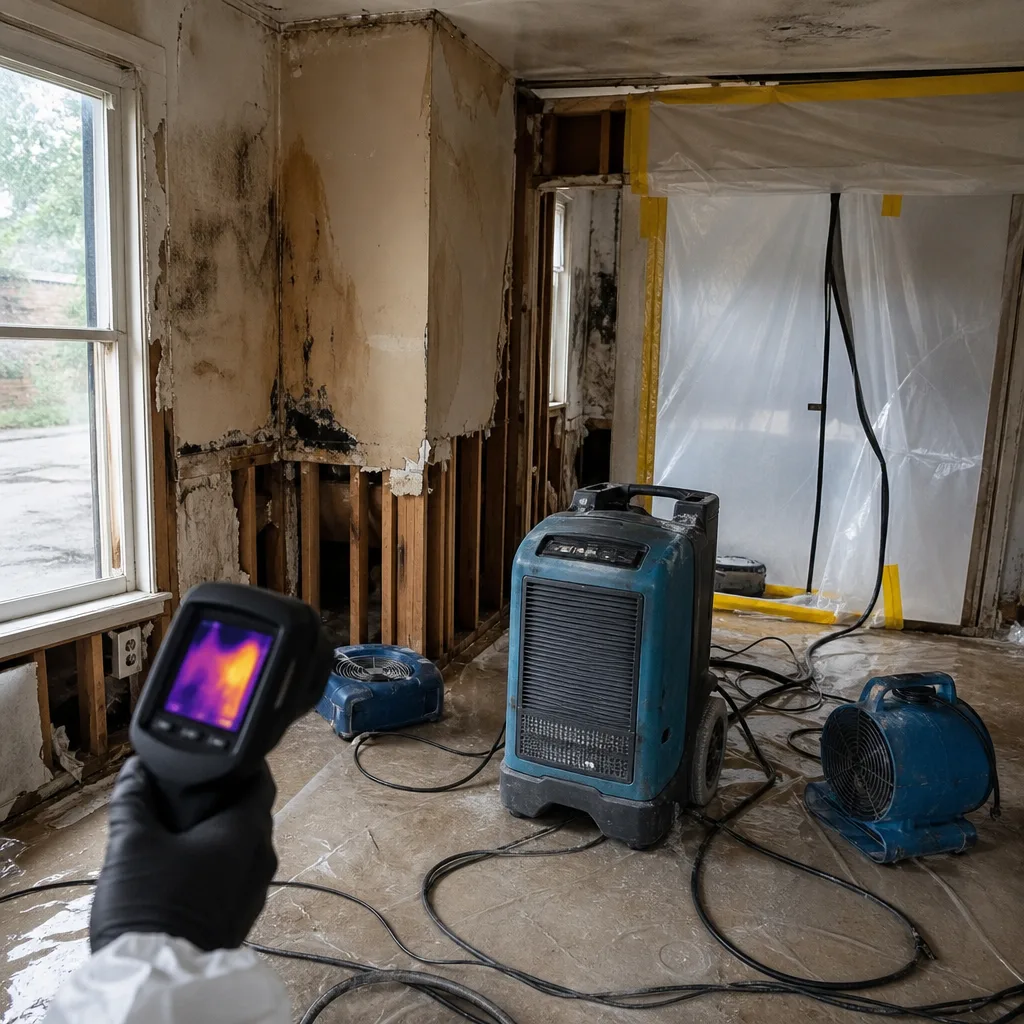
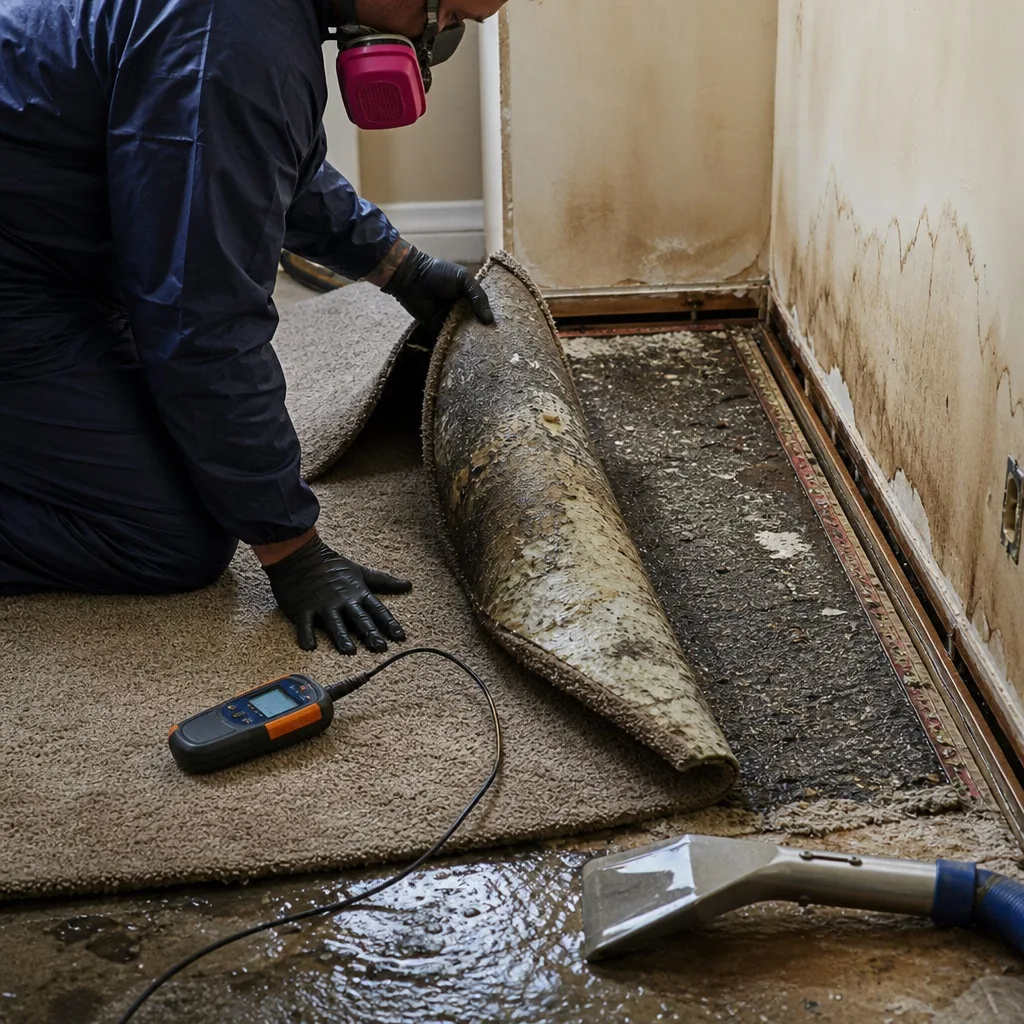
Our crews use moisture mapping with thermal imaging and penetrating hygrometers to find hidden saturation in the brick cavity walls common to Harrison’s early-1900s row homes. Psychrometric data, temperature, relative humidity, and vapor pressure differential, tells us exactly when materials reach dry standard, not just when they feel dry. A surface that reads 15% moisture content in plaster or 12% in dimensional lumber may look fine but will grow mold in 48 hours. We document every reading to IICRC, RIA, and IFA standards so your insurer sees the full picture.
Harrison’s housing stock complicates this further. Below-grade finished basements in two- and three-family brick buildings have often been patched multiple times. Deteriorated mortar joints, aging clay sewer laterals, and decades of waterproofing attempts mean water enters through multiple pathways simultaneously. A crew that only extracts standing water misses the wicking action in porous brick and the trapped moisture behind furring strips.
Why Harrison Property Owners Choose DryMark Restoration Jersey City
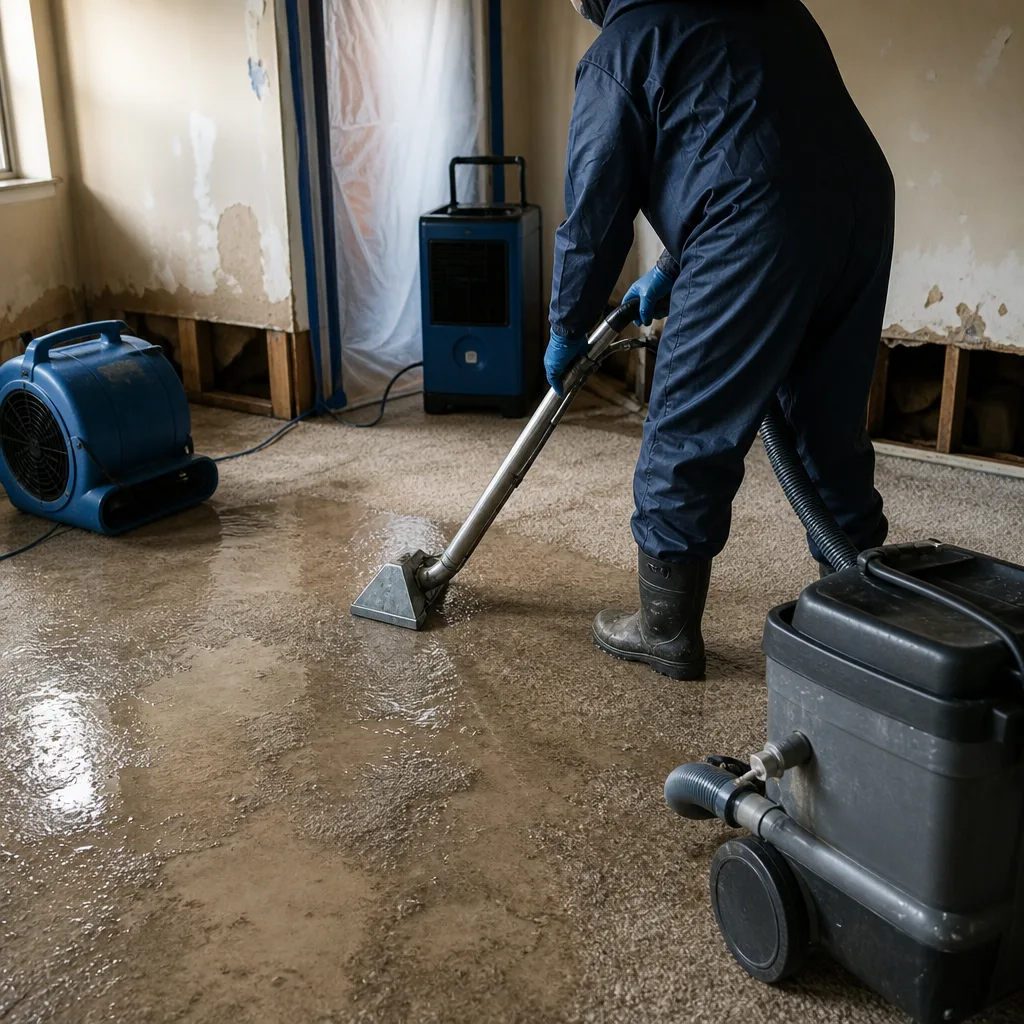
- 45-minute response commitment to Harrison properties, day or night, because standing water becomes Category 3 faster than most owners realize.
- 24/7 live answer: a real person picks up every call, never an automated system or voicemail tree, because we know water is still moving while you wait.
- IICRC-certified crews holding WRT (Water Damage Restoration Technician), ASD (Applied Structural Drying), and AMRT (Applied Microbial Remediation Technician) credentials.
- Free visual inspection with moisture readings and a written scope delivered before any work begins, per Haven Standard, Clause 1.
- Direct insurance billing with photo-documented estimates and daily drying logs that adjusters recognize and pay without dispute.
- One team from extraction through reconstruction: no handoffs between mitigation and rebuild contractors that delay your return to normal.
BeforeAfterOur Water Damage Restoration Process
1. Inspection & Assessment
We arrive with thermal imaging cameras, non-penetrating and penetrating moisture meters, and borescopes for wall cavities. Every affected room is mapped for moisture content, material classification, and contamination category. You receive a written scope and firm price before any equipment starts, guaranteed under Haven Standard, Clause 1.
2. Extraction & Stabilization
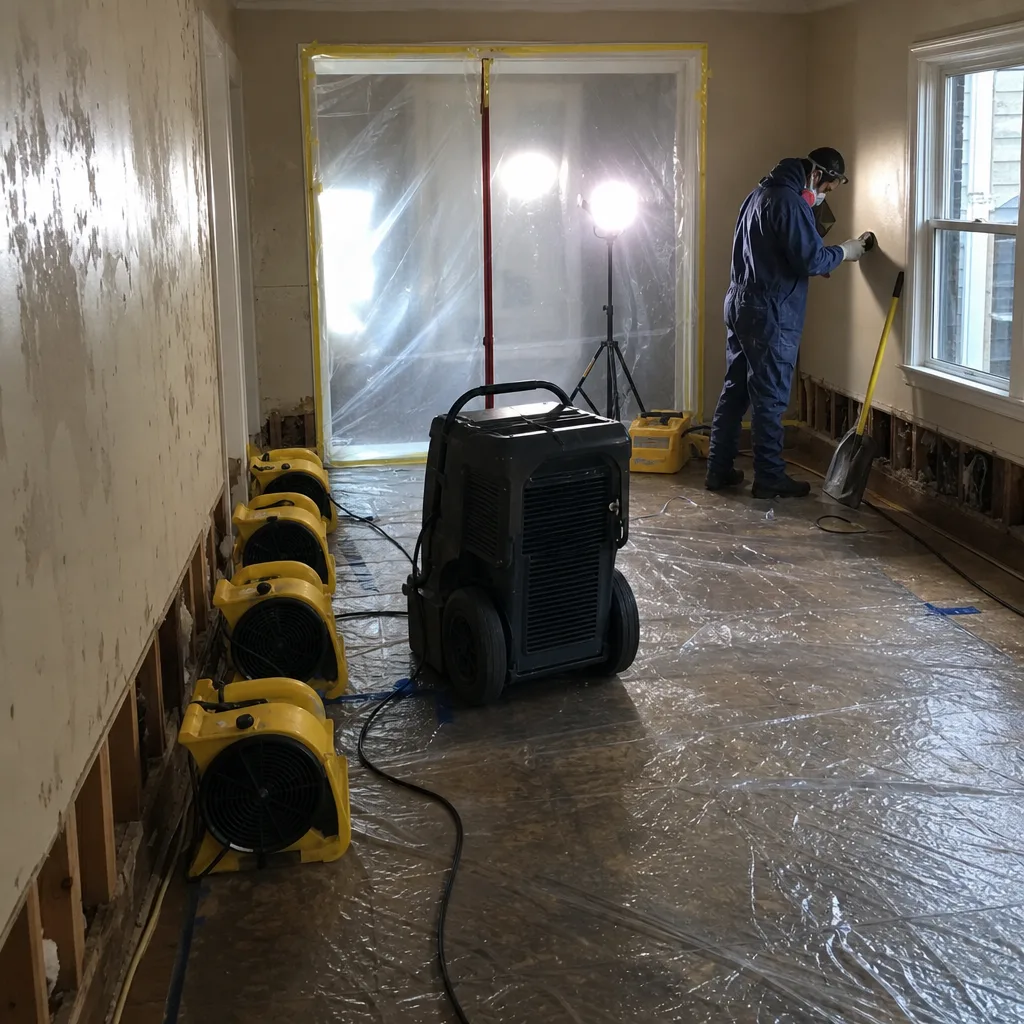
Standing water comes out first with truck-mounted extraction units and submersible pumps. For Category 3 events, we establish containment with polyethylene barriers and negative air pressure using HEPA-filtered air scrubbers to prevent cross-contamination to upper floors.
3. Drying & Dehumidification
We deploy Dri-Eaz and Phoenix LGR dehumidifiers alongside XPOWER and B-Air axial and centrifugal air movers positioned for optimal airflow across wet surfaces. Daily moisture logs track specific humidity, grains per pound, and vapor pressure differential until materials hit dry standard.
4. Cleaning & Sanitization
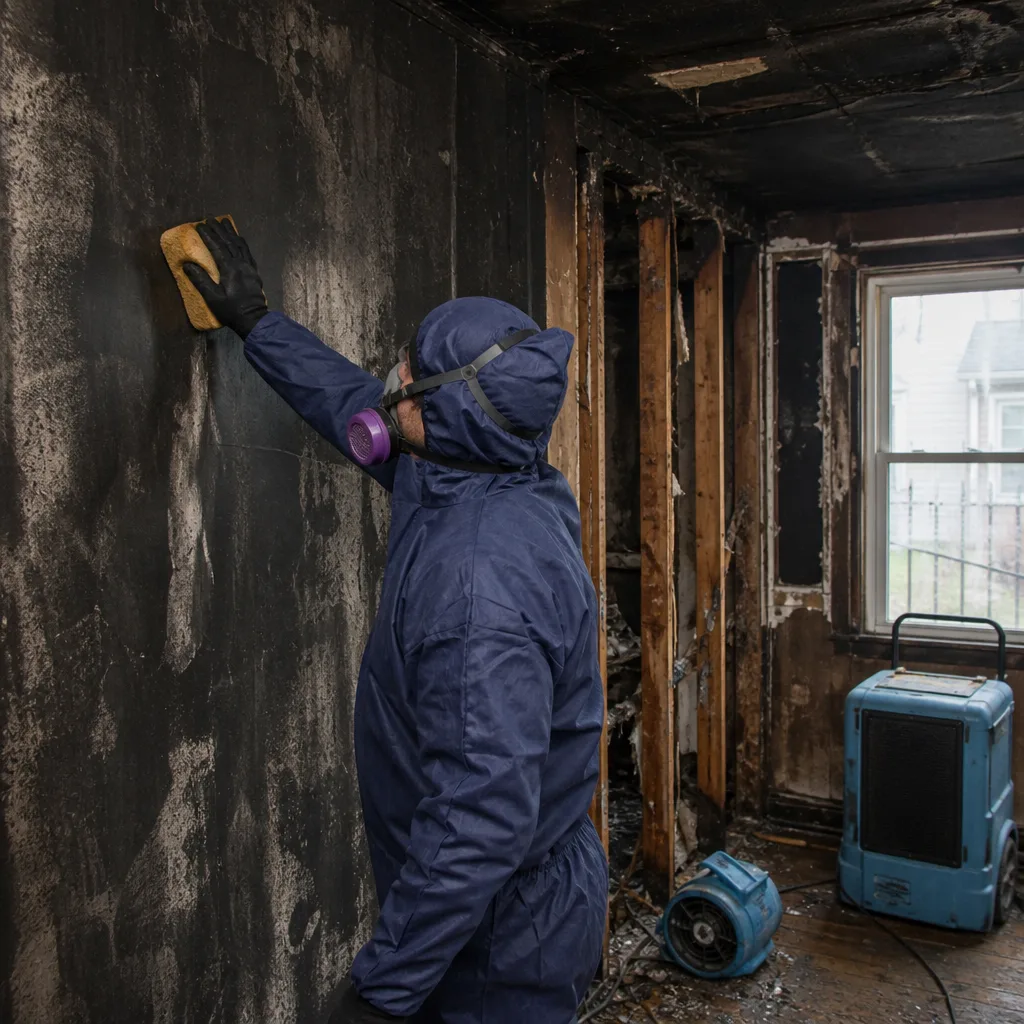
Category 3 water demands antimicrobial treatment of all affected porous materials and pressure-washing of non-porous surfaces. We document every treated area with photos and product specifications for your insurer and our 365-Day Done Right Promise file.
5. Tertiary Drying & Moisture Verification
Tertiary drying targets residual moisture in dense materials like brick, concrete, and engineered subfloors that primary drying cannot reach. We extend dehumidification cycles and use Injectidry systems for wall-cavity drying, verifying with post-drying moisture readings that meet or exceed IICRC S500 standards.
6. Repairs & Restoration
Our reconstruction team replaces removed drywall, flooring, trim, and mechanical systems with materials matched to existing finishes. Every repair is photo-documented and covered by the 365-Day Done Right Promise under The Haven Standard.
Need Emergency Water Damage Restoration in Harrison Now?
Crews minutes away, answering live 24 hours a day. The sooner we start, the less it costs.
Working With Your Insurance Company
Most Harrison water damage claims are paid, but only when the documentation meets adjuster standards from hour one. We photograph every room before touching anything, record moisture readings at initial assessment and daily thereafter, and produce line-item scopes in the format your carrier expects. Our estimates reference IICRC S500 standards and include material classifications by trade name, so there’s no back-and-forth about whether a treatment was necessary.
We coordinate directly with your adjuster, attend site visits when requested, and provide the drying logs that turn restoration invoices into payable claims. Alicia Brennan founded Back to Dry Restoration in 2011 after years as a claims adjuster watching homeowners lose coverage over documentation gaps. That origin is why our process is built around evidence first.
What We Provide Your Insurer
- Thorough documentation of the loss
- Photos of all damage, room by room
- Moisture readings and drying logs
- A detailed, line-item scope of work
- Direct coordination with your carrier
Built for Harrison’s Loss Calendar
January and February bring deep freezes that burst copper supply lines in unheated Harrison basements and crawl spaces. The thaw that follows in March often reveals cracks in aging cast-iron drains that held through winter but fail under spring load. April through June, the Passaic River swells with snowmelt and spring rain; Harrison’s low-lying position means basement seepage even before official flood stage.
Summer thunderstorms deliver flash flooding through overwhelmed combined sewers. By August, a single intense cell can surcharge the system in minutes. September and October bring hurricane remnants and nor’easters; wind-driven rain forces water through deteriorated mortar joints in Harrison’s brick row homes before the storm peaks. November freeze-thaw cycles open new infiltration paths. December’s cold closes the loop. This is not occasional emergency work in Harrison. It is a recurring cycle tied to geography, infrastructure age, and river behavior that neighboring towns do not replicate.
Water Damage Restoration Across Harrison’s Neighborhoods
Properties near the Passaic River waterfront, including blocks off Bergen Street and Hamilton Street closest to the river, face the highest flood frequency and the most severe Category 3 contamination when the combined sewer surcharges. Our crews know these streets from repeated responses; we have extracted the same basements after multiple events, and we document the compounding damage for insurers who need to see pre-existing condition exclusions addressed.
The neighborhoods along Harrison Avenue and Frank E. Rodgers Boulevard, the town’s commercial spine, mix retail and residential in older brick buildings with shared walls. Water migration in these structures travels horizontally through common brickwork, affecting multiple units from a single source. Our moisture mapping identifies the full extent before visible damage appears in adjacent properties.
Areas near I-280 and the PATH corridor, including newer construction and renovated industrial conversions, present different challenges: modern vapor barriers and insulation trap moisture in wall assemblies that older buildings would have breathed through. Tertiary drying with Injectidry systems is often required to reach hidden saturation without destructive removal.
The blocks between Davis Avenue and West Newark Avenue, with their concentration of two-family homes with below-grade rentals, see repeated sewer backup claims. Tenants often delay reporting, extending the contamination window and increasing remediation scope. We train our intake staff to ask the right questions and dispatch with appropriate PPE already loaded.
Specialized Water Damage Restoration Services We Offer in Harrison
Emergency Water Extraction
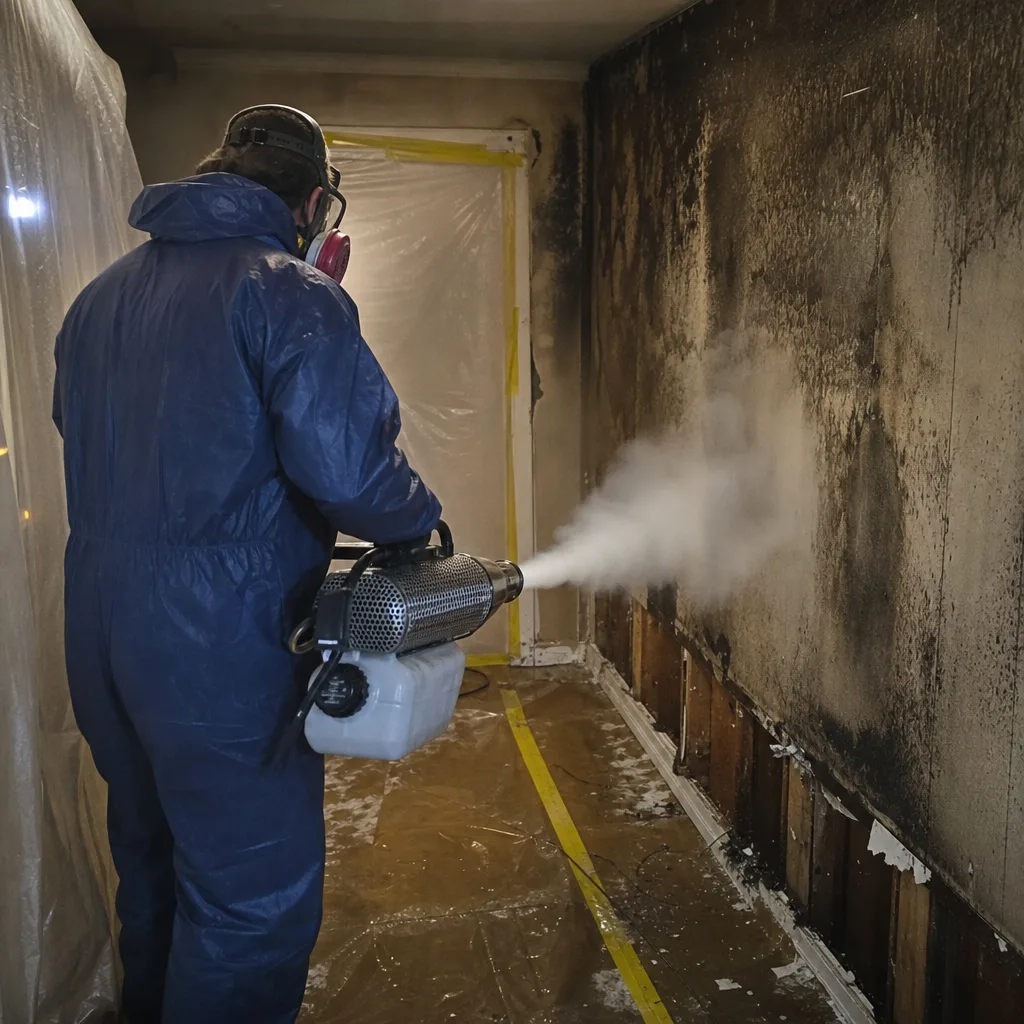
Our truck-mounted extraction systems remove thousands of gallons per hour from Harrison basements, living rooms, and commercial spaces. For Category 3 events, extraction includes sewage solids removal and immediate antimicrobial application. After Hurricane Irene drove Passaic River water into a finished basement on Bergen Street near the river, our crew arrived to Category 3 black water mixing with sewage backup. We set containment, ran water extraction, applied antimicrobial treatment, and used moisture mapping to find hidden saturation behind the brick foundation walls before starting structural drying with Dri-Eaz dehumidification and XPOWER air movers.
Structural Drying & Dehumidification
Harrison’s brick row homes require extended drying cycles compared to wood-frame construction. We deploy Phoenix 200 HT LGR dehumidifiers and calculate specific humidity targets based on your building’s envelope, not generic charts. Daily drying logs go to your insurer and your file.
Flood Cleanup
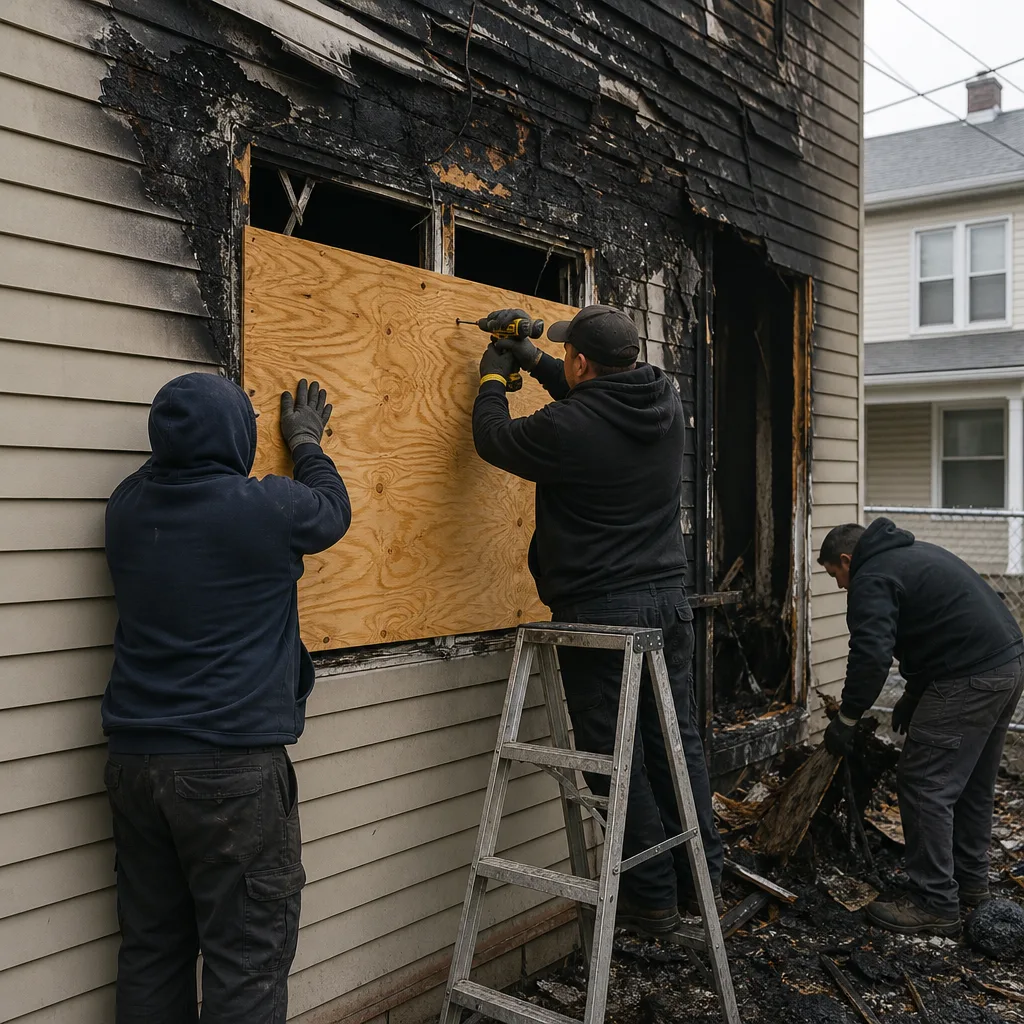
Passaic River flooding in Harrison is never clean water. Every flood cleanup we perform assumes Category 3 contamination until proven otherwise, with full PPE, negative air containment, and regulated waste disposal. This scope difference is why Harrison flood cleanup runs higher than simple rainwater intrusion in other markets.
Burst Pipe Restoration
January freeze events split copper and PEX alike in Harrison’s unheated spaces. We extract, dry, and document the line failure for your insurer, then coordinate with licensed plumbers for repair and our reconstruction team for finish restoration.
Basement Water Removal
Harrison’s below-grade finished basements are the town’s most flood-vulnerable square footage. We remove water, test for sewer contamination, and map moisture in foundation walls that have been wet before and will be wet again.
What happens when you call
- 1
A real person answersNo phone trees - you reach a local pro.
- 2
You get an upfront price rangeHonest numbers before anyone is dispatched.
- 3
A background-checked tech heads outLicensed & insured, dispatched right away.
- 4
You approve before work beginsNothing starts until you say go.
Water Damage Restoration Costs in Harrison, NJ
Emergency water extraction in Harrison typically runs $1,200-$2,400 for residential basements up to 800 square feet. Structural drying and dehumidification adds $1,600-$5,100 depending on contamination category, affected square footage, and drying days required. Category 3 flood cleanup with sewage contamination, antimicrobial treatment, and regulated disposal generally falls at the upper end: $4,500-$7,500 for a typical Harrison basement.
What moves the price: contamination level (Category 1 vs. 3 is a 40-60% scope difference), square footage of affected finish materials, whether drywall and insulation require removal, and how many drying days the structure demands. The Passaic River’s slow crests often extend Harrison drying windows by 30-50% compared to flash-flood events elsewhere.
Most Harrison water damage claims are insurance-covered when documented properly from the start. Out-of-pocket costs typically apply to deductibles, upgrades beyond like-kind replacement, or losses from maintenance issues rather than sudden events. Our free visual inspection produces a written, line-item scope you can submit to your carrier before authorizing work. Call (862) 298-5256 for an exact quote on your specific loss.
We Also Serve Cities Near Harrison
Our crews respond throughout Hudson County and adjacent Essex County, including Harrison, Kearny, Newark, Jersey City, and Secaucus. Each city’s flood risk, building stock, and infrastructure age create distinct restoration profiles; we adjust our equipment loadout and documentation approach accordingly. For Water Damage Restoration in any of these communities, the same live-answer dispatch and written-price guarantee applies.
Serving Harrison, NJ - Our Local Coverage Area
We’re based in the Harrison area and know this community well. Use the map below to see our service coverage - if you’re nearby, we can almost certainly help.
Harrison Water Damage Restoration Questions, Answered
Why is water damage restoration in Harrison different from other Hudson County towns?
Harrison sits in one of Hudson County’s lowest-lying floodplains directly on the Passaic River, where the combined storm-sewer system surcharges simultaneously with rising river water, making almost every flooded basement a Category 3 black water event. Neighboring Kearny and Belleville share some river risk but not Harrison’s severity of repeated inundation and sewer contamination. Call (862) 298-5256 for a free inspection and written scope.
How quickly does mold grow in a flooded Harrison basement?
Mold colonization begins on wet drywall and organic materials within 24-48 hours, and the Passaic River’s slow crests can leave Harrison basements submerged for days rather than hours, often pushing past that window before extraction even starts. This is why immediate structural drying with documented moisture readings matters more here than in areas with faster-draining geography. Call (862) 298-5256 for emergency dispatch.
What does it mean when the Passaic River crests slowly over Harrison?
A slow crest means river water remains at flood stage for days, keeping basements submerged and preventing crews from accessing properties or running equipment, which extends the drying window and compounds mold risk far beyond a typical flash flood. Harrison’s geography makes this the norm, not the exception, for major storm events. Call (862) 298-5256 to discuss pre-positioning or emergency response planning.
Can winter freeze-thaw cycles cause water damage in Harrison’s older brick homes?
Yes. Water enters micro-cracks in deteriorated mortar joints, freezes, expands, and opens new infiltration paths that allow water entry separate from any flooding event. We regularly find hidden wall-cavity moisture in Harrison brick buildings with no recent flood history, caused solely by this cyclic weathering. Moisture mapping finds it before mold does. Call (862) 298-5256 for inspection.
Why does Harrison’s combined sewer system affect restoration costs?
When the combined storm-sewer system surcharges during rain or river rise, sewage backs up through floor drains and fixtures simultaneously with any other water intrusion, automatically classifying the loss as Category 3 black water. This triggers full PPE, antimicrobial treatment, regulated waste disposal, and often more extensive material removal than clean water would require, adding 40-60% to remediation scope. Call (862) 298-5256 for a written price before work begins.
How fast can your crew actually get to my Harrison property?
We commit to 45 minutes from call to arrival for Harrison properties, with crews staged for the zip code and equipment pre-loaded for Category 3 response. Live dispatch at (862) 298-5256 means no voicemail delay while water spreads.
Will my insurance cover the full restoration, or just cleanup?
Most standard homeowners policies cover sudden water damage restoration including extraction, drying, and like-kind replacement of damaged materials, when documented with photos, moisture readings, and line-item scopes from the start. Sewer backup requires specific endorsement on some policies; we review your coverage and document accordingly. Our direct adjuster coordination and photo records maximize payable claim scope. Call (862) 298-5256 to schedule your free inspection and insurance review.
Can my family stay in the home during water damage restoration?
For Category 1 clean water losses affecting limited areas, often yes. For Category 3 sewage-contaminated floods common in Harrison, we generally recommend temporary relocation until antimicrobial treatment, drying, and air quality verification are complete. We document this recommendation for your insurer as part of the claim file. Call (862) 298-5256 to discuss your specific situation.
When water enters your Harrison property, the documentation you collect in the first hour shapes everything that follows: what your insurer pays, how fast you return home, and whether mold becomes a secondary claim. We built our process around that reality. Every job starts with a written price, proceeds with photo-documented daily logs, and ends with a signed 365-Day Done Right Promise under The Haven Standard. No scope creep. No voicemail. No documentation gaps that cost you coverage.
Call (862) 298-5256 now for live answer and 45-minute dispatch to Harrison. Free visual inspection. Written scope before any work begins.
Written by Alicia Brennan, Owner at Back to Dry Restoration, serving Harrison and Hudson County since 2011.
Water Damage Restoration in Nearby Areas